
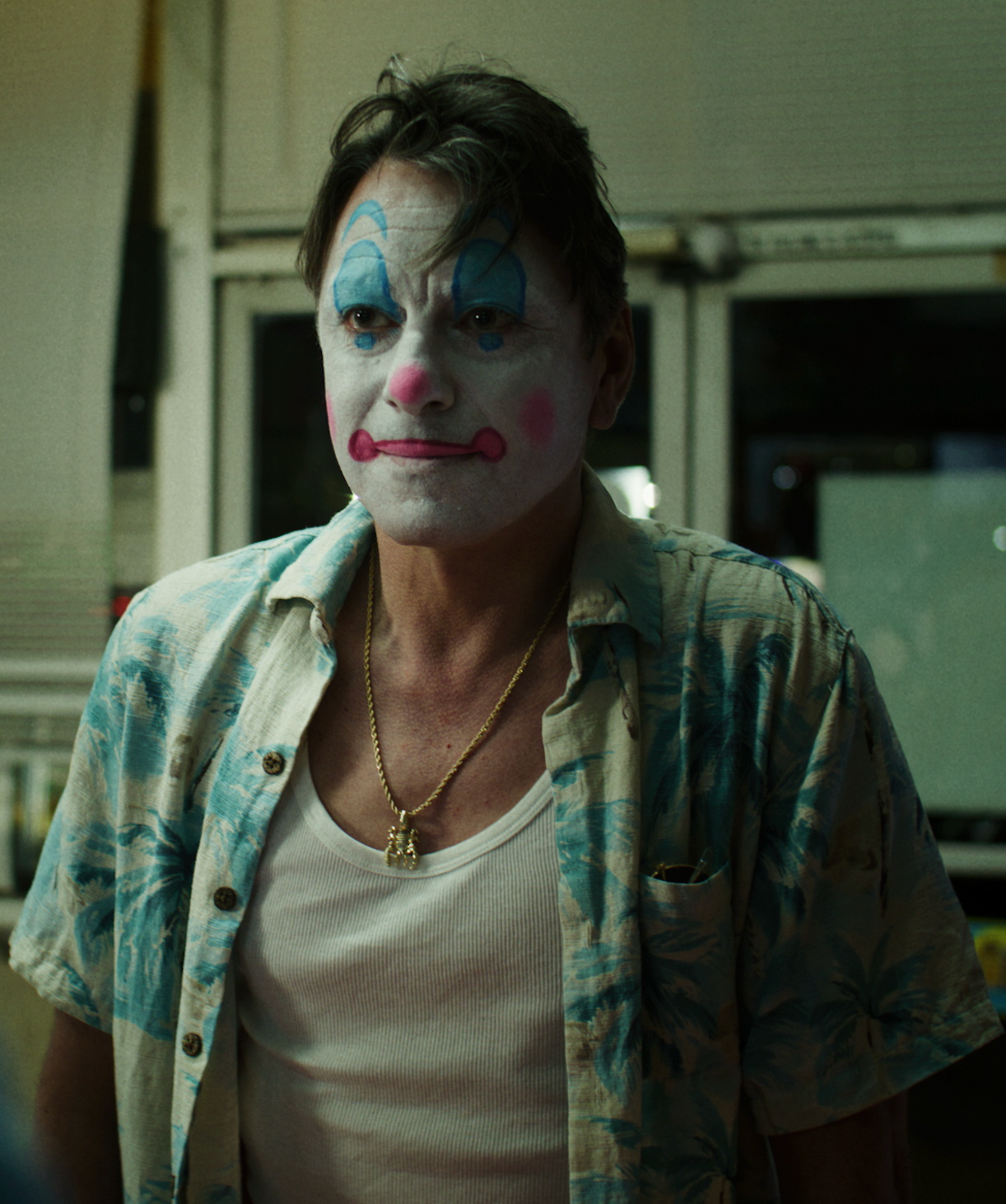
Brady Dowad got his car stuck in a sand dune on the last day of shooting his debut film in the Palmdale-area desert of California. With light dying and the final shots still uncaptured, he and cinematographer Luka Bazeli piled into the prop vehicle with actor Steve M. Robertson, and raced against the sunset.
The desperate scramble—art made under duress—perfectly captures what “Clown Song” demands: filmmakers willing to break themselves for the frame.
What “Clown Song” Says About the Masculine American Dream
“Clown Song,” a music-driven horror short, looks at what happens when the chase for material legacy and quick hits of gratification overshadow family connection and lasting relationships.
For Dowad, the film explores the current state of the masculine American Dream, something he describes as a self-destructive place born from fear of “not being man enough.”
The film, which made its Canadian premiere at Toronto After Dark Film Festival before screening at SOHO International Film Fest in New York, uses an unconventional antagonist to explore how shame becomes buried in a capitalistic, success-obsessed society.
It’s a serious exploration delivered with darkly comedic punch. It’s a balancing act Dowad executed with evident joy and precision.
From Song to Screen: The Origins of “Clown Song”
The project began organically. Actor and musician Steve M. Robertson wrote the song circa 2019 with friend Jake Brinskele, initially just for fun.
Dowad reconnected with Robertson years later in 2023, heard the acoustic guitar rendition and saw something cinematic in the composition. A year of development followed before production commenced.
What struck Dowad most was how the song’s dark comedic sensibilities aligned with his artistic vision.
“It was a part of the song, which initially was created out of Steve exploring a darkly comedic story with his punk rock sensibilities,” he explained. “And then for myself, as a filmmaker, it quickly became a tool to play off the expectations and tropes of clowns in film to tell a non-traditional horror short.”
The Visual Language of “Clown Song”: Pink, Teal, and Horror
The visual language emerged through close collaboration with director of photography Luka Bazeli, whom Dowad has known since childhood. Together, they established a colour palette of pink and teal for the clown makeup, which production designer Alexah Acuña then expanded throughout the physical spaces. This design choice threaded themes of horror through every frame.
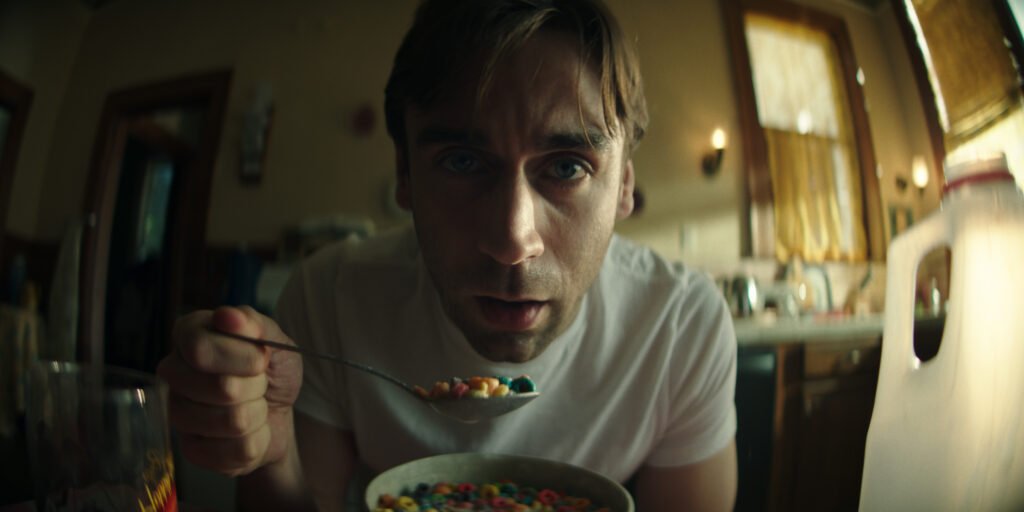
The Narrator, the film’s central character, wants simply to rest at first. But as the story unfolds, he becomes what he’s running from, a self-destructive cycle born from fear of inadequacy. It’s a recognizable American tragedy wrapped in genre convention.
Festival Audiences Respond to “Clown Song”
Audience reactions at both premiere venues proved the gambit paid off. At Toronto After Dark, the theatre erupted. At Union Square in New York, the response was similarly visceral: laughter, tears, disgust, all valid emotional responses to a film that refuses easy categorization.
“We had a blast making it and only hope people connect with it,” Dowad said. “And if not, that’s no one’s fault. Not everything is for everyone.”
Why “Clown Song” Trusts Its Horror Audience
For horror audiences particularly, a demographic Dowad credits with genuine cinematic passion, the film offers something rarer still: a filmmaker who trusts his viewers to understand the subversions beneath the surface, who respects their accumulated knowledge of the genre itself. That trust, Dowad believes, is essential to inviting an audience on the ride.