
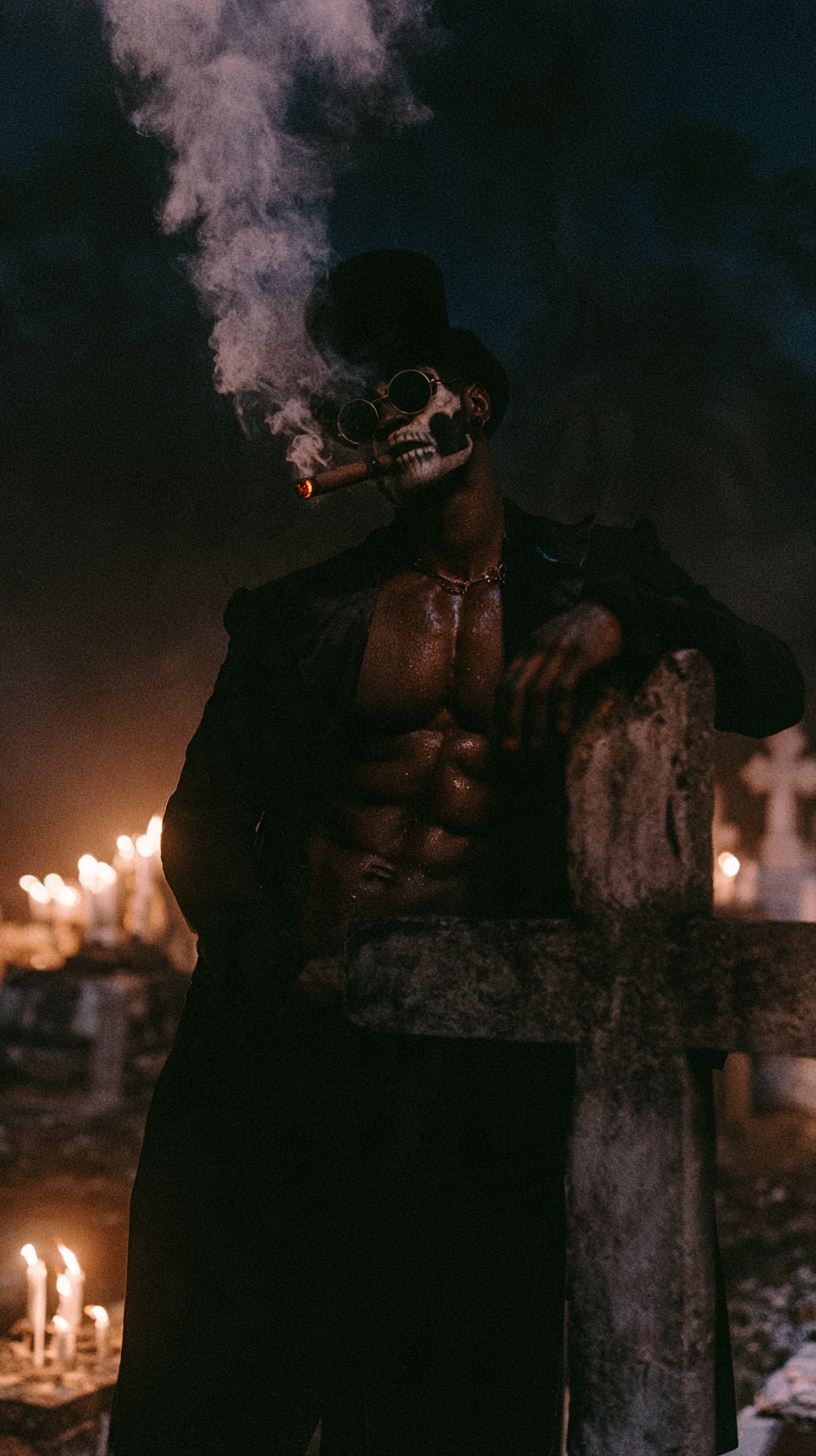
Baron Samedi is one of the most recognizable figures in Haitian Vodou. Popular culture often paints him as a villain in a top hat. In Haitian tradition, he is a respected lwa who rules over death and the cemetery.
This guide explains who Baron Samedi is, where he fits among the Gede spirits and how he reached film and games. It treats Vodou as the living religion it is, and it belongs to our wider guide to Caribbean folklore.
Who Is Baron Samedi?
Baron Samedi is a lwa, or spirit, in Haitian Vodou. His name means Baron Saturday in French. He governs death, the cemetery and the crossroads between the living and the dead.
Tradition holds that he digs the graves and receives the dead. It also holds that he decides whether a gravely ill person lives or dies. Haitians often ask for his help with healing for that reason.
Baron Samedi is known for his humour. He jokes, swears and loves rum. That bawdy side sets the Gede spirits apart from many other lwa.
Jamaica’s duppy offers a contrast. It is a restless spirit that haunts the living.
Baron Samedi and the Gede Family
Baron Samedi belongs to the Gede, the family of lwa tied to death and fertility. Many devotees describe him as the head of the family. Other Barons include Baron La Croix and Baron Cimetière.
Haitians honour the Gede each year on November 1 and 2. Crowds gather in cemeteries, especially in Port-au-Prince, to sing, dance and leave offerings. The dates overlap with All Saints’ Day and All Souls’ Day, so the festival arrives just after Halloween.
Symbols and Offerings of Baron Samedi
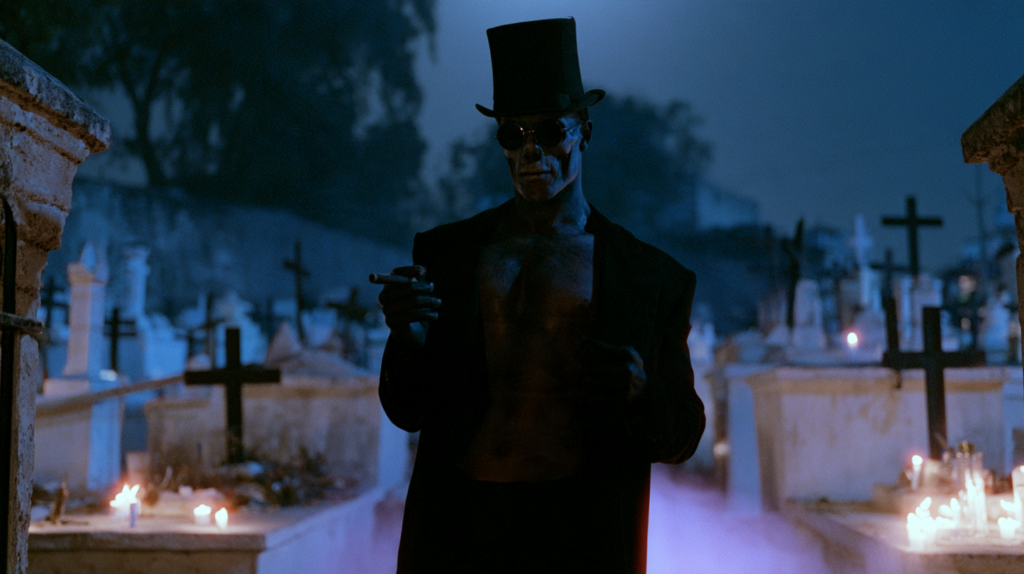
Baron Samedi’s look is easy to spot. He usually wears a black top hat and a black coat. Many images show him with dark glasses, a skull-painted face and cotton plugs in his nostrils. The plugs recall the preparation of a corpse for burial.
Black and purple are his colours. His symbols include the cross, the coffin and the skull. Devotees offer him rum, often steeped with hot peppers, along with cigars. Offerings differ by house and by community.
Other Caribbean traditions keep spirits close in different ways. The legend of the Ti Bolom offers one example from the southern Caribbean.
Baron Samedi in Film and Games
Most English-speaking audiences meet Baron Samedi through entertainment. The 1973 James Bond film Live and Let Die features a character called Baron Samedi. Trinidadian dancer and choreographer Geoffrey Holder played the role.
The film borrows the lwa’s skull imagery and his mischievous laugh. Other books, games and television shows have also borrowed his top hat and skull face. Those versions usually strip away the religious context. They turn him into a trickster or a villain.
Haitian practitioners see him differently. For them, he is a protector who cares for the dead and the dying. Writers and creators who borrow his image owe the religion some care.
Fèt Gede: The Festival of the Dead
Fèt Gede is the Haitian festival where Baron Samedi takes centre stage. Rituals run through November and peak on November 1 and 2. The biggest and loudest gathering happens at the National Cemetery in Port-au-Prince.
Practitioners dress in white and paint their faces to represent the gede, the spirits of the dead. Many in the crowd gather around a tomb that they believe holds the guardian of the dead, Baron Samedi. A priest dressed in black may carve a cross into candles before returning them to worshippers.
Offerings fill the cemetery. Wooden bowls hold plantains, fish, bread and avocados. Altars carry bones, candles and jugs of rum. A priest may spit cleren, a rum laced with hot peppers, onto the faces of practitioners. Some of them shake or stumble as they receive a spirit.
Recent festivals have taken place under heavy strain. Reports from 2025 describe subdued celebrations after Hurricane Melissa and amid ongoing violence in the capital. Devotees still came to honour their ancestors and to ask the spirits for protection.
How a Person Becomes a Gede Spirit
In Vodou, a person who dies can become a gede. That change turns a human soul into a lwa. The new lwa often takes a name that begins with Gede. One example is Gede Loray, with loray meaning thunder.
A family’s service to a gede can continue across generations. When a devotee who served a gede dies, another member of the community may take up that service. Baron Samedi, also called Papa Gede, presides over the whole family during the festival.
The Roots of Vodou
Vodou took shape in the 16th century. Enslaved West Africans, forced to practise Catholicism, combined the saints with the spirits of their own religions. Haiti recognizes Vodou as an official religion, and many people practise it today.
Many Haitians see no conflict between Vodou and Catholic tradition. Fèt Gede overlaps with All Saints’ Day and All Souls’ Day. Its origins reach back to African ancestor traditions that survived the Atlantic crossing.
Death as Part of Life
For devotees, Baron Samedi stands for more than fear. He stands for the idea that death belongs to life. One photo essay on the festival described the cemetery as a liberating space. Mourners there treat death as something to share and to face together.
The same essay noted that Baron Samedi’s tomb, together with that of his wife Brijit, is said to stand at the entrance to every Haitian cemetery. The couple protect the dead and the living who pass through.
Common Questions About Baron Samedi
What does Baron Samedi mean?
Baron Samedi means Baron Saturday in French. Haitians also spell the name Bawon Samdi, and many know him as Papa Gede.
When is Fèt Gede?
Fèt Gede peaks on November 1 and 2. Rituals continue through the month. Crowds gather in cemeteries across Haiti, with the largest gathering in Port-au-Prince.
Is Baron Samedi evil?
Devotees see him as a protector. He guards the dead, helps heal the sick and brings humour to solemn moments. The villain image comes mostly from film.
Who is Baron Samedi’s wife?
Many devotees name Maman Brigitte, spelled Brijit in some sources, as his wife.
Related Articles
Caribbean Folklore: A Field Guide to Monsters and Haunted Places
Duppy: Jamaica’s Restless Spirits and the Legends Behind Them
Ti Bolom: The Little Man of Caribbean Folklore
Baron Samedi is one of the most recognizable figures in Haitian Vodou. Popular culture often paints him as a villain in a top hat. In Haitian tradition, he is a respected lwa who rules over death and the cemetery.
This guide explains who Baron Samedi is, where he fits among the Gede spirits and how he reached film and games. It treats Vodou as the living religion it is, and it belongs to our wider guide to Caribbean folklore.
Who Is Baron Samedi?
Baron Samedi is a lwa, or spirit, in Haitian Vodou. His name means Baron Saturday in French. He governs death, the cemetery and the crossroads between the living and the dead.
Tradition holds that he digs the graves and receives the dead. It also holds that he decides whether a gravely ill person lives or dies. Haitians often ask for his help with healing for that reason.
Baron Samedi is known for his humour. He jokes, swears and loves rum. That bawdy side sets the Gede spirits apart from many other lwa.
Jamaica’s duppy offers a contrast. It is a restless spirit that haunts the living.
Baron Samedi and the Gede Family
Baron Samedi belongs to the Gede, the family of lwa tied to death and fertility. Many devotees describe him as the head of the family. Other Barons include Baron La Croix and Baron Cimetière.
Haitians honour the Gede each year on November 1 and 2. Crowds gather in cemeteries, especially in Port-au-Prince, to sing, dance and leave offerings. The dates overlap with All Saints’ Day and All Souls’ Day, so the festival arrives just after Halloween.
Symbols and Offerings of Baron Samedi
Baron Samedi’s look is easy to spot. He usually wears a black top hat and a black coat. Many images show him with dark glasses, a skull-painted face and cotton plugs in his nostrils. The plugs recall the preparation of a corpse for burial.
Black and purple are his colours. His symbols include the cross, the coffin and the skull. Devotees offer him rum, often steeped with hot peppers, along with cigars. Offerings differ by house and by community.
Other Caribbean traditions keep spirits close in different ways. The legend of the Ti Bolom offers one example from the southern Caribbean.
Baron Samedi in Film and Games
Most English-speaking audiences meet Baron Samedi through entertainment. The 1973 James Bond film Live and Let Die features a character called Baron Samedi. Trinidadian dancer and choreographer Geoffrey Holder played the role.
The film borrows the lwa’s skull imagery and his mischievous laugh. Other books, games and television shows have also borrowed his top hat and skull face. Those versions usually strip away the religious context. They turn him into a trickster or a villain.
Haitian practitioners see him differently. For them, he is a protector who cares for the dead and the dying. Writers and creators who borrow his image owe the religion some care.
Related Articles
Caribbean Folklore: A Field Guide to Monsters and Haunted Places
Duppy: Jamaica’s Restless Spirits and the Legends Behind Them


1 Comment
Caribbean Folklore: A Field Guide to Monsters and Haunted Places - Your source for all things horror
October 12, 2026[…] Baron Samedi: Who the Haitian Lwa of the Dead Really Is […]