
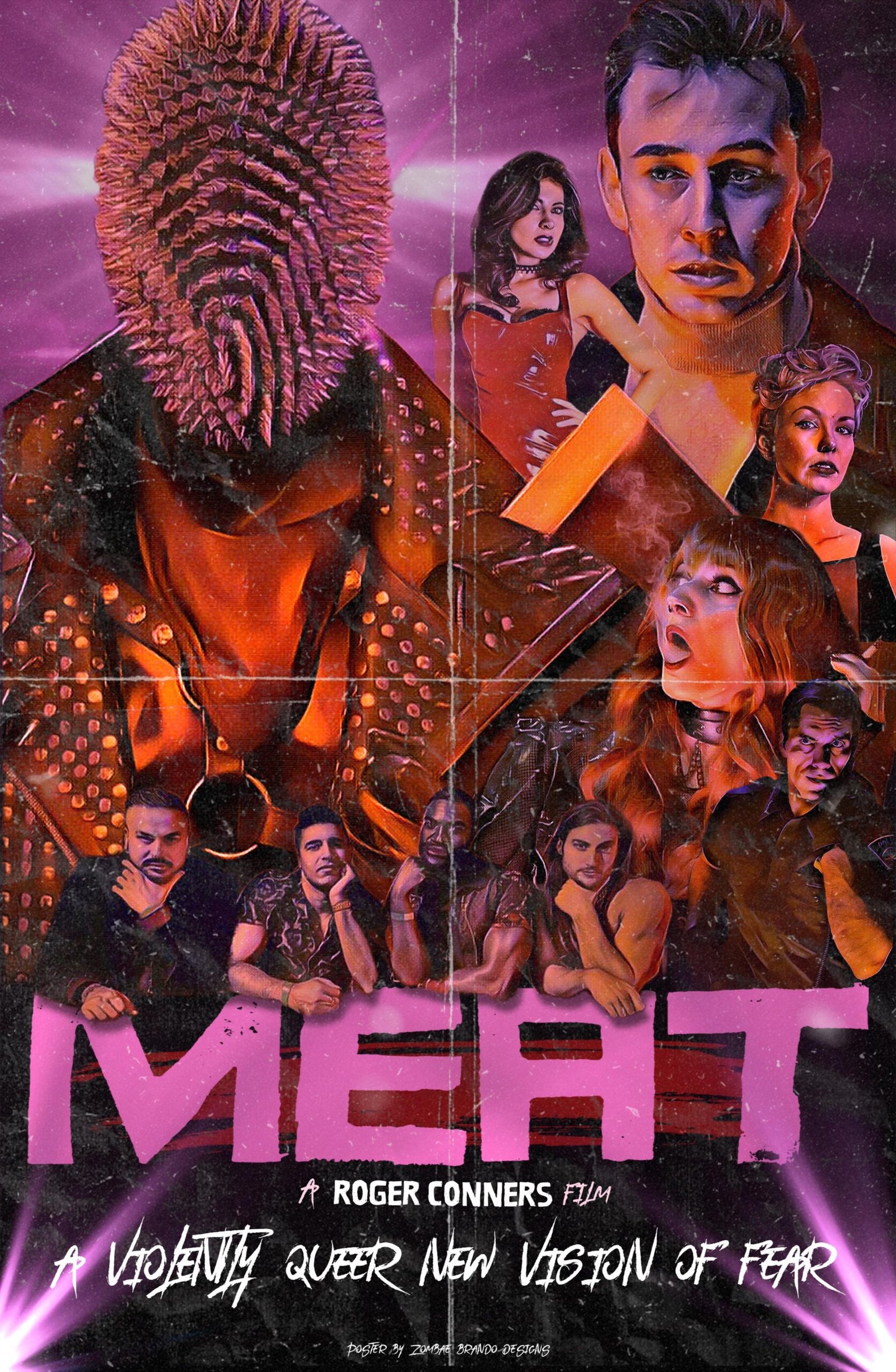
For nearly five decades, slasher films have stripped women bare and forced audiences to watch them die. MEAT flips one of horror’s oldest conventions on its back. This time, the camera points at men.
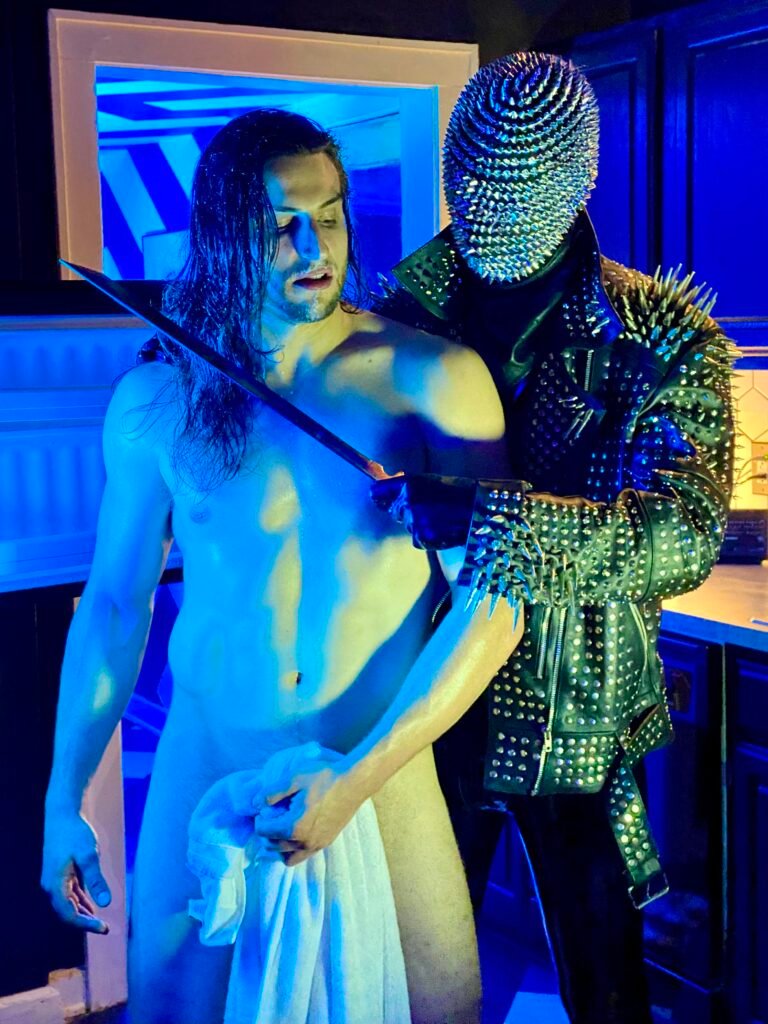
The queer slasher, written and directed by Roger Conners with co-writer R. Zachary Shildwachter, puts male bodies on display the way the genre has objectified women since the late 1970s.
The discomfort is the point. Conners, a Westlake, Ohio, native who earned the moniker “Scream Queer” through years of indie horror acting, built the film as a revenge slasher set entirely in and around Cleveland.
A masked killer called The Stud targets a group of friends responsible for a young gay man’s fatal overdose. But beneath the body count sits a provocation aimed squarely at audiences who have never had to watch themselves be consumed.
Using male nudity to challenge horror’s double standard
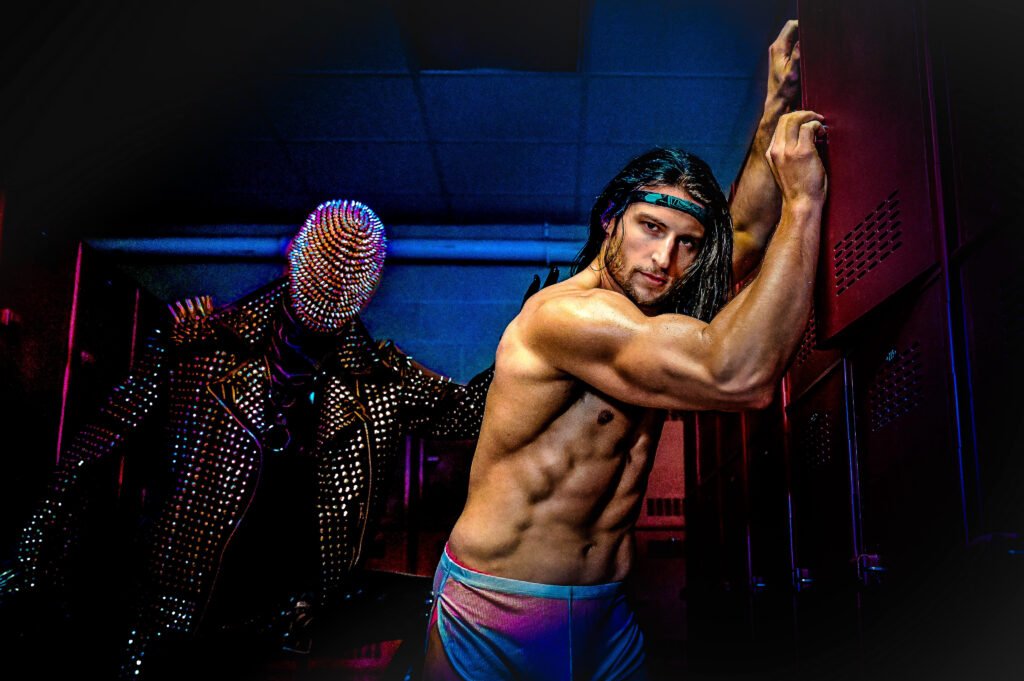
The slasher genre has a long history of putting women’s bodies on display. Since John Carpenter’s Halloween in 1978, the formula has been remarkably consistent. Female characters undress. The camera lingers. They die.
In her landmark 1975 essay Visual Pleasure and Narrative Cinema, film theorist Laura Mulvey argued that traditional cinema positions viewers inside a “male gaze”. The male gaze, Mulvey argued, was structured around a patriarchal, masculine perspective that objectifies women as passive spectacles for male viewing pleasure.
Related Articles
In Canadian horror ‘Head Like a Hole,’ capitalism is the real monster
When Male Silence Turns Monstrous
A $400 horror short film that exposes the beauty industry’s darkest secrets
‘We’re All Haunted Here’ Rethinks the Haunted House Horror Film
How sex on screen signalled death in horror films
It refers to the way traditional cinema frames women’s bodies as objects of visual pleasure for a presumed male viewer. Women become passive objects of desire. The slasher took that framework and sharpened it into a blade.
By the early 1980s, the pattern had calcified into an unwritten rule. Sex on screen signalled death. Films such as Friday the 13th and A Nightmare on Elm Street punished female characters for their sexuality with graphic violence. Scholar Carol Clover noted in her 1992 book Men, Women, and Chain Saws, that while male and female characters died at comparable rates, only female death scenes were routinely paired with nudity. The camera knew how to follow a woman through a dark hallway and linger on her fear. It did not do the same with men.

Conners wanted to know what happens when the lens turns around.
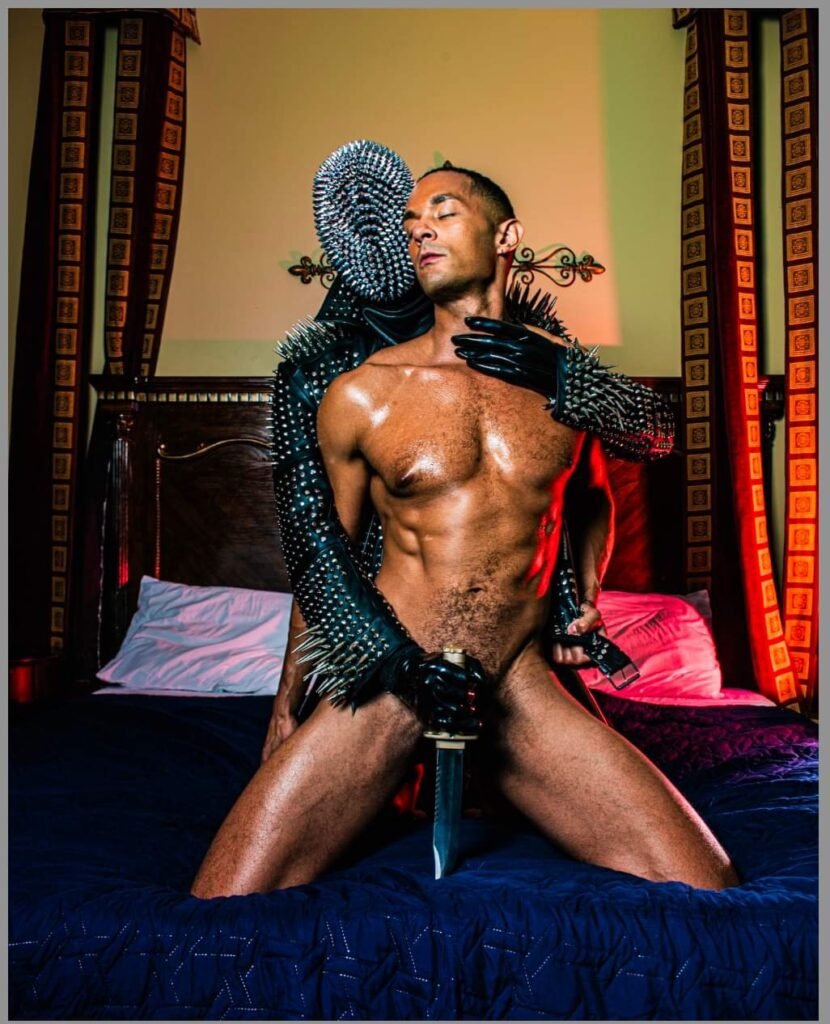
“There’s something shocking about male nudity, and it can really make the casual moviegoer very uncomfortable,” Conners said. “I want people to be uncomfortable.”
The discomfort isn’t accidental. Conners said the title alone sets up limitless double-entendres, and he leaned into every one. But he was strategic about when skin appears on screen.
“When people are nude in this film, it’s with intentionality,” he said. The film uses voyeurism to place its characters in vulnerable positions as they simply go about their lives.
That vulnerability carries a deliberate message. Conners said straight male viewers need to feel the unease that women and queer horror fans have absorbed for years. It’s a discomfort those audiences have simply learned to accept. MEAT reverses the gaze. It forces the audience to sit with the same exposure the genre has demanded of women for nearly five decades.
Why queer representation in horror films demands more than token characters
Conners grew up loving horror but rarely saw himself reflected in it. Queer characters, when they appeared, were punchlines or villains.
“I’ve always craved real, genuine LGBTQIA+ representation, and that inspired me to take matters into my own hands,” he said.
MEAT’s characters are layered, flawed and authentically queer. Conners said he avoids depictions that read as parodies or stereotypes. That deliberate complexity makes the violence hit harder.
“If you give the audience characters that are layered and nuanced and truer to life, it makes the horror elements a bit easier to digest,” he said. The film doesn’t shy away from depicting queer individuals dying on screen. But every death is executed with thought behind who is being targeted and why.
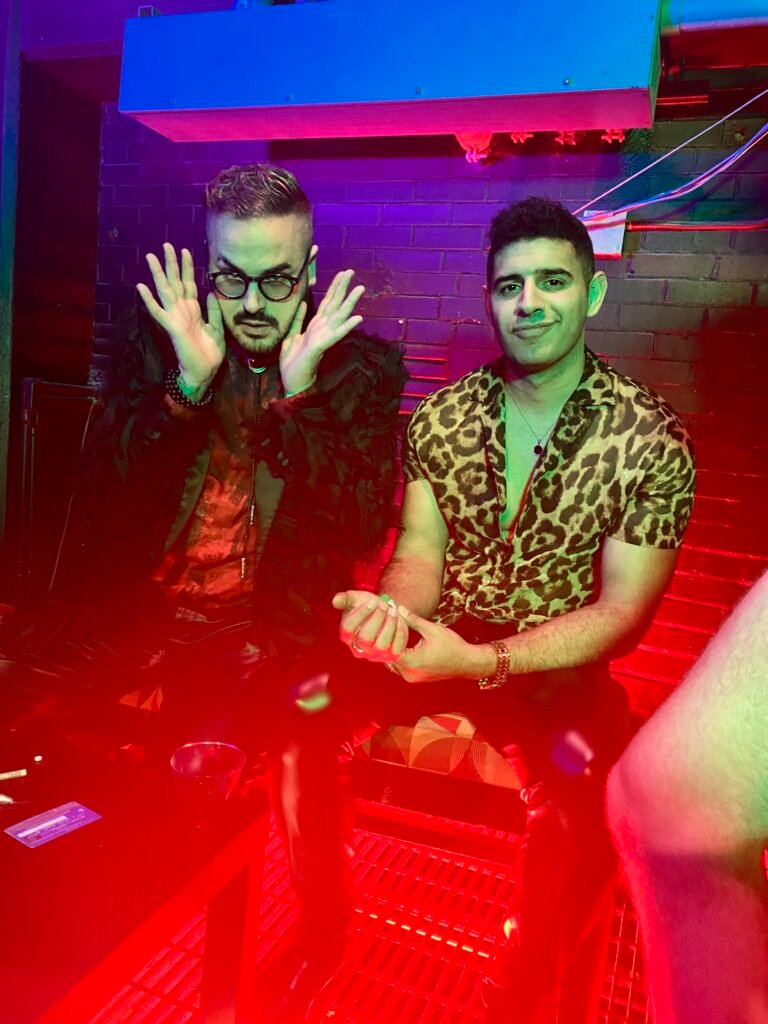
One standout is Mohamed, a queer Muslim Arab character played by Hussein Hassan. The role was originally written as Puerto Rican. When Hassan auditioned, Conners and Shildwachter rewrote the character entirely.
“Including a Muslim character in a queer slasher entitled MEAT doesn’t feel like it should be a big deal,” Conners said. “Any opportunity we have to amplify oppressed voices, we’re going to do it.”
The Stud: designing a queer slasher villain in fetish wear
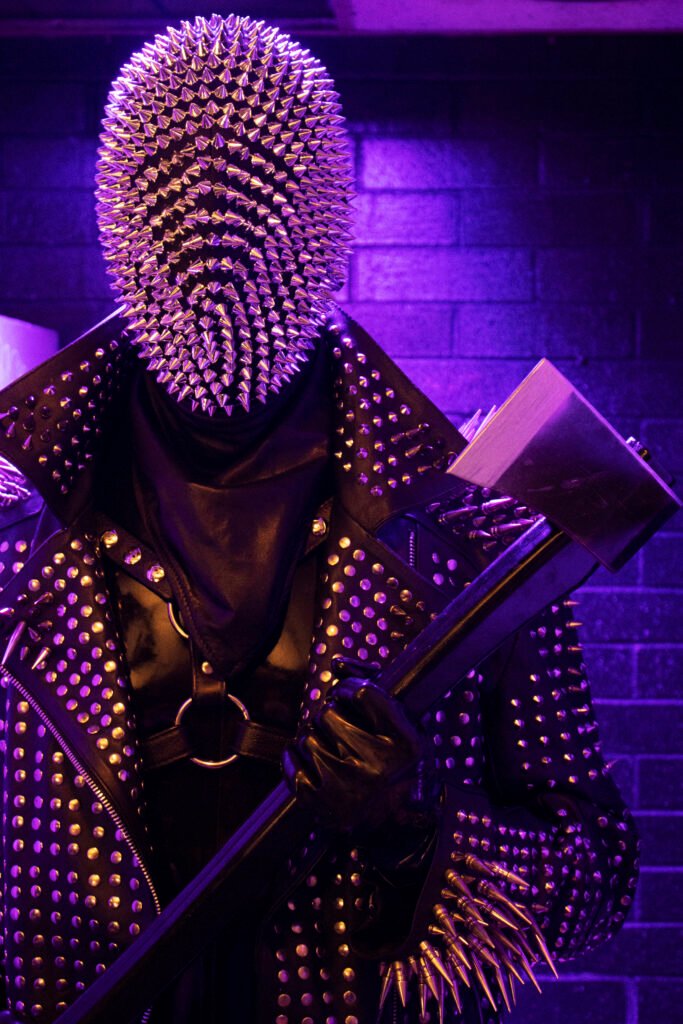
The Stud draws from leather culture, kink and punk aesthetics. Conners wanted a killer who read as both threatening and fashionable.
“I took heavy influence from fetish-wear and the kink scene, incorporating a harness, fisting gloves, and elements of latex and rubber,” he said. Sharp metal studs cover the costume, turning the character into a walking weapon.
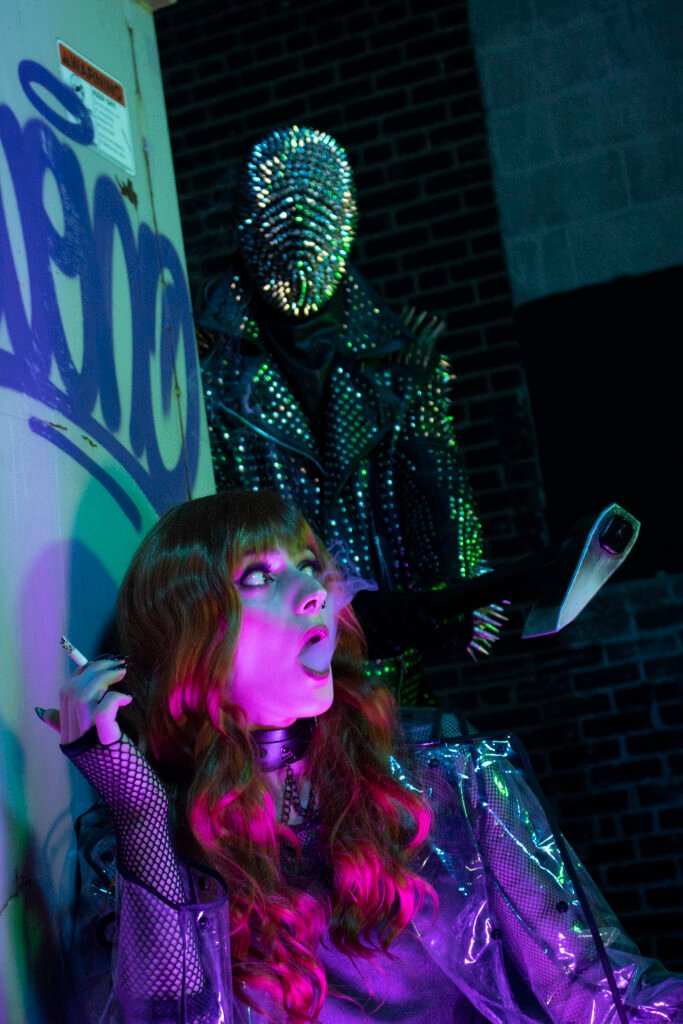
Conners cited influences ranging from vintage gay leather imagery to Billy Idol to creepypasta villains to the cult film Party Monster. The metallic elements serve a cinematic purpose, too. Lit properly, The Stud glows — an effect Conners exploited during scenes involving characters under the influence of drugs.
The film’s subplot rooted in the fashion world ties directly into the killer’s presentation. The Stud is fast, stealthy and lethal on impact.
How Cleveland’s political climate shaped the final cut of MEAT
Conners began writing MEAT around 2015. What started as a call for better representation became something more urgent.
“What began as an opportunity for better LGBTQIA+ representation has turned into an artist’s war cry amidst a time of intense persecution and discrimination,” he said.
Production wrapped in late 2024, just before the political situation in the United States intensified. That shift changed Conners’ approach to the edit. Queer-centric material that had been cut for runtime went back in.
“Seeing everything starting to boil over made me rethink my approach,” he said. “I opted to throw my runtime concerns out the window.”
The film was shot entirely in Ohio, predominantly in Cleveland’s Greater Cleveland area. Locations included Gordon Square, Ohio City, Lakewood and a mansion sequence in Hocking Hills. Conners acknowledged Ohio is a conservative state, but said Cleveland operates as a progressive enclave within it.
Romero, Raimi and the indie horror film roots behind MEAT
George Romero’s Night of the Living Dead was the first horror film Conners ever saw. It shaped everything that followed.
“I learned at a young age the importance of weaving socially relevant content into your narratives,” Conners said. Both Romero and Sam Raimi taught him that budget doesn’t determine vision.
Conners wanted MEAT to follow that tradition. He’s a filmmaker playing by his own rules, on his own dollar, producing work he considers a landmark achievement within the genre.
The film premiered at the Capitol Theatre in Cleveland in June 2025. It has since screened at the Atlanta Horror Festival, Houston Horror Film Fest, and Toronto Indie Horror Fest, and was an honourable mention at Buried Alive Film Festival. It also won Best Director and Best Actor at Houston.
Conners also co-hosts Dark Night of the Podcast with fellow filmmaker Troy Escamilla. The show began during COVID-19 as a social outlet. It’s approaching its sixth anniversary this summer.
What MEAT means for queer horror fans and the genre’s future
Conners hopes MEAT gives queer audiences exceptional representation. But he also wants the broader horror community to embrace it as a slasher on its own terms.
“If you’re a progressive minded person and can hang with the queers and the other misfits that commune with us, I like to think you’ll find plenty of great moments,” he said.
The film explores drug abuse within the queer community without flinching. Conners drew from personal loss. He said the resentment from losing loved ones to hard drugs still lingers, and he poured that grief into the film’s first act.
MEAT runs long. Conners has made peace with that. The extra runtime ensures viewers experience something unfiltered at a moment when that kind of visibility carries weight.
“My building frustration, rage, pain, depression, and intense pride in my community are the building blocks of which this piece of cinema was constructed,” he said.

1 Comment
How Found Footage Horror Movies Shaped Analogue's TikTok Debut - Your source for all things horror
September 9, 2026[…] How the horror film, MEAT, disrupts the male gaze […]