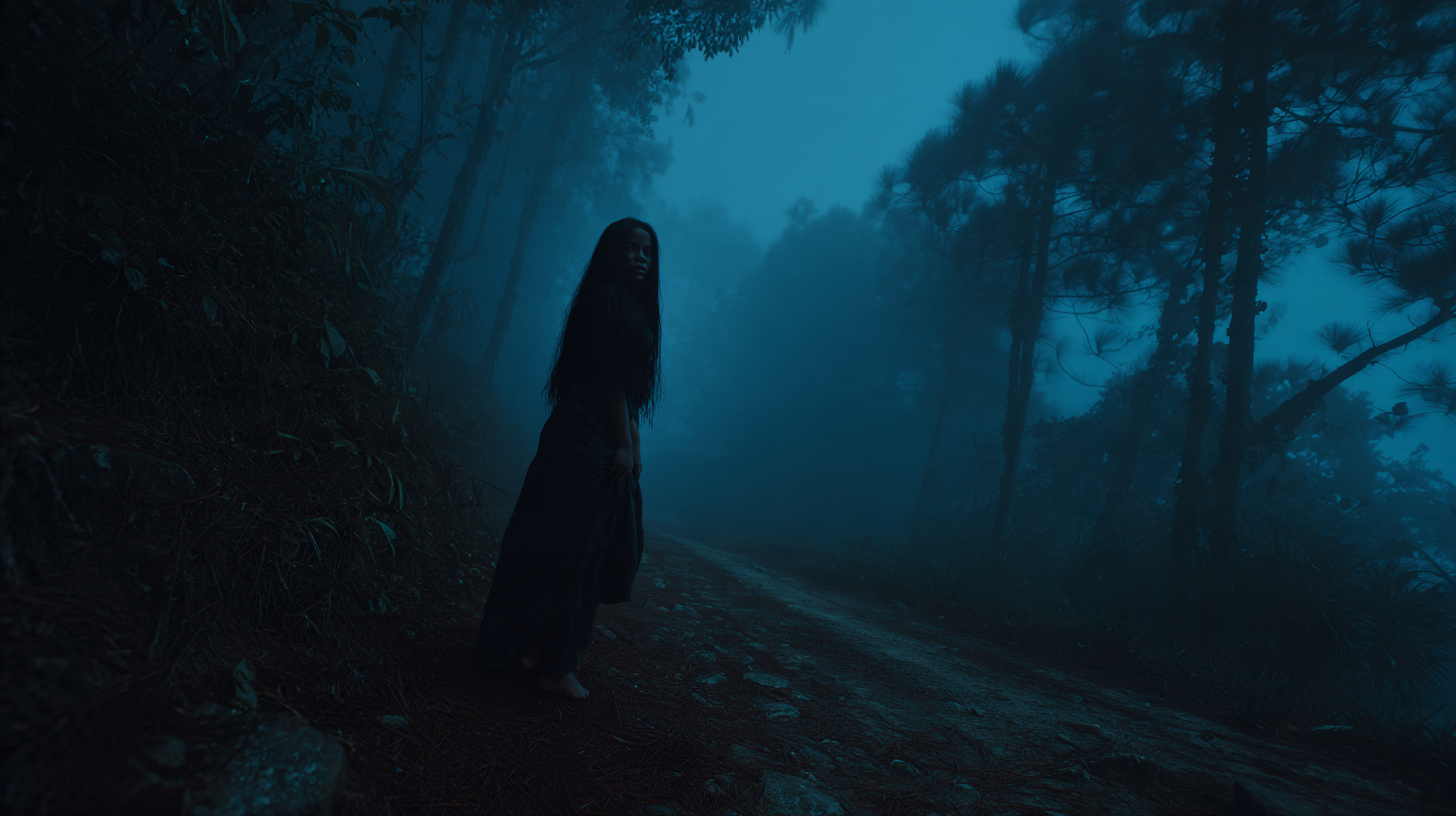
La Ciguapa is a woman of Dominican legend whose feet point backward. She lives in the high mountains, moves at night and leaves a trail that sends hunters the wrong way. Stories say men who meet her gaze may never find their way home.
This guide explains who La Ciguapa is, where scholars think the legend comes from and why the backward feet matter. It forms part of our guide to Caribbean folklore.
What Is La Ciguapa?
Dominican folklore describes La Ciguapa as a woman with long, glossy hair that covers her body. Tellers often say her skin is brown or dark blue. Her feet face backward, so her footprints seem to point toward her instead of away.
She lives in mountain forests and keeps her distance from people. Many tellers call her silent and shy. Others say she bewitches lone men and draws them into the wilderness, where they vanish. In some versions she looks lovely to one viewer and horrifying to another.
Origins of the Ciguapa Legend
Many Dominicans trace La Ciguapa to the Taíno, the Indigenous people of the island. Scholars dispute that claim. No known Taíno artifact or story describes a creature like her.
Some researchers think the legend is more recent. They point to similarities with European mermaid stories. They also note backward-footed spirits elsewhere, such as the Curupí of Guaraní tradition.
The legend first appears in print in an 1866 short story called La Ciguapa. Dominican writer Francisco Javier Angulo Guridi wrote it.
Why the Ciguapa Walks Backward
The backward feet give La Ciguapa her power. Trackers follow her prints in the wrong direction, so she escapes. Tellers say she can lead a hunter deep into the forest while he believes he is closing in.
The detail also works as a warning. A trail that points the wrong way stands for the danger of following something you do not understand. Stories like this often steer people away from remote forest at night. Some tellers say the only way to catch a ciguapa is to hunt on a full-moon night with a six-toed dog called a cinqueno.
The motif appears elsewhere in the Caribbean. Trinidad’s douen also has backward feet, as our jumbie guide explains.
La Ciguapa in Dominican Culture
La Ciguapa remains a fixture of Dominican storytelling. Writers and filmmakers in the diaspora keep reimagining her.
Dominican folklore holds other eerie figures. El Tapao, a faceless man, is said to haunt Colonial Santo Domingo. Other shape-shifting women of Caribbean folklore, such as the soucouyant, carry similar warnings about the night.
What La Ciguapa Looks Like
Descriptions of La Ciguapa agree on a few points. She is small and often described as dark-skinned, with brown or dark blue skin. Her long, glossy black hair covers her body like a mane. Her feet face backward.
Her face matters less than her effect on viewers. In some tellings, she looks lovely to one person and horrifying to another. Other tellers call her a shy forest creature who wants only to stay hidden. A third group casts her as a nocturnal enchantress who bewitches anyone who meets her gaze.
Where La Ciguapa Lives
La Ciguapa lives in the high mountains and dense forests of the Dominican Republic. She keeps to the night. She moves silently and avoids villages. Even today, some people in mountain communities say they have seen a ciguapa.
Tracking her fails because of her feet. Anyone who follows her prints walks away from her. That single detail explains why the legend has lasted so long. A hunter can never tell which way she went.
Ciguapa Cousins Around the World
Folklore elsewhere offers close parallels. The Curupí of Guaraní tradition also has backward feet. Some researchers see a link between the two legends. Others point to the many traits La Ciguapa shares with European mermaids.
Some writers have even compared her to the churel, a female ghost from South Asian folklore. Other writers call that link far-fetched, since no known route carried the story to the Dominican Republic.
Scholar Ginetta Candelario argues that the legend took shape after Spanish colonization. In her view, European mermaid stories blended with island folklore to produce the ciguapa we know today.
La Ciguapa in Print and on Screen
La Ciguapa first appears in print in an 1866 short story by Francisco Javier Angulo Guridi. Later writers kept returning to her. Yohanca Delgado’s short story Our Language uses a ciguapa as its narrator and follows her life.
Filmmakers have claimed her too. The 2009 Dominican film El Mito de la Ciguapa brought the legend to the screen. The 2021 short film La Ciguapa Siempre follows a young woman on a camping trip who discovers that she is a ciguapa.
What the Legend May Mean
Readers have found several meanings in La Ciguapa. Some see a guardian of the forest who punishes outsiders. Others see a warning about wandering into the wilderness at night. A third reading focuses on beauty and desire, since she draws men toward danger.
The backward feet tie these readings together. They show a creature who looks easy to follow and cannot be caught. Her legend reminds listeners that the trail they trust may lead the wrong way.
Common Questions About La Ciguapa
How do you pronounce ciguapa?
Say it see-GWAH-pah.
Is La Ciguapa a Taíno legend?
Many Dominicans say so. Scholars dispute the claim, because no known Taíno artifact or story describes a creature like her.
Is La Ciguapa dangerous?
It depends on the teller. Some stories show a shy creature who avoids people. Others warn that she lures lone men to their deaths.
Who is El Tapao?
El Tapao is another Dominican legend. The faceless man is said to haunt Colonial Santo Domingo.
La Ciguapa at a Glance
- Origin: Dominican Republic folklore
- Appearance: a small woman with long hair that covers her body and feet that point backward
- Home: the high mountains and dense forests
- Habits: nocturnal, silent and hard to track
- First in print: an 1866 short story by Francisco Javier Angulo Guridi
- Disputed origin: popularly called Taíno, though scholars find no Taíno source
Why the Mountains Suit the Legend
Dominican geography gives the legend room to breathe. The Cordillera Central covers rugged, forested country, and it holds Pico Duarte, the highest peak in the Caribbean. Remote slopes like these make a fitting home for a creature who avoids people and cannot be tracked. The setting also helps explain why so many stories end with a lost traveller.
Related Articles
Caribbean Folklore: A Field Guide to Monsters and Haunted Places
Jumbie: A Guide to the Spirits of Caribbean Folklore
Soucouyant and Ole Higue: The Caribbean’s Skin-Shedding Vampire