
By Ali Zafar
Nayla Al Khaja, the first female Emirati director, is redefining the horror genre by weaving her cultural heritage into stories that resonate both locally and internationally.
Al Khaja spoke with the Creepy Current about her journey into horror filmmaking, the challenges of balancing suspense with cultural sensitivity, and her upcoming projects that delve deep into the psyche of her characters.
“What drew me to the horror genre for Three was its unique ability to tap into raw, primal emotions, making it an incredibly powerful tool for storytelling,” Al Khaja explains.
“Horror allows me to explore themes that are often left untouched—fear, the unknown, and deeply buried societal anxieties.”
Her film Three is a testament to this philosophy.
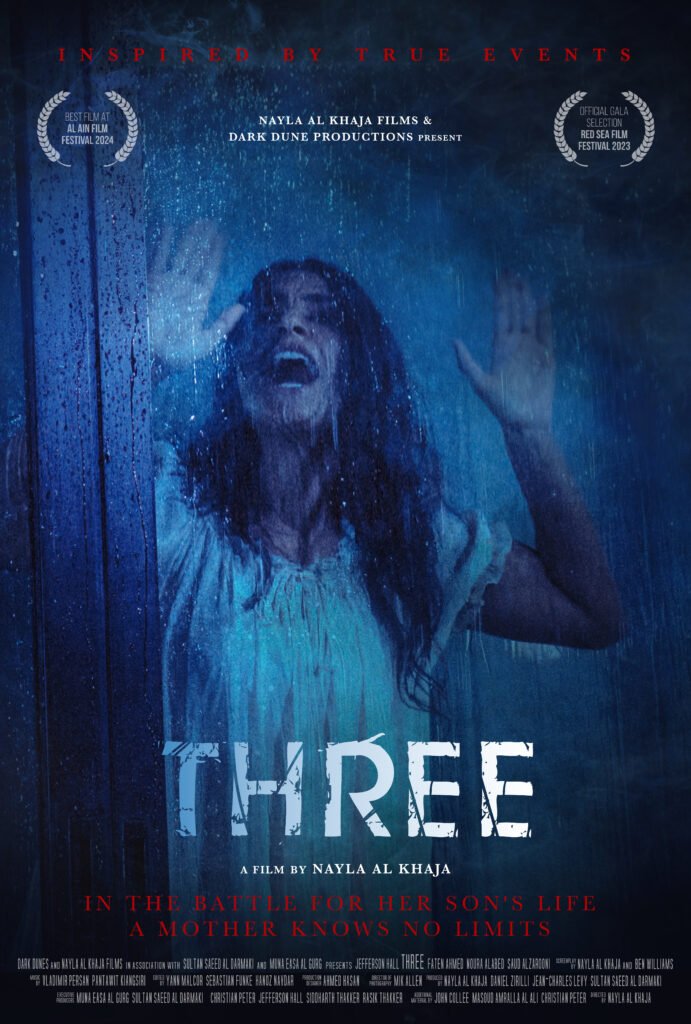
Three is a psychological horror thriller that centres on Ahmed, a 12-year-old boy in Dubai who begins exhibiting disturbing behaviour and physical changes. His divorced mother Maryam finds herself torn between seeking help from a Western doctor who believes Ahmed’s issues are medical, and her sister who suspects demonic possession.
The story explores the clash between modern medicine and traditional Islamic beliefs, while delving into themes of mental health, family dynamics, and cultural identity.
Adding Arab and Emirati Elements into Horror
By incorporating elements of Emirati culture, Al Khaja offers a fresh perspective within the genre.
“I draw from the rich heritage of Emirati folklore, where stories of jinn, the supernatural, and traditional beliefs about death and the afterlife have long been a part of the oral storytelling tradition,” she says.
These cultural touchstones provide a foundation for creating psychological tension and mystery that is both authentic and engaging.
One such element is the Ghaf tree, a symbol deeply rooted in Emirati culture.
“The Ghaf tree holds significant cultural and symbolic meaning in the UAE, not only as a symbol of resilience and survival in the desert but also in terms of local supernatural beliefs,” Al Khaja notes.
“It’s believed that jinn take refuge under these trees, especially at night, and locals are often cautious about disturbing Ghaf trees or even being near them after dark.”
Navigating the delicate balance between crafting suspenseful narratives and maintaining cultural sensitivity is a challenge Al Khaja embraces wholeheartedly.
“In Three, I wanted to create an experience that is unsettling and immersive, but without crossing cultural lines that could feel disrespectful or alienating to the audience,” she says.
Respect for family, religion, and community is paramount in Emirati society, and Al Khaja is careful to honour these values while exploring themes of fear and psychological tension.
The theme of possession in Three is inspired by both cultural and personal influences. “In Emirati and broader Middle Eastern folklore, the concept of possession, particularly by jinn, has long been a powerful narrative element,” she explains.
Considering both Emirati and International Horror Lovers
By consulting with cultural and religious experts, she ensures that these themes are portrayed with accuracy and sensitivity.
When creating her films, Al Khaja envisions an audience that appreciates psychological thrillers and suspense.
“They’re not just looking for jump scares; they want to feel a connection to the characters and be taken on a journey that explores the human condition in a way that’s both unsettling and thought-provoking,” she says.
This approach resonates with both Emirati and international viewers, bridging cultural gaps through universal emotions.
Discussing her upcoming film BAAB, Al Khaja describes it as an indie fantasy horror film with a deeply personal and introspective narrative.
The film delves into the psychological and emotional stages experienced by a woman suffering from tinnitus after the unexpected loss of her twin sister.
“It’s a visceral journey into the protagonist’s inner world, dealing with themes of loss, identity, and the subconscious,” she says.
BAAB differs from Three in its stylistic and thematic approach. While Three is grounded in psychological horror, BAAB incorporates a “fantastical, almost mythical layer,” blending horror with surreal, dreamlike elements. This allows Al Khaja to explore metaphysical concepts and the manifestations of grief in symbolic ways.
Her method of building tension and atmosphere is rooted in immersion. “I focus on creating an immersive experience that draws the audience into the characters’ emotional journey,” she says. Through visual storytelling, sound design, and deliberate pacing, she crafts a sense of unease that slowly builds.
“Sound design plays a crucial role,” Al Khaja adds. “In BAAB, the protagonist’s tinnitus is central to the sound design, weaving discomfort and tension into the narrative itself.”
Al Khaja’s short film The Shadow, available on Netflix, serves as a precursor to her feature-length works. While more contained, it touches on psychological and emotional aspects of fear similar to those explored in her longer narratives.
“It allowed me to explore how much can be conveyed with very little and gave me a chance to focus intensely on atmosphere,” she reflects.
Reflecting on Being the First Female Emirati Director
Being the first female Emirati director carries both honour and responsibility for Al Khaja. “I’ve had to break barriers and overcome preconceived notions about what a woman, particularly from this region, can achieve in the film industry,” she says.
She hopes to inspire the next generation of female filmmakers, demonstrating that Emirati stories and perspectives are valuable on the global stage.
Her influences span from Guillermo Del Toro’s Pan’s Labyrinth to the classic suspense of Alfred Hitchcock.
“Del Toro’s use of symbolism, practical effects, and focus on storytelling over shock value is something I deeply admire,” she says. These inspirations inform her dedication to creating horror films that are not only terrifying but also deeply meaningful.
Al Khaja believes that Emirati filmmakers have much to offer the horror genre.
“We can offer a nuanced take on horror that reflects the societal dynamics of the region, such as the tension between tradition and modernity, family obligations, and cultural identity,” she explains.
The Growing Appetite for Horror In the UAE and greater Middle East
The landscapes of the UAE and its untapped folklore provide a rich backdrop for new narratives.
The appetite for horror in the UAE and the broader Middle East is evolving.
“Audiences are looking for stories that not only scare but also explore deeper themes that resonate with their personal and cultural experiences,” Al Khaja says. There is a growing demand for films that blend suspense with social and spiritual themes, reflecting a shift in viewer preferences.
When asked what scares her most, Al Khaja candidly admits, “Fear of tight spaces. Claustrophobia.”
This personal vulnerability perhaps informs the confined, tense atmospheres she skillfully creates in her films.
Her favourite horror classics, The Exorcist and Rosemary’s Baby, reflect her appreciation for narratives that delve into psychological and supernatural realms.
“Balancing horror elements with the exploration of social themes is a delicate but purposeful process,” she says. By intertwining the two, she makes the fear resonate more deeply because it is tied to something real and relatable.
Nayla Al Khaja is not just crafting films; she is shaping a narrative landscape that honours her heritage while pushing the boundaries of genre and expectation.
Through her work, she invites audiences to confront their fears, question their realities, and explore the shadows that lie just beneath the surface.