Jamesie Fournier was in college in Fort Smith, N.W.T., when a day of ice fishing went wrong.
The man who took the group out had made his ice chisel by hand. He had soaked the wood for about a year, peeled off the bark, sanded it and stained it. The rule was to wrap its string around your hand, so it couldn’t fall off when you broke through the ice.
Fournier did exactly that. Five minutes later, he broke through the ice, and the chisel slid off his hand anyway. It sank to the bottom of the lake.
“We all just go so quiet, because this is exactly what he told us not to do, and I just went ahead and did it,” Fournier said.
Then came a thought.
“I wish there was someone underneath the ice who could get the chisel for us,” he said. “That’s when it dawned on me that I do know someone who lives underneath the ice.”
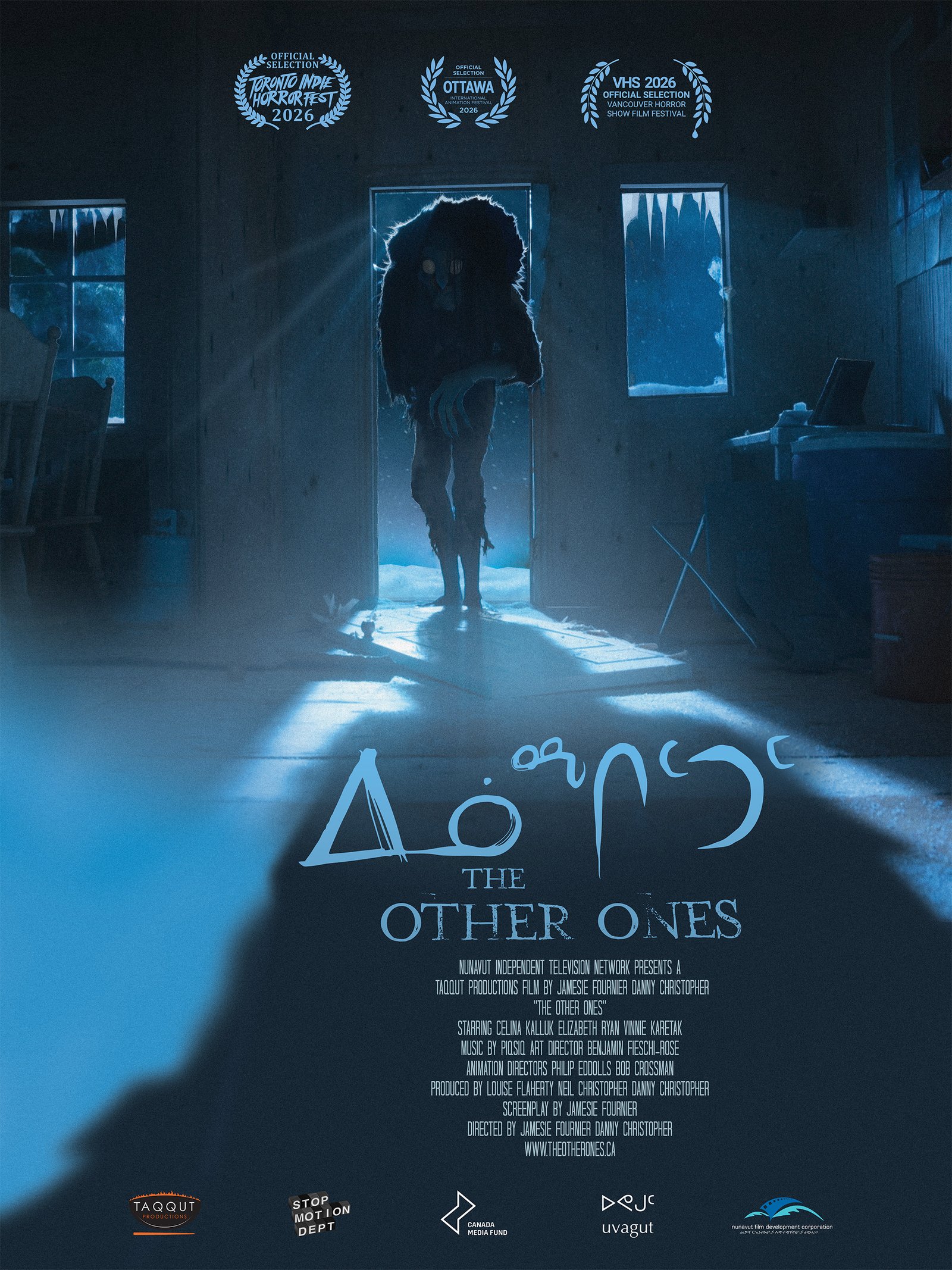
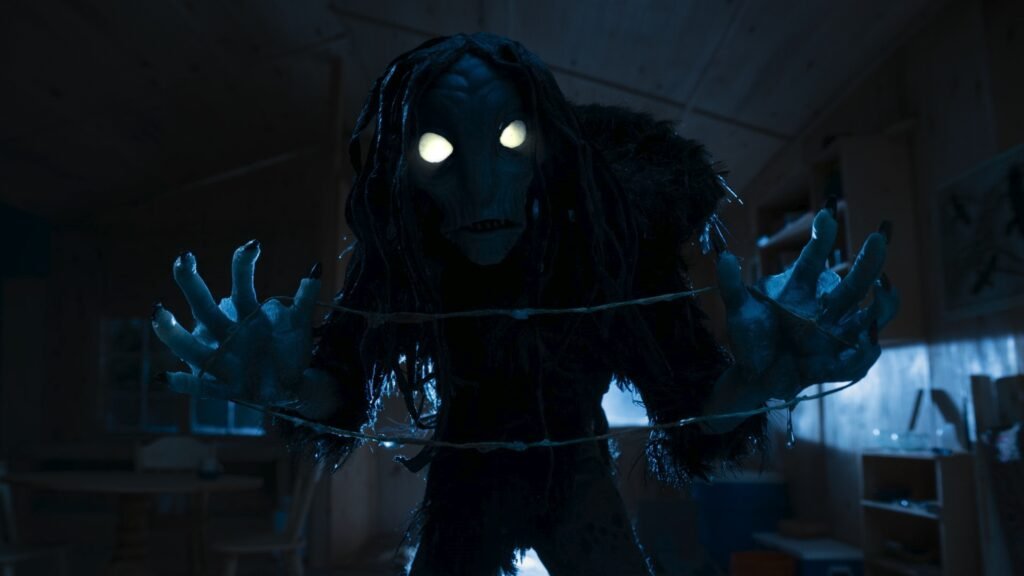
That someone was the Qallupilluq, a child-stealing spirit from Inuit legend. It became the monster of “The Other Ones,” a stop-motion horror short that Fournier co-directed with Danny Christopher. The film grew from his 2022 book of the same name, published by Inhabit Media.
“The Other Ones” screened at the Toronto Indie Horror Fest, and it’s also screening at the Blood In the Snow film festival.
It arrives at a promising moment for Indigenous horror, a subgenre that is only beginning to realize its potential.
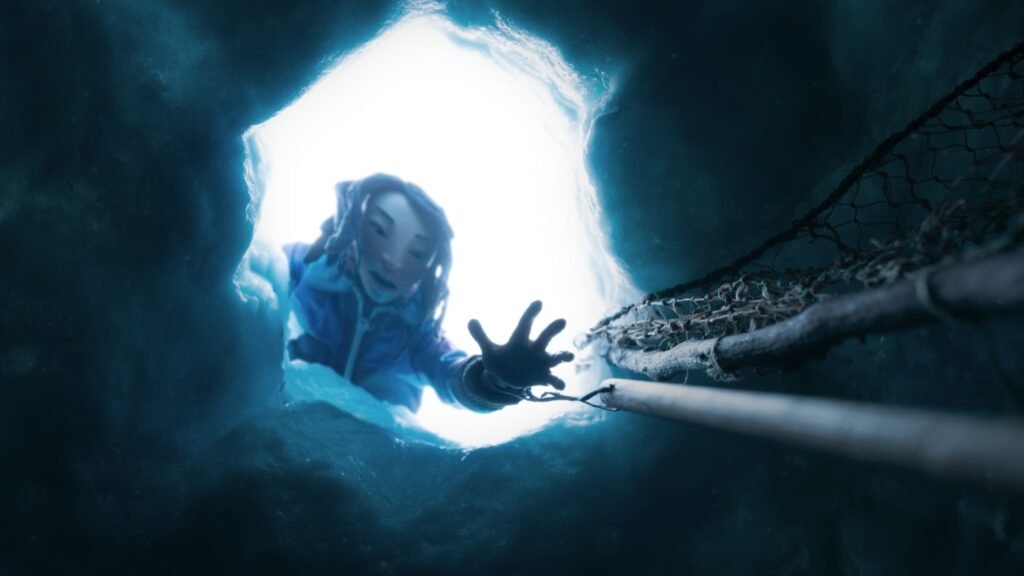
Table of Contents
An old warning, a new film
In Inuit tradition, the Qallupilluq lives beneath the ocean ice. It steals children who stray too close to the cracks. The plural is Qallupilluit.
Traditionally, the creature is seen as female. It wears an amauti, a woman’s garment with a large hood, and keeps its captives inside.
Fournier grew up on the stories. His mother used them to keep her children in bed at night.
“My mother used to tell us scary stories when we were kids,” he said. “It’s just to make us be quiet and stay in bed.”
Later he found the legend in print. “A Promise Is a Promise,” by Michael Kusugak and Robert Munsch, is a children’s story that doesn’t flinch from the creature’s darker side.
“It is a children’s story, but it is a children’s story that doesn’t shy away from the creepy and disturbing aspects of these creatures,” Fournier said.
He thinks of the monsters as a kind of protection.
“I like to think of these creatures as agents of a spiritual immune system, almost like antibodies,” he said.
His film moves the creature somewhere unexpected. It is set not on Arctic sea ice but on a lake in boreal forest and Canadian Shield country in the 1990s. Fournier said he had always felt a little left out, because the great monsters of the stories weren’t from where he lives.
So he wrote one for home. A mother and daughter awaken the creature at an island cabin, with no way off except across the water.
Related Articles
Species (Sanguine) Is A French Body Horror Built for a Burned-Out Generation
Whalefall Movie Review: A Creature Feature With Grief in Its Belly
The land that doesn’t care
Ice offers comfort, until it breaks.
“You’re out there in the winter,” he said. “You got all your winter gear on. Everything’s weighing you down. And you’re up against this creature that is very much at home in the water.”
Ask him what makes the north so fertile for horror, and he starts with isolation.
“There’s a sense of desolation and isolation that comes with this,” he said. “You’re left with this sense of isolation, that you’re out there on your own and you could very well disappear.”
That sensation is the engine of Arctic horror, and the danger is real.
“If you fall through the ice, that is almost like a death sentence right there,” he said. “There’s always the ‘what if’.”
He says he finds comfort in the cold. The land is another matter.
“Yeah, the landscape does not care,” he said.
Why stop-motion
Fournier’s reason for choosing stop-motion is simple.
“Well, because it’s fun,” he said.
Horror, he added, suits the form.
“Puppets are kind of inherently creepy to begin with,” he added.
The short was produced by Taqqut Productions, Inhabit’s film company, with offices in Toronto and Iqaluit. Toronto’s Stop Motion Department built and shot the scenes.
Vinnie Karetak, known for “North of North,” voices the creature, and he needed little direction. Fournier had prepared a speech about influences and motivation.
“He stopped me before I even started: ‘Nope, I got this, Jamesie,'” Fournier recalled Karetak saying.
The score is by PIQSIQ, the Inuit throat-singing duo. Funding came from the Canada Media Fund, Telefilm, the Nunavut Film Development Corporation and the Canada Council for the Arts.
The film is in Inuktitut, and Fournier said that matters to audiences, who get to hear their language and see themselves reflected on screen.
Indigenous horror: A subgenre with room to grow
Fournier is excited about where the stories go next.
“It’s really exciting how the next generations are going to be able to take these stories and make them their own,” he said.
He is working in a field with real momentum. The British Film Institute, in a recent guide to the subgenre, points to Jeff Barnaby’s “Blood Quantum” (2019), a zombie film set on a reserve where Indigenous people are immune.
The BFI argues that Canada’s Indigenous horror has flourished partly because more funding has been available. In March 2024, the federal government announced $65 million over five years for the Indigenous Screen Office, plus $13 million a year after that.
The United States looks different. The BFI notes that far less Indigenous-made horror has emerged there, and that many films drawing on Native folklore come from non-Native filmmakers.
Scholars have noticed. Laura Hall, a Carleton University professor, argues in her 2025 book “Bloodied Bodies, Bloody Landscapes” that mainstream horror has long cast Indigenous people as cannibals, demons and ghosts. She says Indigenous creators should shape the stories.
Fournier has added to the shelf himself. For the second “Taaqtumi” anthology of Arctic horror from Inhabit, he wrote about the amautalik, a creature similar to the Qallupilluq, but on land.
“The Other Ones” is also one of six shorts in “Alianaqtut,” a package of Inuktitut horror from Taqqut Productions.
What comes next for Fournier
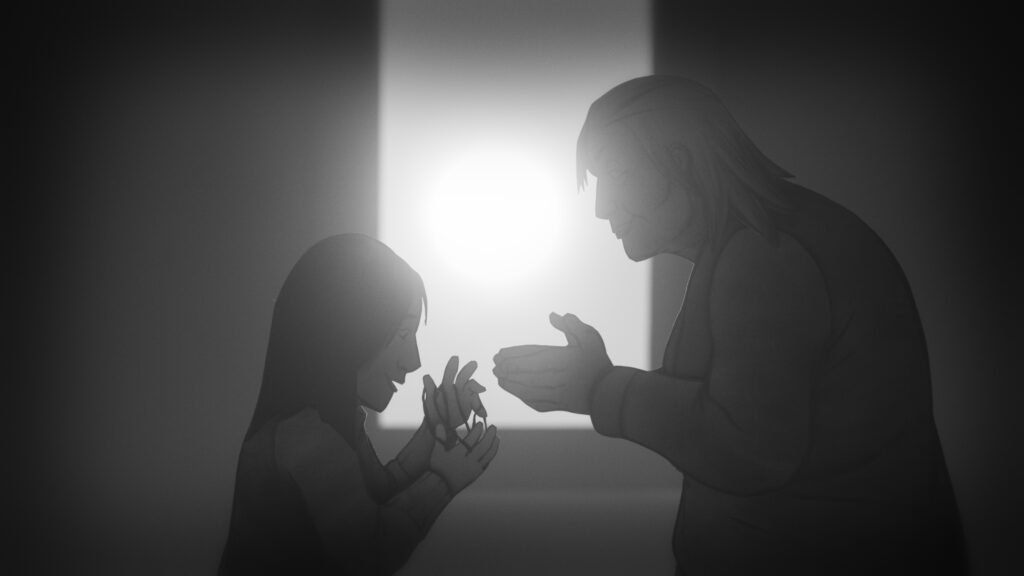
The next film for Fournier is “Kiviuq and the Bee Woman.” Kiviuq is one of the legendary heroes of Inuit storytelling, and Fournier said there are something like 200 tales about him. In this one, the hero meets an ancient bee in human form.
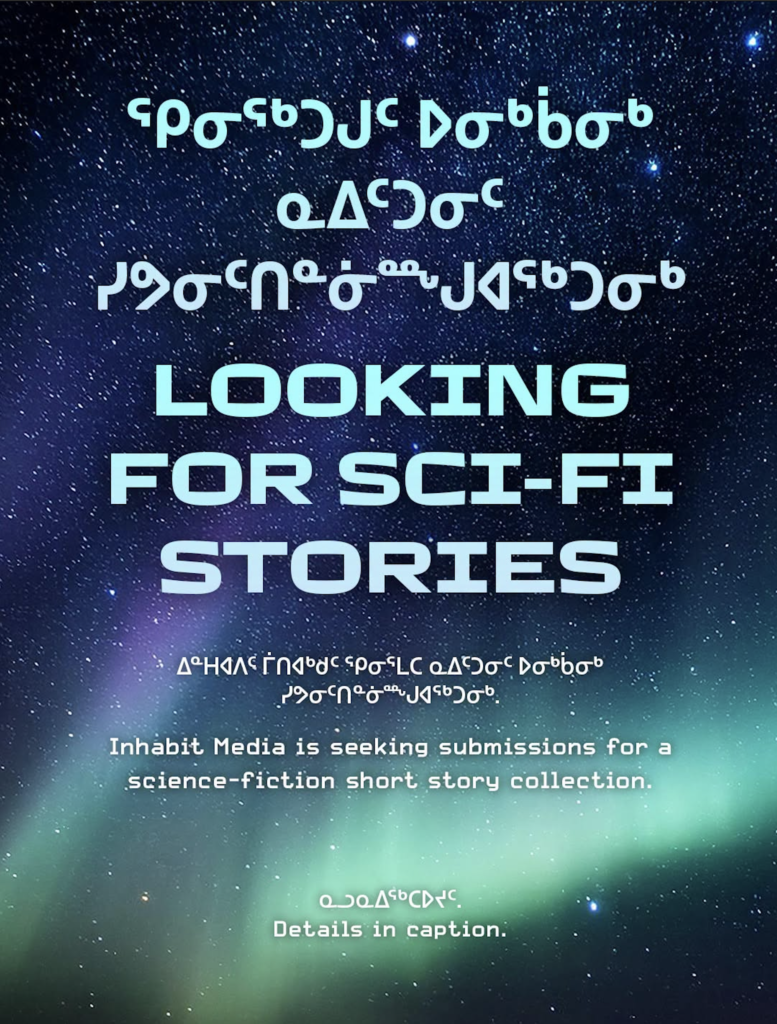
Fournier is also looking for futuristic sci-fi horror stories for a sci-fi collection that Inhabit Media is publishing.
Fournier’s own path as a writer began with a book. In Grade 6 or 7, he came across Richard Van Camp’s novel, “The Lesser Blessed” in Yellowknife, a story about Indigenous teenagers set in places he knew.
Seeing the novel changed something.
“Seeing that was kind of a big moment for me,” he said.
In the film’s opening scene, a character takes a book off a shelf. Look closely and it is Van Camp’s novel, rebuilt as a tiny replica. Somewhere in a puppet’s house sits the book that told a schoolboy he was allowed to write.