
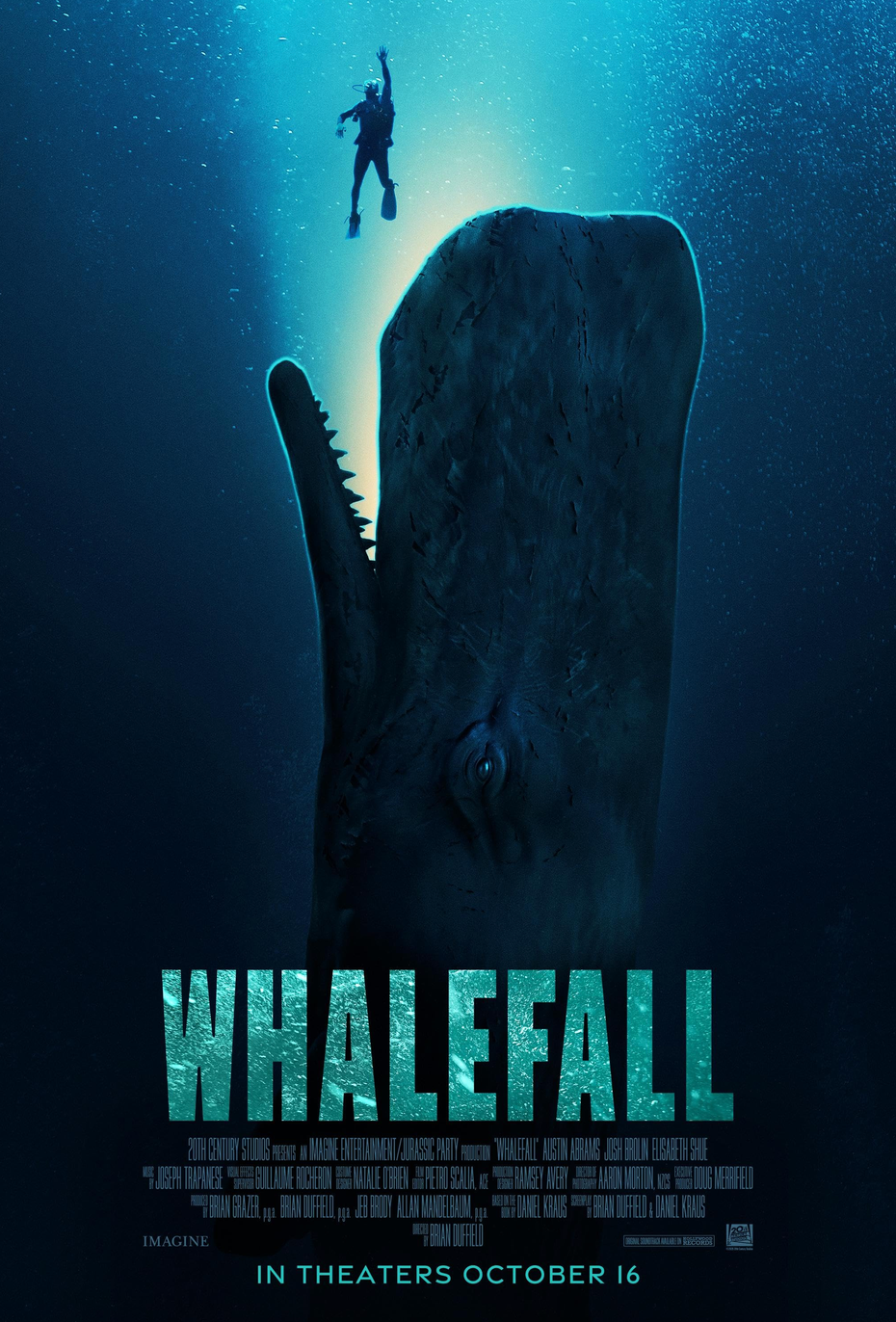
Horror and thrillers often make the best conduits for trauma. Fear gives pain a shape that an audience can face, and a monster gives grief somewhere to live. “Whalefall” understands that.
I watched it at the Toronto After Dark Film Festival, where it had its Canadian premiere on Oct. 14. The “Whalefall” movie turns the terror of being swallowed by a sperm whale into a story about losing a father. It is a survival thriller with creature-feature bones and a surprisingly raw emotional core, and I enjoyed it a great deal.
Director Brian Duffield adapts Daniel Kraus’s 2023 novel, and Kraus co-wrote the screenplay. Austin Abrams stars as Jay Gardiner, a diver who searches the waters off California’s central coast for his late father’s remains. Jay gets caught between a sperm whale and a giant squid, and the whale swallows him. He has one hour of oxygen left.
That setup could have turned silly. Duffield plays it straight, and the movie is better for it.
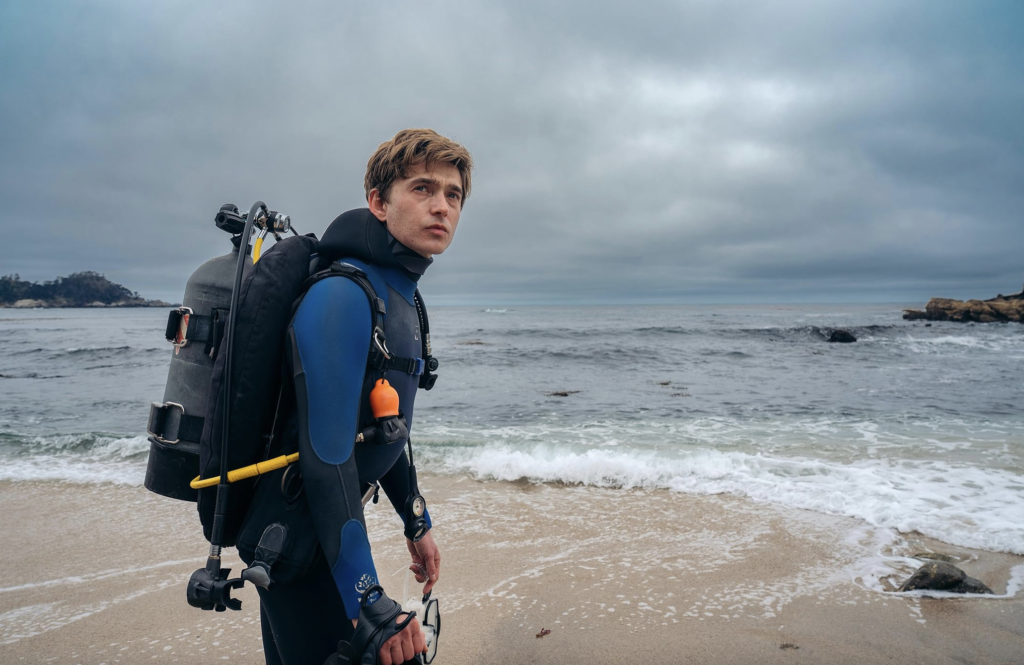
Table of Contents
What the Whalefall movie gets right
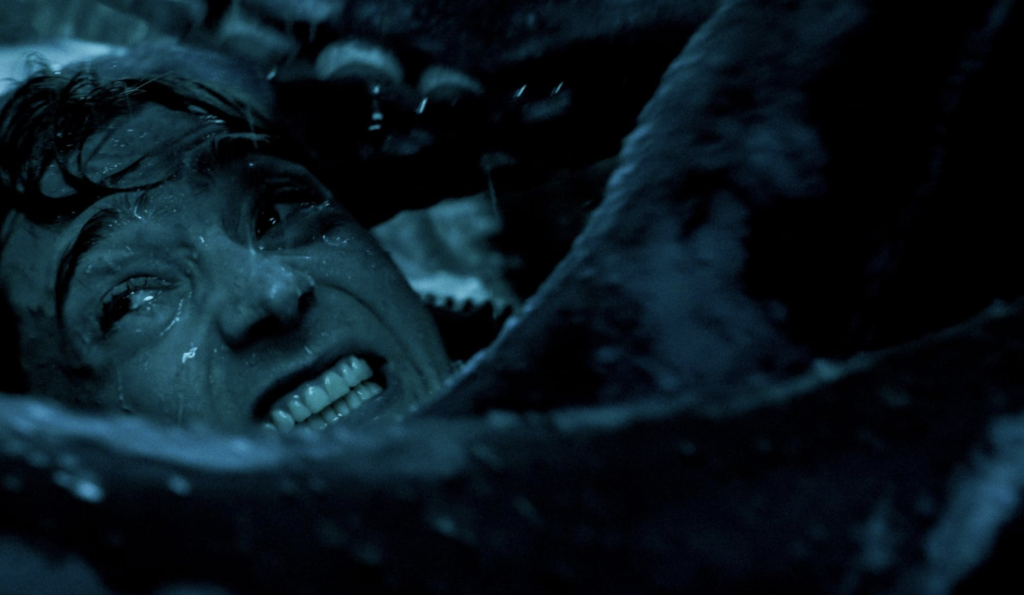
The oxygen countdown is the film’s best tool. Every minute inside the whale costs Jay something, and the tension builds from that simple fact. Duffield keeps the focus tight, so the audience stays in the dark with Jay.
The filmmakers built large whale interiors and exteriors on sets. Computer-generated imagery mostly enhances those environments rather than replacing them. That practical approach gives the stomach a physical, cramped quality that digital effects alone rarely achieve. You feel the walls closing in.
The sets also move. The whale’s heart sits beside its stomach, so the chamber reacts to every beat throughout the film. It is a small touch, but it keeps the space alive. Jay never gets to forget that he is inside a living animal.
Abrams carries much of the film alone inside that whale, which is a serious test for any actor. He gives the audience a human face to follow through the dark.
The premise also forces the film to keep inventing. A story set almost entirely inside one animal could run out of ideas quickly. The film needs fresh obstacles and fresh reasons to keep watching. Duffield finds enough of them to sustain the survival story without padding it, and the pacing never sags.
The title also does quiet work. A whale fall is the term for a dead whale sinking to the seafloor. Its body then feeds deep-sea life for years. I read that as a hint that loss can sustain something new, and the film leans toward that idea.
Is Whalefall a creature feature?
Yes, with one important caveat. The whale threatens Jay through sheer size and indifference rather than malice. Duffield has described the film as the opposite of “Jaws,” and that framing fits.
A sperm whale is the largest toothed animal on Earth, reaching up to 18 metres in length and 60 tonnes. The film uses that scale to frighten. The result is a creature feature where the creature behaves like an animal.
The dread comes from enclosure and depth, a fear often called thalassophobia. Fans of monster movies will still find plenty to enjoy, because the whale is more force of nature than villain.
Duffield previously directed the alien invasion thriller “No One Will Save You.” Here he again builds a genre story around one isolated character. That focus suits a film where the whole world shrinks to a single dark chamber.
Grief and the father-son story
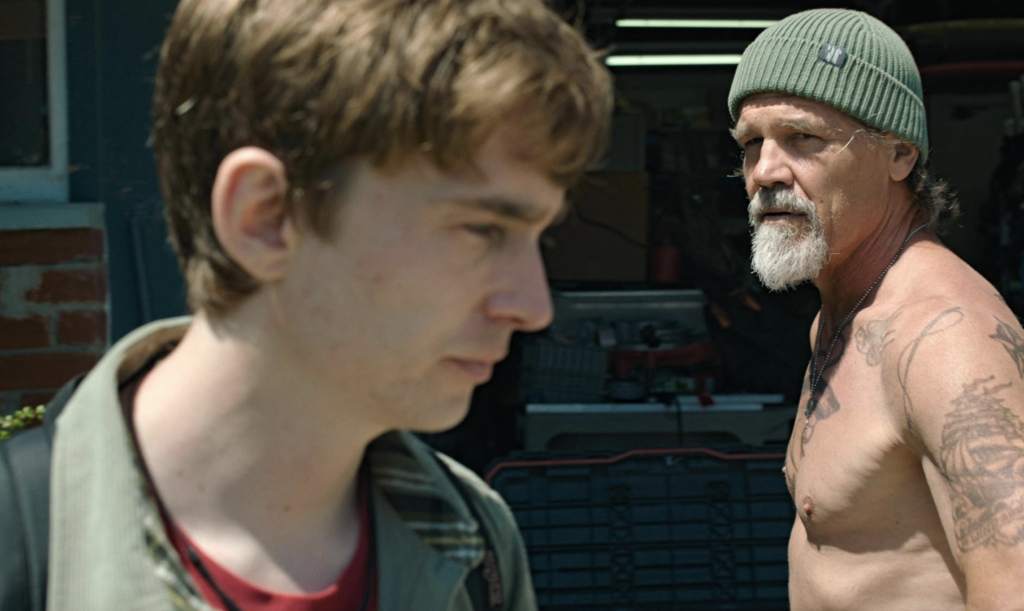
Josh Brolin plays Mitt Gardiner, Jay’s father, who appears through memory. The supporting cast includes Elisabeth Shue, John Ortiz, Jane Levy and Emily Rudd.
The film pairs the horror of being swallowed alive with the trauma of losing a parent. Jay is trapped in the dark, and so is his grief. That parallel gives the movie more weight than a typical monster story carries. It gave me something to think about after the lights came up.
The idea also changes how the survival plot works. Jay does not simply fight the whale. He has to decide whether he wants to get out at all, and that question gives the countdown a second meaning. The ticking clock measures his air and his will.
The film does stumble in one spot. The flashbacks to Jay’s father can feel jarring when they interrupt the tension inside the whale. We also learn so little about Mitt that it is hard to feel much for him.
Still, these are small complaints in a film that earns most of its emotional beats.
Related Articles
Taboo topics in horror: Some Like It Rotten pushes forbidden boundaries
Dolly: An Indie Horror Short Film with a Handmade Nightmare
Strawberry Sweet Killers Horror Short Film Mixes Sweetness with Terror
Friendship, paranoia, and the quiet terror behind the horror short film Stalker
Horror About Going Viral Explores the Dark Side of Social Media (The Poem)
How A Childhood Fascination with Horror Led to a Moroccan Masterpiece—Achoura
Thirst Trap Turns Sex Work Into A Terrifying Yet Thoughtful Horror Film
Why horror fans should see it
Sharks have dominated ocean horror for decades. “Whalefall” offers a fresh take by shifting the fear from teeth in open water to a body that has swallowed you whole.
The Toronto After Dark Film Festival is a natural home for the film. The festival has long championed genre cinema from around the world. A Canadian premiere there suited a movie this bold.
Is Whalefall based on a true story?
No. The film is fiction, adapted from Kraus’s novel. Kraus has said the idea came from a viral video of kayakers who ended up inside a whale’s mouth.
After consulting experts, he learned that a sperm whale could swallow a person under certain circumstances. Duffield admits that it would take a lot of things going wrong. The filmmakers also worked with whale experts. They say they aimed for scientific accuracy while taking some liberties for the story.
Whalefall release date
20th Century Studios is giving the film an exclusive theatrical release on Oct. 16, so the big screen is the place to see it. Sound matters here, and a theatre makes the most of it.
Final verdict
“Whalefall” is a tense and unsettling film with real feeling behind it. The father-son thread has its flaws, but the survival story is gripping and the premise pays off.
Horror fans who like scares rooted in real fears will get the most out of it. Viewers drawn to emotional stories will find a reason to stay as well. The film asks what a person does with grief when there is nowhere left to run. It answers with more heart than I expected from a movie about a man trapped in a whale.
I recommend seeing it in a theatre, preferably with a loud sound system and a steady stomach.