French horror director Talal Selhami needed an escape growing up in suburban Paris as an only child. He fended off the banality of everyday life through horror, and by dreaming up imaginary creatures.
“My fear and the fascination of creatures is directly related to my childhood. I also started watching horror films pretty young. I must have been 9 or 10 when I saw Nightmare on Elm Street,” Selhami says.
Eventually, this early fascination would shape Selhami’s distinctive cinematic voice. It culminated in his 2018 film, Achoura, a cornerstone of modern Moroccan horror.
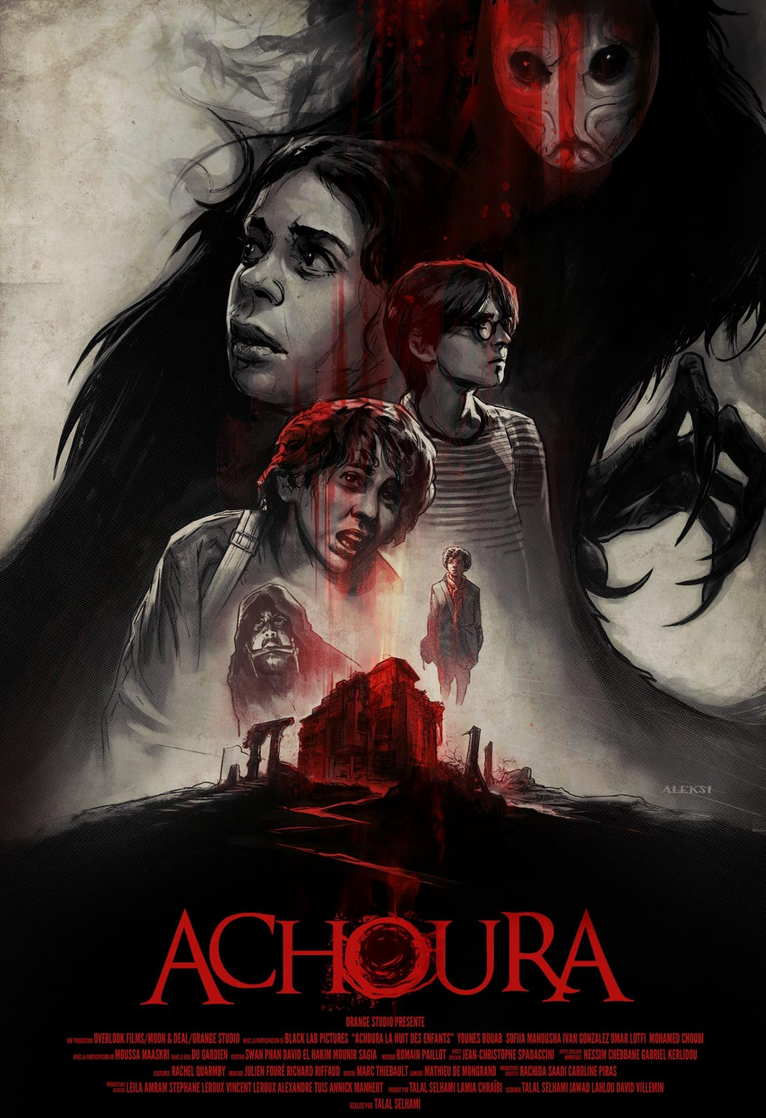
Achoura tells the story of three friends who reconnect when a long-lost companion suddenly reappears. Together, they confront terrifying events from their past and battle a monstrous creature born from Moroccan legend.
“The main idea was to make the first creature feature in Morocco,” Selhami explains. “Even in France, creature features are rare. This was inspired by a nightmare I had as a kid where I was in an elevator, the lights went out, and I saw this giant creature that could turn its head 180 degrees.”
From Paris to Morocco: A Director’s Origins
Selhami moved from Paris to Morocco at age eight. As a result, his love for film became a crucial escape from the challenges of adjusting to a new environment.
“Movies like Gremlins and E.T. were so important to our generation. Watching them felt like living something totally fantastic,” he says.
That sense of wonder and escapism directly shaped Selhami’s storytelling instincts. It also planted the seeds for what would eventually become one of the genre’s boldest Moroccan horror entries.
Achoura and the Rise of Moroccan Horror
One of the unique aspects of Achoura is its deep roots in Moroccan culture. The film draws its title, and its dread, from a real celebration.
“Achoura is a celebration of children, like a mix between Christmas and Halloween. It was the perfect context for a horror story,” Selhami says.
The film’s monster is based on the legend of Bougatate, a jinn that preys on children in their sleep. “We built this mythology around Bougatate, tying it to the history of French colonialism in Morocco,” he adds.
Meanwhile, Achoura spans three timelines, all centred on a French compound. This structure adds layers of historical and political intrigue to a story rooted in Moroccan horror tradition.
Related Articles
Desert Dread: How an Ancient Curse Inspired Saudi Arabia’s First Horror Movie
If You’re in the UAE, Watch out for Umm Al Duwais
Embracing Shadows: The Horror of Writer & Director Nayla Al Khaja
The Ghaf Tree has a Haunted History in UAE Folklore
Horror as a Universal, Political Language
Some viewers find the film’s political undertones significant. Still, Selhami sees horror as a universal language that travels well beyond Morocco’s borders.
“Horror can reflect globally. It breaks clichés and offers a different perspective on a country’s culture. I hope we can have more horror films from the MENA region. Watching horror can help you understand a culture in a way few other genres can,” he says.
Selhami’s passion for horror isn’t confined to the screen. It’s part of his personal journey, one he traces back to childhood video store visits.
“I remember going to Blockbuster as a kid, heading straight to the horror section. Today, we don’t have Blockbuster anymore, we have Netflix. Making horror films is commercially viable, it’s easier to sell a horror movie than an art-house film. The difference lies in who sells the movie and where it starts its journey, whether at Sundance or a smaller festival.”
Selhami’s earlier film, Sinistra, also explored horror and thriller elements. In doing so, it tapped into a growing appetite for the genre in both Morocco and France.
“In Morocco, there’s a young audience hungry for new content. When Moroccan films hit theatres, people go and watch them. There’s a gap, and horror is perfect to fill it. In France, the history of cinema is different, but there’s a new wave coming, a generation that will be more political.”
Financing a Moroccan Horror Film
Financing Achoura was a challenge, Selhami says, putting it lightly.
“It was a bit of a schizophrenic situation, financing it was a nightmare. We managed to secure around 1.5 million euros, thanks to local Moroccan funds, TV channels, and corporate sponsors like Orange. We started with a visual effects company in Morocco, developing storyboards and art to bring the film to life.”
Ultimately, successfully financing the film makes Selhami optimistic about the future of Moroccan horror as a viable genre, not just a passion project.
The Future of Moroccan Horror
“There are many stories and legends in Moroccan culture that haven’t been explored yet,” Selhami says. “Arabic culture has a rich tradition of oral storytelling that needs to transition to visual media. Hopefully, more directors will use this folklore, offering new perspectives.”
With Achoura, Selhami hasn’t just created a landmark in Moroccan cinema. He’s carved out a niche for himself in the global horror landscape, with a story that stays true to his roots. Achoura remains one of the clearest examples of Moroccan horror reaching an international audience, earning recognition on the festival circuit since its 2018 release.
As Selhami keeps pushing boundaries, he remains a beacon for aspiring filmmakers across the MENA region. In the end, he’s proof that even the most terrifying nightmares can lead to the most compelling stories.
French horror director Talal Selhami needed an escape growing up in suburban Paris as an only child. He fended off the banality of everyday life through horror, and by dreaming up imaginary creatures.
Childhood Fears A Source of Inspiration
“My fear and the fascination of creatures is directly related to my childhood,” he says.
“I also started watching horror films pretty young. I must have been 9 or 10 when I saw Nightmare on Elm Street,” Selhami adds.
This early fascination would eventually shape Selhami’s distinctive cinematic voice. It culminated in his 2018 film, Achoura, a cornerstone of modern Moroccan horror.
Achoura tells the story of three friends who reconnect when a long-lost companion suddenly reappears. Together, they confront terrifying events from their past and battle a monstrous creature born from Moroccan legend.
“The main idea was to make the first creature feature in Morocco,” Selhami explains. “Even in France, creature features are rare. This was inspired by a nightmare I had as a kid where I was in an elevator, the lights went out, and I saw this giant creature that could turn its head 180 degrees.”
From Paris to Morocco: A Director’s Origins
Selhami moved from Paris to Morocco at age eight. His love for film became a crucial escape from the challenges of adjusting to a new environment.
“Movies like Gremlins and E.T. were so important to our generation. Watching them felt like living something totally fantastic,” he says.
That sense of wonder and escapism directly shaped Selhami’s storytelling instincts. It also planted the seeds for what would eventually become one of the genre’s boldest Moroccan horror entries.
Achoura and the Rise of Moroccan Horror
One of the unique aspects of Achoura is its deep roots in Moroccan culture. The film draws its title, and its dread, from a real celebration.
“Achoura is a celebration of children, like a mix between Christmas and Halloween. It was the perfect context for a horror story,” Selhami says.
The film’s monster is based on the legend of Bougatate, a jinn that preys on children in their sleep. “We built this mythology around Bougatate, tying it to the history of French colonialism in Morocco,” he adds.
Achoura spans three timelines, all centred on a French compound. This structure adds layers of historical and political intrigue to a story rooted in Moroccan horror tradition.
Horror as a Universal, Political Language
Some viewers find the film’s political undertones significant. Selhami sees horror as a universal language that travels well beyond Morocco’s borders.
“Horror can reflect globally. It breaks clichés and offers a different perspective on a country’s culture. I hope we can have more horror films from the MENA region. Watching horror can help you understand a culture in a way few other genres can,” he says.
Selhami’s passion for horror isn’t confined to the screen. It’s part of his personal journey, one he traces back to childhood video store visits.
“I remember going to Blockbuster as a kid, heading straight to the horror section. Today, we don’t have Blockbuster anymore, we have Netflix. Making horror films is commercially viable, it’s easier to sell a horror movie than an art-house film. The difference lies in who sells the movie and where it starts its journey, whether at Sundance or a smaller festival.”
Selhami’s earlier film, Sinistra, also explored horror and thriller elements. It tapped into a growing appetite for the genre in both Morocco and France.
“In Morocco, there’s a young audience hungry for new content. When Moroccan films hit theatres, people go and watch them. There’s a gap, and horror is perfect to fill it. In France, the history of cinema is different, but there’s a new wave coming, a generation that will be more political.”
Financing a Moroccan Horror Film
Financing Achoura was a challenge, Selhami says, putting it lightly.
“It was a bit of a schizophrenic situation, financing it was a nightmare. We managed to secure around 1.5 million euros, thanks to local Moroccan funds, TV channels, and corporate sponsors like Orange. We started with a visual effects company in Morocco, developing storyboards and art to bring the film to life.”
Successfully financing the film makes Selhami optimistic about the future of Moroccan horror as a viable genre, not just a passion project.
The Future of Moroccan Horror
“There are many stories and legends in Moroccan culture that haven’t been explored yet,” Selhami says. “Arabic culture has a rich tradition of oral storytelling that needs to transition to visual media. Hopefully, more directors will use this folklore, offering new perspectives.”
With Achoura, Selhami hasn’t just created a landmark in Moroccan cinema. He’s carved out a niche for himself in the global horror landscape, with a story that stays true to his roots. Achoura remains one of the clearest examples of Moroccan horror reaching an international audience, earning recognition on the festival circuit since its 2018 release.
As Selhami keeps pushing boundaries, he remains a beacon for aspiring filmmakers across the MENA region. He’s proof that even the most terrifying nightmares can lead to the most compelling stories.