Horror has long relegated queer characters to two roles: the villainous psychopath or the doomed victim. Heteronormative storytelling built both tropes over decades of slashers, creature features and haunted-house films. Queer viewers watched from the margins of a genre that rarely let them survive to the credits, let alone lead the story.
That pattern is shifting. A new wave of queer horror is subverting old stereotypes and adding real depth to characters who once existed only to die or to terrify. Queer writers and directors now sit behind the camera on many of these projects, and their presence changes what ends up on-screen. The films below trace three overlapping shifts: characters who survive instead of dying first, characters whose menace has nothing to do with their identity, and queer people of colour who finally get to anchor their own stories.
Challenging the “Bury Your Gays” Trope in Queer Horror
The “bury your gays” trope has haunted the genre for decades. Writers kill off queer characters at disproportionate rates, often right after a moment of intimacy or right when a character reaches a happy ending. Television took the brunt of criticism for this pattern in the 2010s, but film carries the same history. Recent queer horror films push back hard against it.
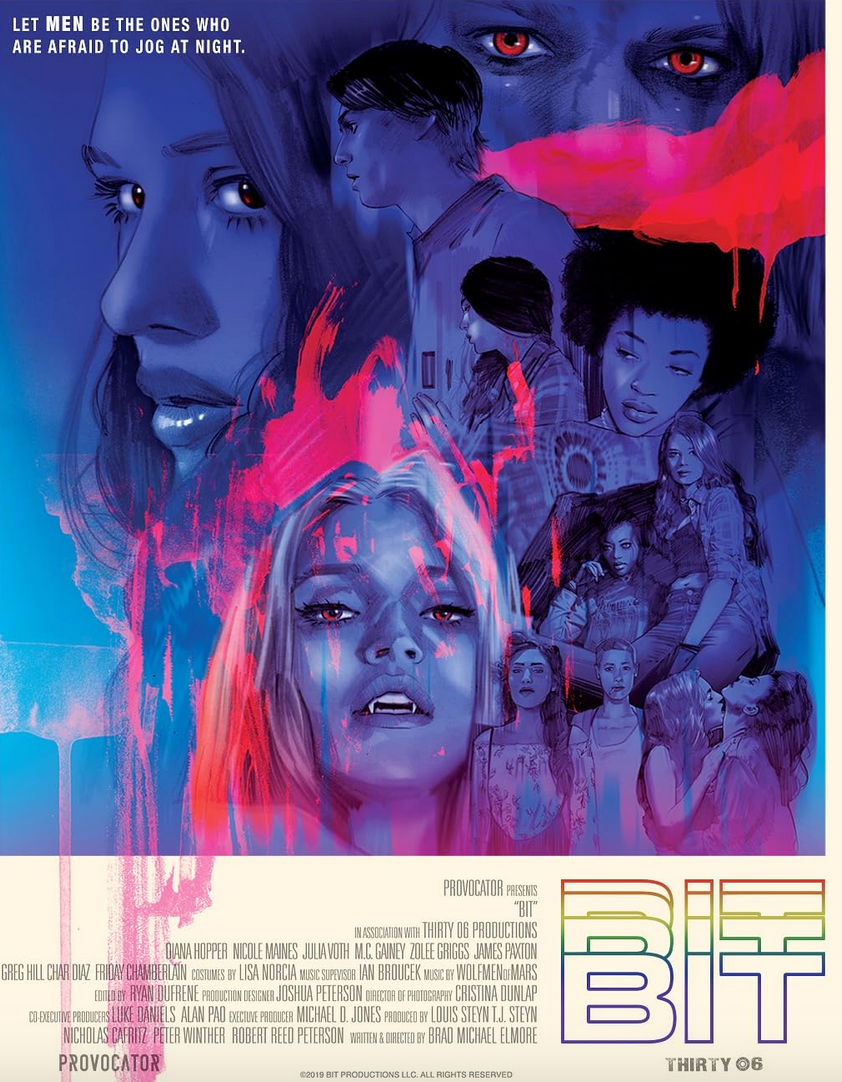
Brad Michael Elmore wrote and directed Bit in 2019. The film follows Laurel, a transgender teen played by trans actor Nicole Maines, who spends a summer in Los Angeles after graduating high school in a small Oregon town. She falls in with a coven of queer feminist vampires who target predatory men on the city’s streets. Laurel survives her own transformation and comes into her power over the course of the film. She grapples with the ethics of her new life along the way, but she does not meet the fate the genre once assumed for a character like her.
The Fear Street trilogy, released on Netflix in 2021 and based on R.L. Stine’s novels, tells a similar story across three linked films.
Deena and Sam, played by Kiana Madeira and Olivia Scott Welch, anchor the entire narrative rather than sitting on its margins. Their relationship drives the plot forward through all three instalments, and the films treat their romance with the same weight given to any straight couple in a horror franchise. Both characters survive the trilogy’s supernatural threat by the final act. The story never punishes them for loving each other, and it never uses their relationship as a source of tragedy.
Reclaiming Queer Horror From the Villain Lens
Horror has also cast queer and gender-nonconforming characters as villains for decades, from cross-dressing killers to coded predators. That framing linked queerness itself to danger rather than locating danger in a character’s specific choices or history. Newer films sever that link entirely.
Julia Ducournau wrote and directed Titane in 2021. Agathe Rousselle plays Alexia, a gender-nonconforming lead whose violence traces back to a childhood trauma and a metal plate fused into her skull, not to her identity. The film locates her menace in what happened to her as a child. It never locates that menace in who she is as an adult, and it treats her fluid gender presentation as a fact of the character rather than a warning sign.
A Nightmare on Elm Street 2: Freddy’s Revenge offers an older, messier example. Released in 1985, the film built unmistakable queer subtext around Jesse, played by Mark Patton, a gay actor who was not yet out publicly at the time.
Screenwriter David Chaskin denied writing the subtext intentionally for years, then told an interviewer in 2007 that he had built it in on purpose, aiming for a homophobic scare rather than a sympathetic one. Patton bore the professional fallout of that denial for decades. He has since reclaimed the film’s status as a queer cult classic. He now speaks openly at horror conventions and in the 2019 documentary Scream, Queen! My Nightmare on Elm Street about turning a painful production history into a rallying point for queer horror fans.
Centring Queer POC Perspectives in Horror
Queer representation in horror has skewed white for most of its history, even as the genre grew more open to queer storylines overall. A handful of recent films centre queer people of colour instead of relegating them to supporting roles.
Pat Mills directed The Retreat, a 2021 Canadian slasher film, working from a script by Alyson Richards. Tommie-Amber Pirie and Sarah Allen play Renee and Valerie, a lesbian couple whose relationship is already strained when they head to a remote retreat with friends. Armed homophobic extremists target the group soon after they arrive, and the couple has to fight their way out together. Richards has said she wrote the film specifically to subvert “bury your gays” and “dead lesbian syndrome” tropes, giving her characters the tools to fight back and survive together instead of turning on each other under pressure.
The Blackening, directed by Tim Story and written by Tracy Oliver and Dewayne Perkins, took a similar approach to race and sexuality at once. The 2022 horror-comedy follows seven Black friends trapped in a cabin with a killer over a Juneteenth weekend getaway. Perkins also plays Dewayne, an openly gay Black man who refuses to serve as comic relief for the rest of the cast. Perkins has said he built the character specifically to expand the “gay best friend” trope into a full person with his own arc, one who gets to fight the killer and survive like anyone else in the group. He has also spoken publicly about wanting to see more gay Black men written as heroes rather than sidekicks in genre films.
Why Queer Horror Keeps Gaining Ground
Each of these films shares a common thread. Queer creators, or collaborators working closely with queer source material, wrote the characters themselves rather than handing the job to outsiders. That authorship shows up on-screen in small, specific details. Laurel’s literal transformation into a vampire parallels her own gender transition without ever naming it outright. Dewayne’s friendships carry real weight because Perkins lived versions of them before he wrote them into a script. Richards built The Retreat’s central couple around her own experience of a cabin trip with friends, one that involved plenty of real fear but none of the supernatural violence.
This pattern extends beyond the four films above. Directors like Ducournau bring an outsider’s eye to body horror precisely because they are not working from inherited genre formulas built around straight audiences.
Documentaries like Scream, Queen! give performers like Patton a chance to narrate their own history on their own terms, decades after a studio system denied them that control. Each project treats queer identity as a lens for understanding the story rather than a twist to be revealed or a flaw to be punished.
None of this means horror has solved its representation problem. Critics and fans have long pointed to a pattern of queer characters dying at higher rates across the genre as a whole, and queer people of colour remain underrepresented behind the camera relative to their straight and white counterparts. But the films above mark a real shift in who gets to tell these stories and how they end.
What Queer Horror Looks Like Now
Genre conventions like the final girl, the killer clown or the haunted cabin still shape most horror releases. What has changed is who occupies those roles and who survives them. Bit hands its vampire power fantasy to a trans teenager instead of sidelining her. Fear Street lets its central couple live through three linked films. The Retreat turns its lesbian leads into hunters instead of prey. The Blackening gives its gay character room to be flawed, funny and heroic all at once.
Directors and writers behind these films describe similar frustrations with the genre they grew up loving. They wanted to see themselves as more than a punchline or a body count. Richards has spoken about growing tired of watching queer women killed off or revealed as psychopaths in film after film. Perkins has said he never saw gay Black men positioned as heroes on screen and decided to write that role for himself.
The results push back against a genre that spent decades treating queer identity as either a threat or a target. Bury your gays, once treated as inevitable, keeps losing ground to films willing to let queer characters live, fight and lead.
A Growing Body of Work
Queer horror is not a niche corner of the genre anymore. It is a growing body of work that is reshaping who survives to the credits, and why. Audiences keep showing up for these stories, and festival programmers keep making room for them. The genre that once treated queerness as either a punchline or a punishment now has room for both terror and joy in the same character.
Horror has long been a genre that explores the “other” and challenges societal norms.
Queer characters, often portrayed through a heteronormative lens, have historically been relegated to tropes like the villainous psychopath or the ill-fated victim.
However, we are beginning to see more iconic queer characters subverting these stereotypes and adding nuanced depth to horror.
Related Articles
Queer Horror: Moving Beyond The Genre Stereotype
Queer and Trans Horror Reclaims Fear on Screen
High heels, monsters & misfits: why queerness and campy horror are a perfect match
The Top 10 Most Scary Queer Horror Movies
Queens of the Dead: How a Zombie Comedy Film Reclaims Horror’s Legacy
The queer slasher: how one filmmaker is rewriting horror’s rules from the inside
Challenging the “Bury Your Gays” Trope
The “bury your gays” trope, where queer characters are disproportionately killed off, has been a persistent issue in horror.
But films like Bit (2019), written and directed by Brad Michael Elmore challenge this narrative. The film follows a transgender teen who becomes a vampire and embraces her newfound power. She defies the expectation of queer characters meeting an untimely demise.
Similarly, in the Fear Street trilogy (2021), based on R.L. Stine’s books, the central queer relationship between Deena and Sam, played by Kiana Madeira and Olivia Scott Welch, respectively, drives the narrative and survives the horror. It subverts the “bury your gays” trope.
Reclaiming Queer Horror from the Villainous Lens
Additionally, queer characters have often been portrayed as villains or psychopaths, perpetuating harmful stereotypes. However, films like Titane (2021), written and directed by Julia Ducournau, a French woman filmmaker, challenge this trope. The film’s lead character, Alexia, played by Agathe Rousselle, is a gender-nonconforming individual whose violent actions are not rooted in their queerness but rather in their traumatic past.
In A Nightmare on Elm Street 2: Freddy’s Revenge (1985), the queer subtext surrounding Jesse, played by Mark Patton, a queer actor, was initially unintentional. However, Patton has since embraced the film’s status as a queer cult classic, reclaiming the narrative and challenging the villainization of queer characters.
Centring Queer POC Perspectives
While queer representation in horror has often been through a white lens, films like The Retreat (2021), written and directed by Pat Mills, centre queer POC perspectives. The film follows a lesbian couple, played by Brittany Snow and DeWanda Wise, who are hunted by homophobic extremists, exploring the intersections of queerness, race, and violence.
Similarly, in Urban Massacre (2002), directed by Darnell Martin, the main characters are racial minorities, challenging the whitewashing of horror and providing a fresh perspective on the genre.
As the horror genre continues to evolve, iconic queer characters written and portrayed by queer people of colour and women are challenging stereotypes and adding depth to the narratives.
Shifting Tropes
By subverting tropes like the “bury your gays” and the villainous psychopath, and centring queer POC perspectives, these characters are reclaiming the genre and providing nuanced representations that resonate with diverse audiences.