
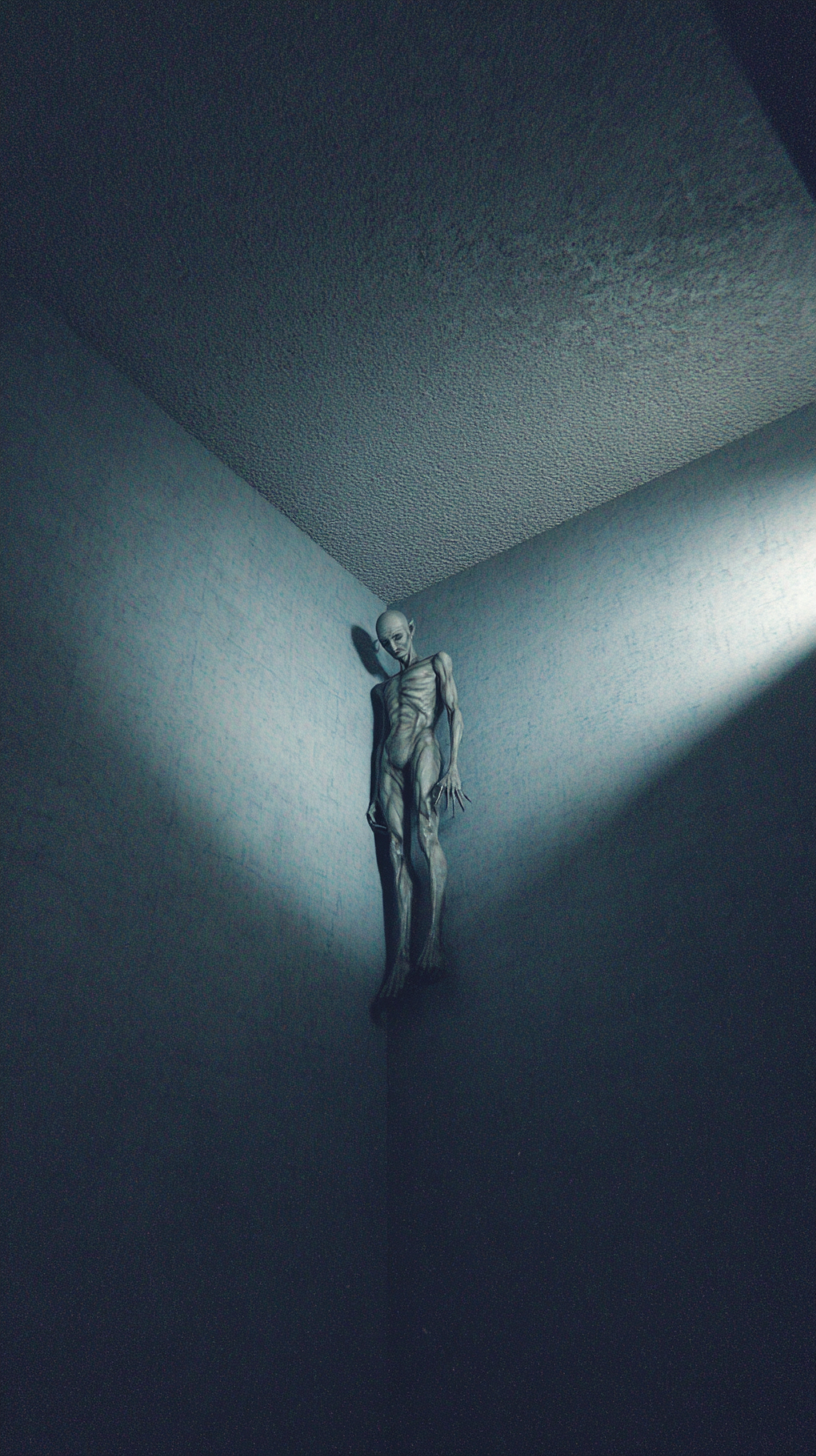
You can build a Ti-Bolom. That detail unsettles Saint Lucians most. A small devil walks the island and a person chooses to make it.
Most monsters in Caribbean folklore arrive uninvited. The Soucouyant slips through a keyhole. The Lagahoo prowls the road on its own dark errand. The Ti-Bolom breaks that pattern. Someone summons it, feeds it and puts it to work. It wears a child’s face, and it answers to whoever paid to raise it.
This feature takes a long look at one of the Eastern Caribbean’s most enduring spirits. Where does the Ti-Bolom come from? How does the legend say a person makes one? Which photograph put it back in the news in 2013? And why does the story still follow Saint Lucians abroad? Along the way, the Ti-Bolom sits beside its wider family: the duppy, the jumbie, the boloms of the stage. No folk creature stands alone.
Table of Contents
What is a Ti-Bolom?
The Ti-Bolom is a small, child-sized spirit at the dark heart of Saint Lucian folklore. Its name comes from Kwéyòl, the French-based Creole that Saint Lucians speak. It translates almost literally as “little man” or “little fellow.” People also write the name as Ti Bolom, without the hyphen, or simply as bolom. The spelling shifts because the word lives mainly in speech, not on the page. Kwéyòl carried it for generations before anyone wrote it down. Researchers from the University of Bristol spent ten days recording the legend in Saint Lucia in 2024. They describe a spirit that a master summons to do his bidding. At its core, the story warns against greed.
Storytellers usually put the creature at two or two-and-a-half feet tall. Some call it a little boy, others a little girl. The shape is always a small child who is not quite right. The eyes give it away.
In several Saint Lucian accounts, the whites have vanished, and the eyes read fully black. The voice carries too. People often hear it before they see it.
“The little devil”
People sometimes call the Ti-Bolom the “little devil,” and it earns the name. It is not a lost soul seeking peace. It serves evil, and it acts on its master’s will. The travel and culture site Uncommon Caribbean places the Ti-Bolom mainly in Saint Lucia, though its kin turn up across the region. The creature serves the Devil, and it serves whoever holds it.
The legend is old, and it stays very much alive. The Bristol team found that details shift from teller to teller. The moral never moves. Greed has a cost. The Ti-Bolom is the bill.
How you make a Ti-Bolom
Here is what separates the Ti-Bolom from a fireside ghost story. You do not stumble on one by accident. You make one on purpose.
The most widely repeated version is blunt. A person brings the Ti-Bolom into the world on Good Friday, acting with evil intent. The timing carries weight. Good Friday is the holiest, most sorrowful day on the island’s Catholic calendar, when the churches fall silent. Raising a devil on that day inverts everything the day should mean. Regional outlet Dominica News Online recorded this version in its 2013 coverage of a Saint Lucian case. Saint Lucians hand it down more than any other.
Other tellings describe a hands-on ritual. The Telling Tales project archived one version from Saint Lucian storytellers. A person holds an egg under one arm for three days, then throws it into the sea. From that, the Bolom comes to life. The recipe changes, but the logic holds. Someone incubates a thing that should never live, and gives it life.
Every version shares one thing: intent. Nobody births a Ti-Bolom. Someone conjures it, and conjures it for a reason. Usually that reason is money. The owner wants wealth or power, and the little devil is the shortcut. Here the Ti-Bolom brushes up against obeah, the Afro-Caribbean spiritual practice that Saint Lucians have long feared and quietly consulted. One point deserves emphasis. Obeah is a broad tradition with healing and protective sides. The Ti-Bolom belongs to its darkest, most cautionary edge, not to the practice as a whole. The legend describes a person who grabs a forbidden tool. It does not judge a faith.
Feed it or be eaten
A Ti-Bolom is no pet, and it comes at a price. Once it exists, the owner has to feed it. What it eats forms the heart of the horror.
The legend gets specific. The Ti-Bolom lives on raw meat, and it demands a steady supply. The master who raised it must keep the meat coming. Stop the supply, and the arrangement reverses. The creature that worked for you turns on you. Dominica News Online recorded the rule plainly: keep feeding the creature, or it eats you.
Read that twice. The Ti-Bolom is a debt that eats. You raise it to get rich, and it chains you to it. The hunger never ends. Miss one feeding, and you become the meal. You cannot retire it or put it back in the box. You only rent the wealth it brings, and the rent is flesh.
This is why the Ti-Bolom works as a near-perfect parable. The Bristol researchers reached the same conclusion. Beneath the black eyes and the raw meat, the story warns against greed and the easy, ugly path to comfort. You wanted more than your share. Now something small and hungry owns you.
The legend also explains the dread it still carries on the island. A duppy haunts a place. A Ti-Bolom haunts a household, because someone in or near it likely made a choice. People fear more than the creature. They fear the neighbour who might have raised one.

The unbaptized child at the heart of the story
To grasp why the Ti-Bolom looks like a child, follow Saint Lucia’s beliefs to their source. The island is a meeting point. Its folklore fuses West African spiritual traditions, which enslaved Africans carried across the Atlantic, with the French Catholicism that colonial rule imposed. Britain and France traded the island so often that it earned the nickname “Helen of the West Indies.” The Ti-Bolom sits right on that seam.
In the most common framing, the Ti-Bolom is the soul of a child who died before baptism. Outlets including the Costa Rican Times and Uncommon Caribbean record this version. That detail is pure colonial Catholicism. Older Church teaching held that an unbaptized child could not enter heaven. The soul lingered somewhere in between. Folk belief took that anxiety and gave it a body. The unblessed child does not rest. Instead, darker hands can put it to use.
From there the legend turns predatory. Storytellers say the Ti-Bolom hides in the bush and in lonely places, crying like a lost or frightened child. A passerby hears what sounds like a baby in distress. He follows the sound off the road and into the trees. That is the trap. In the grimmest accounts, the creature climbs onto its victim and pulls the soul out through the chest or forehead. The bait is pity. The Ti-Bolom weaponizes the most human instinct there is: the urge to help a crying child.
This unborn-or-unbaptized root links the folk Ti-Bolom to its most famous literary cousin. There, the legend leaves the bush and walks onto a stage.
From folk tale to Nobel stage: Derek Walcott’s Bolom
Saint Lucia gave the world two Nobel laureates, and one of them put the Bolom before an international audience. Derek Walcott, born in Castries in 1930, won the Nobel Prize in Literature in 1992. He drew on the folk tales he heard as a child when he wrote his early play Ti-Jean and His Brothers in the late 1950s.
In the play, the Bolom serves as the Devil’s messenger. Walcott casts it as the restless soul of an unborn child. The shrouded figure arrives at a poor family’s hut to deliver a challenge. The bored, unfeeling Devil offers a reward to any of three brothers who can make him feel real emotion. The Bolom heralds that bargain. Reviewing a revival, the Boston Globe noted how this “child of the devil” sets the whole story in motion.
Walcott did more than borrow a monster. He turned it into a symbol. Writing in Stabroek News, one critic reads the Bolom as a Caribbean society not yet truly born. In that view, colonialism holds the people in bondage, and the Devil appears disguised as a plantation owner. In that reading, the youngest brother, Ti-Jean, does more than defeat the Devil. He bargains for the Bolom’s life. The unborn thing finally gains existence: free and human, but now mortal too.
It is a striking move. Walcott took a creature that Saint Lucians feared as a tool of greed and gave it a second meaning. That meaning speaks to colonial history and a society’s long wait to be born.
The folk Ti-Bolom and the literary Bolom are not identical. One is a hired devil that eats raw meat. The other is a tragic figure on a Nobel laureate’s stage. Yet both grew from the same soil, and the same unbaptized child sits at the root.
The Bexon photograph: When the legend made the news
For most of its life the Ti-Bolom lived in oral tradition. Saint Lucians passed it down in Kwéyòl, one generation to the next. Then, in 2013, it surfaced in a photograph and made the news.
The story came out of Bexon, a community in the Saint Lucian interior. A man photographed himself indoors. HTS News reported the case, and Dominica News Online picked it up in October 2013. Only three people stood in the room when he took the picture. Yet when people looked at the photo afterward, a fourth presence filled the frame. Something in the background matched nobody who had been there.
The man’s daughter told reporters that only three individuals had stood in the room. Whatever else appeared, she said, looked like none of them. Word spread fast through the community. Residents who saw the picture grew convinced the figure was not human. Many reached for the same explanation, the one the island already had a name for. They called it a Ti-Bolom. The family came to believe a supernatural presence had seized the house.
The Bexon case matters less for the photograph than for the reflex around it. Faced with an image they could not explain, a whole community reached for the Ti-Bolom at once. That is what a living legend looks like. People did not dust the story off for tourists. They grabbed it first to explain something strange in a family home.
One caveat keeps the record honest. The Bexon coverage dates to October 2013, and it documents the photograph and the community’s reaction. The reports cannot prove what filled the frame. They document something real all the same. A centuries-old piece of Caribbean folklore surfaced in modern Saint Lucia, and a community named it without hesitation.
The Ti-Bolom in a Caribbean of duppies and jumbies
The Ti-Bolom belongs to Saint Lucia, but it lives in a crowded spirit world. Across the region, the dead and the unnatural carry many names. The Ti-Bolom forms one branch of a much larger family tree.
The most widespread name is duppy. In the folklore of Jamaica, The Bahamas, Barbados and beyond, a duppy is a ghost or spirit. The word carries West African origins, tied to Akan and Bantu beliefs in a dual soul. Those beliefs hold that a person carries more than one spirit, and that one can linger on earth after death. Much of Caribbean folklore turns on the duppy. People fear it as a malevolent thing that comes out at night to trouble the living. Edward Long’s History of Jamaica recorded the earliest known mention of the duppy in 1774.
The anthropologist Zora Neale Hurston documented Jamaican duppy beliefs in her 1938 book Tell My Horse.
In the smaller islands, people often call the same restless spirit a jumbie. Not every duppy means harm. In Jamaican belief, a good duppy “dreams you”, it visits a sleeper to pass on advice.
Families also keep “nine nights” after a death, a wake that helps the spirit move on. The Ti-Bolom offers no such comfort. Nobody mourns it, and nobody sends it home. A master made it to use, and use defines its whole short existence.
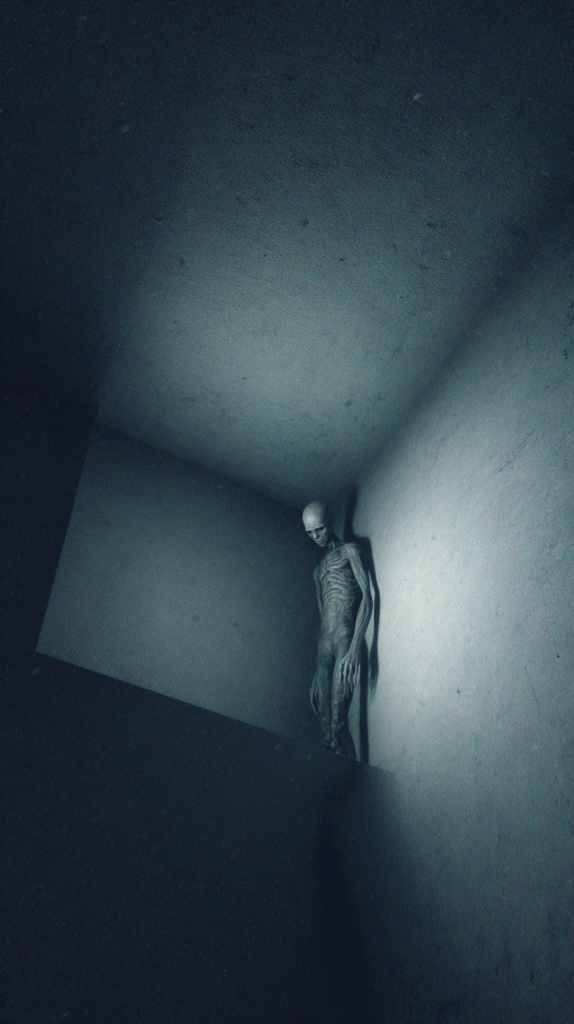
The good duppy
One distinction deserves a clear line. A duppy is, at root, the spirit of someone who died. The National Caribbean Heritage Museum’s account notes that someone can even set a bad duppy on a person through obeah. A master raises a Ti-Bolom to serve in much the same way. But the Ti-Bolom is no ghost of an adult who lived a full life and refused to leave. It is a child who barely lived, or never lived and someone conjured it into a servant. A duppy is what remains of a life. A Ti-Bolom is what someone makes from a life cut short.
That places the Ti-Bolom in striking company. It shares one engine with the duppy and the jumbie. West African belief in spirits that linger and obey powers all three. Slavery’s violence and European Christianity then reshaped that belief. The Rolling Calf rolls down the road wrapped in chains. The Old Higue sheds her skin by night. The soucouyant flies as a ball of fire. All of them count as cousins. They share the same collision of cultures on plantation ground. The Ti-Bolom wears the Saint Lucian face of that inheritance. The island’s French Catholic past and its Kwéyòl tongue gave it that form.
If Looks Could Kill: The Diablesse of Barbados
The story of Heart Man: Barbados’ darkest folklore
A Tale of Moving Coffins in Barbados (Chase Vault)
The Duppy of Barbados: The Island’s Haunting Spirits
The Haunted George Washington House
The Ti-Bolom: Saint Lucia’s Little Man Who Works for the Devil
Horror Short Film, All Skin No Laugh, rooted in Caribbean Folklore
How to kill a Ti-Bolom
If a person can make a Ti-Bolom, one question follows. Can anyone get rid of one? The folklore says yes but never easily, and never by force. You cannot fight the little devil. You have to outwit it.
The escapes that survive in oral tradition all share a clever shape. You do not destroy the Ti-Bolom. You hand it a task it can never finish, and you set sunrise as the deadline. In one telling, you send it to the beach to count every grain of sand. Any mistake forces it to start over. In another, you hand it a basket full of holes and order it to fetch water. The basket holds nothing, so the creature carries and spills and returns all night.
The clock does the work. These spirits belong to the dark, and dawn kills them. Set an impossible chore, keep the thing busy until first light, and the unfinished task and the rising sun end it.
The same logic runs through other Caribbean spirit lore. There, the soucouyant must gather every scattered grain of rice before cockcrow, or die trying.
These methods come from oral tradition, and the details shift from village to village. That variation marks no flaw in the story. It proves the story still lives. People reshape it each time they tell it, and they treat it as inheritance, not fiction. As the Bristol researchers observed, Caribbean folk culture often treats these stories as true. People pass the escapes along just as they pass the warnings, in case you ever need them.
Why the Ti-Bolom still travels
A legend survives for a reason, and the Ti-Bolom has outlasted most. It survives because it does more than scare. It does real work.
At its simplest, the Ti-Bolom works as a moral engine. It explains misfortune and warns against greed in one breath. Consider the neighbour who got rich too fast, the household where things turned strange, the man who grabbed power he had no right to. The legend gives each one a shape and a cost. The little devil names the price of the shortcut. Everyone who hears it grasps the lesson on their own.
The Ti-Bolom also carries Saint Lucia itself. For the island’s large diaspora in New York, Toronto and London, it stays a piece of home that crossed the water. Few outsiders make art about this specific spirit. So when a Saint Lucian abroad hears the name, it lands hard. The Ti-Bolom belongs to them in a way the region’s better-known monsters never could. That helps explain why the legend keeps finding fresh audiences. It speaks straight to people who long waited for the world to take their folklore seriously.
A story worth telling
And the world has begun to take it seriously. The Telling Tales project at the University of Bristol set out to record the Ti-Bolom from Saint Lucian storytellers. The team also built a digital “folk map” of the island. They treat these stories as living cultural heritage, not quaint superstition. They frame the work as decolonial mapping. The folk stories draw their own geography of the island, in their own language, on their own terms. The map proved the point. When a storyteller names a village, the display moves to it. The stories trace intricate webs across Saint Lucia and out toward neighbouring islands. The team also weighed hard ethical questions. Caribbean folk stories often name real people and real places. Handle them carelessly, and a public map could expose the living. So the researchers asked how much an archive should ever reveal. That care marks the line between exploiting folklore and honouring it.
The Ti-Bolom is a horror story, and a good one. A person raises this hungry child-devil on Good Friday, feeds it raw meat, and loses it to do their will. But it also records how Saint Lucians have made sense of greed, grief, faith and fear for generations. It distills Caribbean folklore to its essence. African belief and European religion fused under colonial pressure into something wholly the island’s own. Build one, and it eats you. Tell one, and it outlives you. The Ti-Bolom has always offered that bargain, and people keep taking it.