
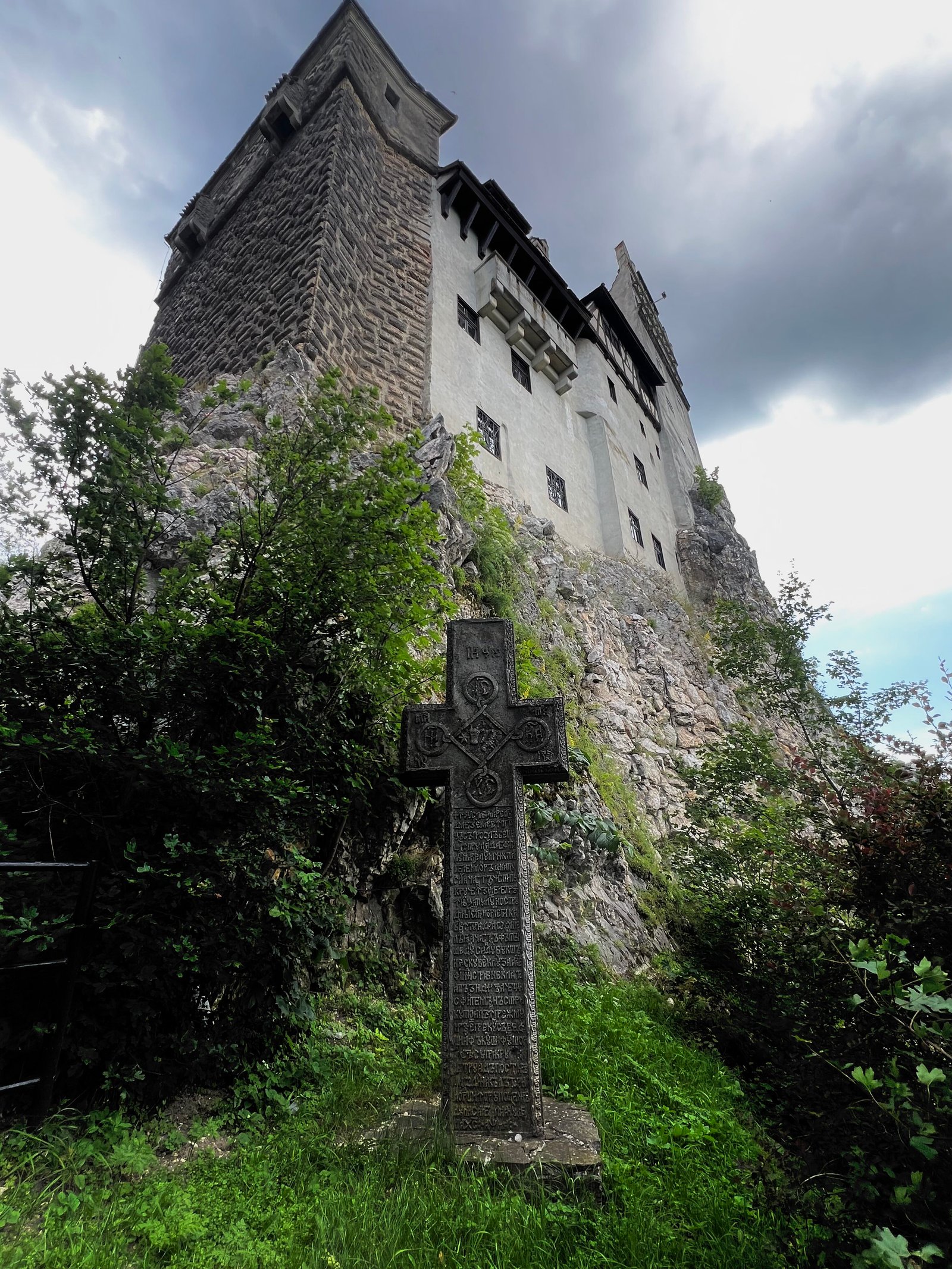
A castle stands on a limestone bluff in central Romania. A man who never saw it made it famous. So did a vampire who never existed, and a warlord who almost certainly never slept there. Tourists call it Dracula’s Castle. They are not as wrong as the purists like to think.
The signs at the gate, the fang-shaped fridge magnets and the lineup snaking up the hill all point the same direction. Roughly 800,000 visitors a year climb to Bran Castle, in the Carpathian foothills near Brasov. They come looking for a vampire. What they find is something richer: a place where history, fiction and folklore genuinely converge.
I visited Bran myself to trace the threads that tie it all together. A monstrous medieval prince. Count Dracula the vampire. A fortress that eerily mirrors his fictional home. And a living tradition of vampire belief that predates them both. These threads wound around one another for centuries. At Bran, you can finally hold the whole knot in your hands.
The story of Dracula’s Castle is four stories that chose the same address. First comes the building itself, with its Saxon stonework and royal furniture. Then comes the novel, written by an Irishman who conjured Transylvania from an English seaside library. Then comes the folklore—stranger than any fiction that borrowed from it. Last comes Vlad III, the man who lent the vampire his name and, in doing so, fused legend to landscape. Pull the threads apart and each one leads back to the others.
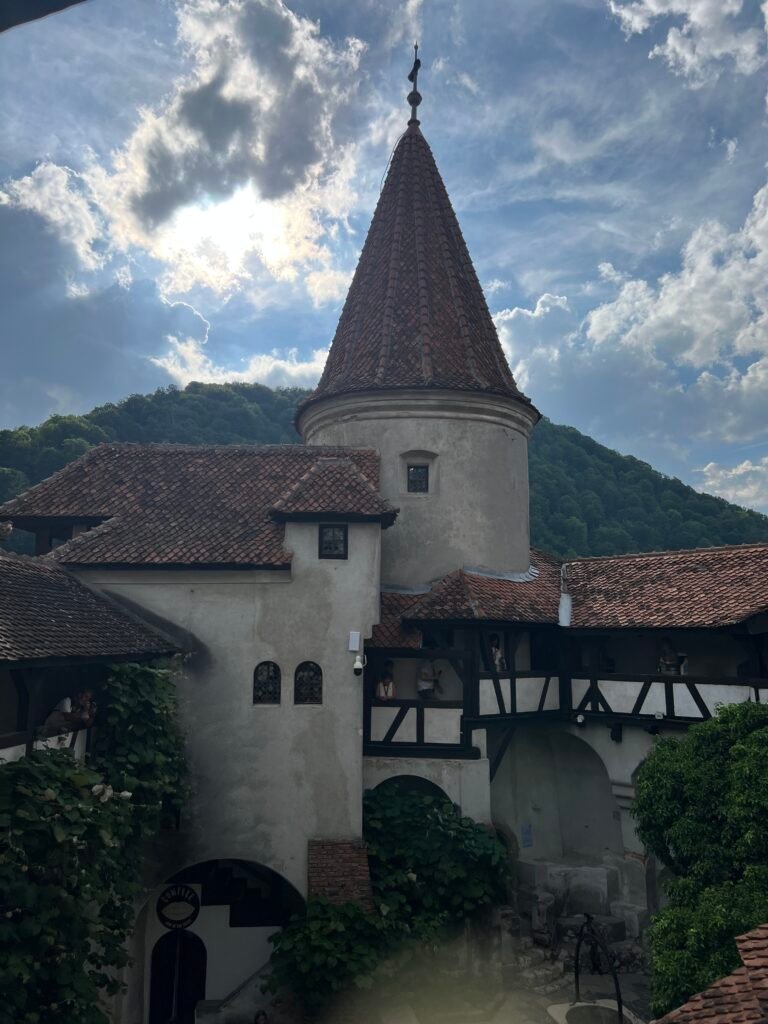
Table of Contents
The History of Bran Castle: A Fortress Guarding a Mountain Pass
Long before anyone named a vampire, Bran served as military hardware. After 1211, knights of the Teutonic Order raised an early fortification near the pass. It did not last. In 1377, King Louis I of Hungary granted Brasov‘s Saxon townsmen the right to build a stone castle. Workers finished it by 1388. It guarded the trade route between Transylvania and Wallachia and slowed the advancing Ottomans.
For centuries it did unglamorous work. It served as a customs house, a toll point, a fortress glowering at armies in the gorge below. Early in the 15th century it changed hands more than once. It passed briefly to Wallachian control under Prince Mircea the Old. Even then, the building already looked the part. It perched on rock, commanded a lonely view and watched over a land the rest of Europe considered haunted.
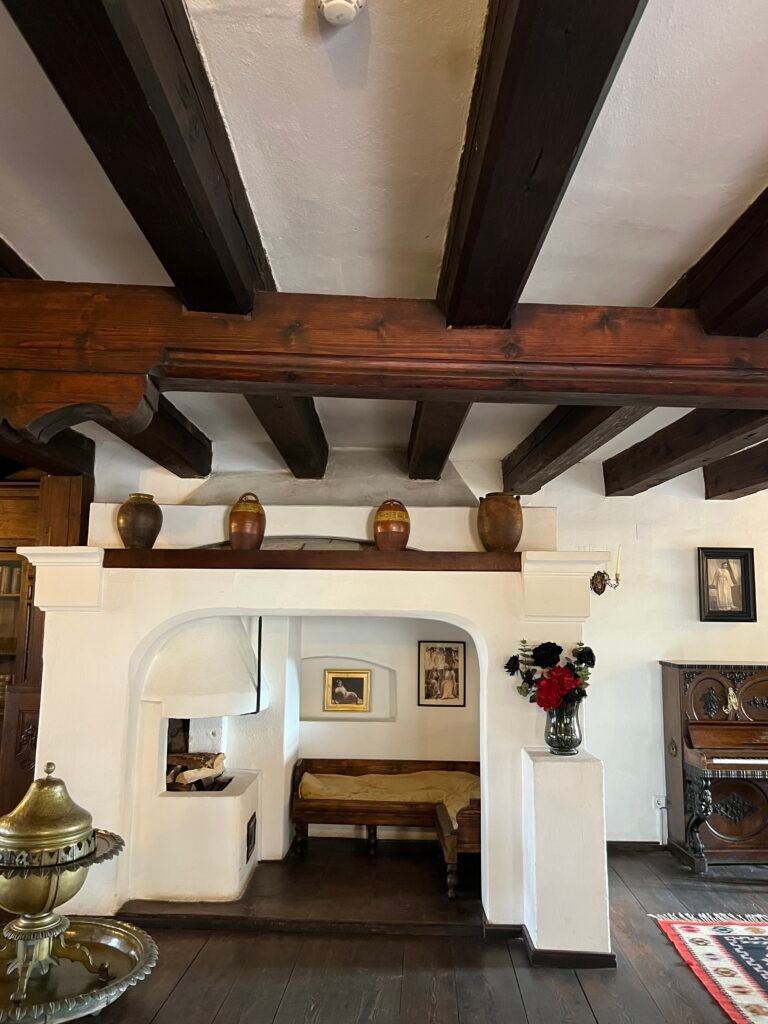
Its second life ran gentler. In 1920, Brasov’s town council gave the castle to Queen Marie, Romania’s British-born queen. She adored the place and turned it into a summer residence. She softened the medieval shell with terraced gardens, a tea house and warm, light-filled rooms. When she died in 1938, attendants placed her heart in a silver box, at her own request. They laid it to rest in the valley near the castle she had made her own. That detail alone deserves its own ghost story.
What followed felt less romantic. The new communist regime forced out Marie’s daughter, Princess Ileana, in 1948. The state opened Bran as a museum in 1956. After a long legal fight, the courts restored ownership in 2006 to Ileana’s son, Archduke Dominic von Habsburg. The family reopened it as a private museum. But the building’s third life as Dracula’s Castle had already begun. And it drew on something far older than marketing.
How Bran Castle Became Count Dracula’s Castle
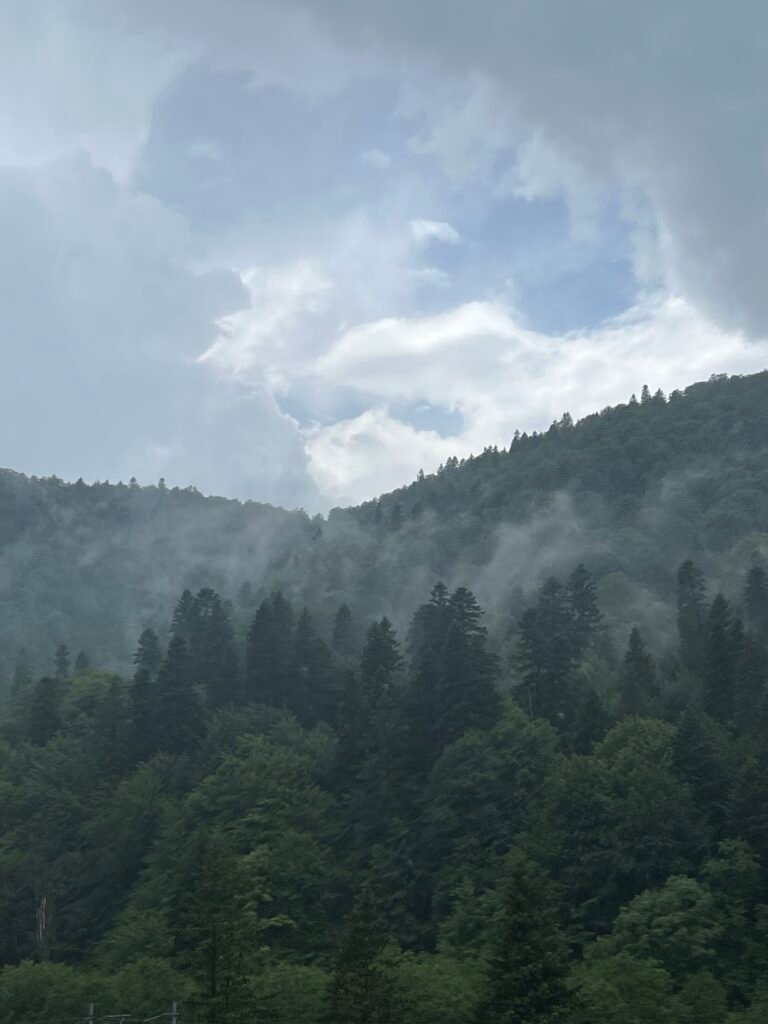
Some places earn a legend. Others inherit one. Bran did both. It resembles the brooding fortress in Bram Stoker’s “Dracula” in the one way that matters most. Both perch on rock and command a long, lonely view of a land steeped in vampire belief. That resemblance did not come from nowhere. It drew on the same landscape and the same dread that fed Stoker’s imagination.
The real momentum arrived in the 1970s. American visitors, primed by decades of Hollywood, turned up in Transylvania hunting the count. They pointed at Bran. Romanian tourism officials recognized a gift when they saw one. They have marketed the castle as Dracula’s Castle ever since. But the tourists were responding to something real. The Carpathian foothills carry centuries of vampire folklore. Bran sits squarely in that territory.
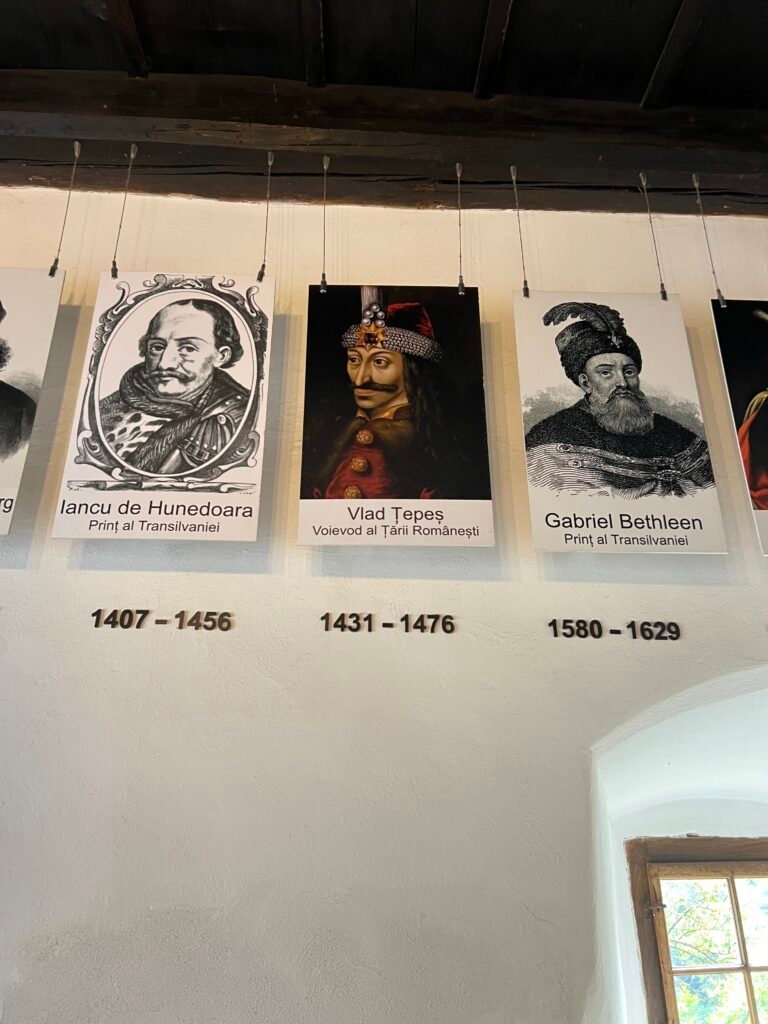
Vlad III, the prince behind the name, never owned Bran. A tradition holds that captors briefly held him nearby around 1462, but even that remains uncertain. Still, dismissing the link entirely misses the point. Bran does not need a deed of ownership to earn its place in the story. It stands in the heart of the region Stoker chose for his novel. It looks like the castle he described. And it rises from land where people genuinely feared the undead for centuries.
The climb to the gate now ends in a cheerful gauntlet of stalls. Vendors sell plastic fangs, vampire socks and potion-shaped bottles of local spirits. Inside, a separate ticket buys entry to a torture-chamber exhibit. The souvenirs are kitsch. The atmosphere is not. Stand on the ramparts at dusk, look out at the Carpathian tree line, and the folklore feels pretty real.
Related Articles
Bukwas: The Wild Man of the Woods You Don’t Want To Meet
The Skinwalker: A Shape-Shifting Creature of Terror
Shadow People: Unveiling the Dark Figures of the Paranormal
Second-Hand Shopping Horrors: When Cursed Items Find New Homes
The Horror of Artificial Intelligence: Unexplained Behaviours Leave Experts Puzzled
Whispers from the Web: Uncovering Internet Urban Legends
Bram Stoker and the Transylvania He Never Saw
Bram Stoker created the count. This Irish civil servant turned theatre manager ran London’s Lyceum Theatre for the actor Henry Irving. In his spare hours, for seven years, he built a vampire. Stoker liked to say the idea came in a nightmare. He blamed a generous helping of dressed crab at supper. It is a good story. The truth is more revealing. He researched Transylvanian folklore relentlessly, and what he found was terrifying enough without invention.
Stoker never went to Transylvania. He never saw the Carpathians or crossed the Borgo Pass. He assembled his Transylvania from books, maps and travelogues read in England. But those sources were not fiction. They described a living world of vampire belief. Stoker built his novel on top of real superstition, real fear and real landscape. The genius was not that he invented a horror. He recognized one that already existed.
Much of that reading happened on holiday. In the summer of 1890, Stoker took rooms in Whitby, a Yorkshire fishing town. Its ruined abbey, windswept churchyard and salty shipwreck tales all surfaced in the novel. No accident, then, that the count comes ashore there. He leaps from a storm-wrecked ship as a great black dog.
The finished book is a marvel of borrowed authority. Stoker first drafted it as a play, “The Undead.” Irving dismissed it after a single test reading. He rebuilt it as a novel: a collage of letters, diary entries, newspaper clippings and a doomed ship’s log. That documentary style lent real folklore and real geography the frame of fiction. The novel convinced readers because the world underneath it was already true.
Stoker’s Sources: A Footnote and a Folklorist
Two sources did most of the heavy lifting, and both drew on fact. The first was a dry 1820 volume by a British diplomat, William Wilkinson. He titled it “An Account of the Principalities of Wallachia and Moldavia.” Stoker found it in the Whitby subscription library on Aug. 8, 1890. He recorded the date in his own notes. In a footnote, Wilkinson mentioned a 15th-century warlord called Dracula. He added that, in Wallachian, the word meant Devil. Stoker copied the name and moved on. He had his title and his villain in a single afternoon.
The second source gave the novel its soul. Emily Gerard, a Scottish writer, lived in Transylvania in the 1880s. Her husband served in the Austro-Hungarian army. She published an 1885 essay, “Transylvanian Superstitions,” in the journal The Nineteenth Century. Later, she expanded it into the 1888 travelogue “The Land Beyond the Forest.” She did not invent the beliefs she recorded. She documented what villagers actually feared. If Wilkinson handed Stoker a name, Gerard handed him a world that believed in its own monsters.
Gerard carried the word nosferatu into English. She presented it as the Romanian term for vampire. Stoker lifted it almost intact, and through him it travelled into a century of film. Later folklorists noted that nosferatu is not a standard Romanian word. Gerard likely absorbed the term from an earlier German source. But the belief system behind it was entirely real. The word may have been imprecise. The terror it named was not.
Transylvanian Vampire Folklore: Strigoi, Nosferatu and the Restless Dead
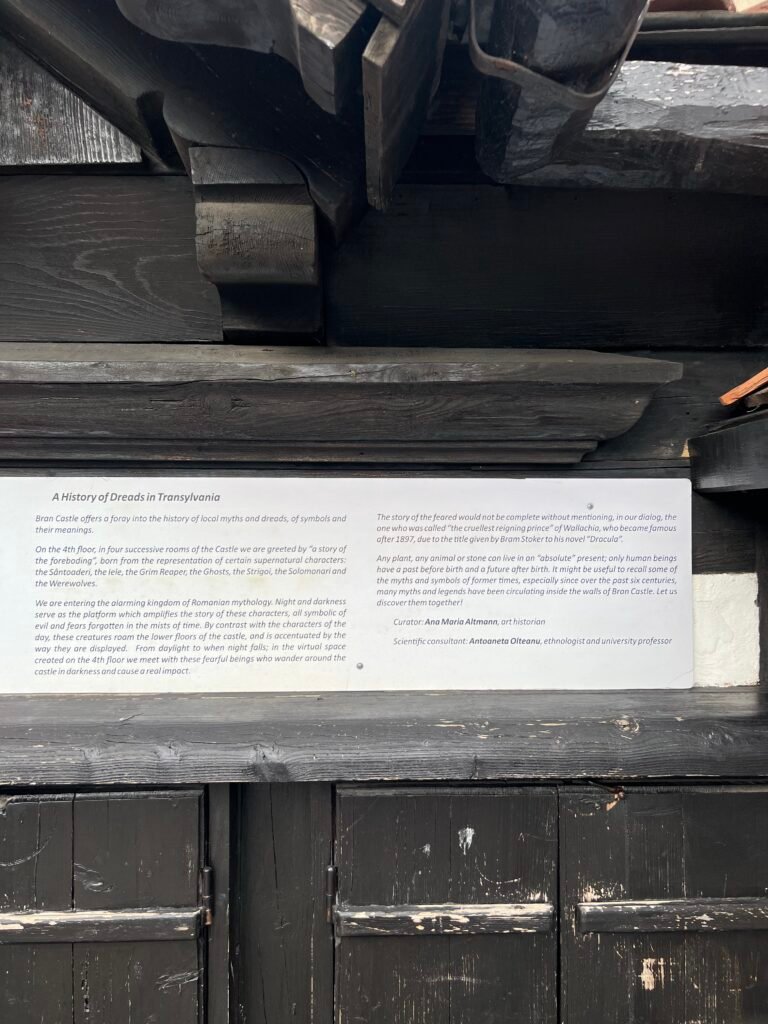
In the villages Gerard described, the dead posed an active threat. A soul’s peace depended on ritual. Villagers held the Pomana, or funeral feast, at set intervals for years. They laid out the dead man’s favourite dishes and lit a candle in his memory. Skimp on the rites, and the neglected soul might return.
Two kinds of returning dead haunted that world. The strigoi were restless spirits whose appearance signalled coming sickness or misfortune. People feared the nosferatu more, the true vampire. Every peasant believed in it, Gerard reported, as firmly as in heaven or hell. It came in two sorts, living and dead. A person could inherit the condition at birth, sometimes marked from the start, or become one after death.
The remedies were physical and grim. Villagers might exhume a suspected vampire and pierce or burn the corpse. Garlic warded it off, and so did careful burial. These were not idle campfire stories. During the vampire panics of the 17th and 18th centuries, villagers blamed disease outbreaks on the recently buried. Austro-Hungarian authorities dispatched officials to investigate village exhumations as a matter of public order. This was documented, repeated and widespread.
Stoker did not pluck his vampire from thin air. He drew it from a deep well of genuine belief. His count wears a tailored suit over a peasant’s ensemble. The aristocratic polish is fiction. The dread underneath it is not. That is what makes the novel last. It rests on something people once believed and, in parts of rural Romania, remembered well into the modern era.
Related Articles
Exploring the World’s Most Eerie and Haunted Forests
The Lost Colony of Roanoke: A Tale of Mystery and Spectral Whispers
Haunted Houses: Tracing the Origins of a Cultural Phenomenon
The Legacy of Witch Hunts Continue to Haunt Us
Reclaiming Horror: Indigenous Voices Transform the Genre
Bringing Nightmares to Life with Latex Masks
The Night Doctors: Truth Behind This Dark Legend
Vlad the Impaler: The Real Dracula
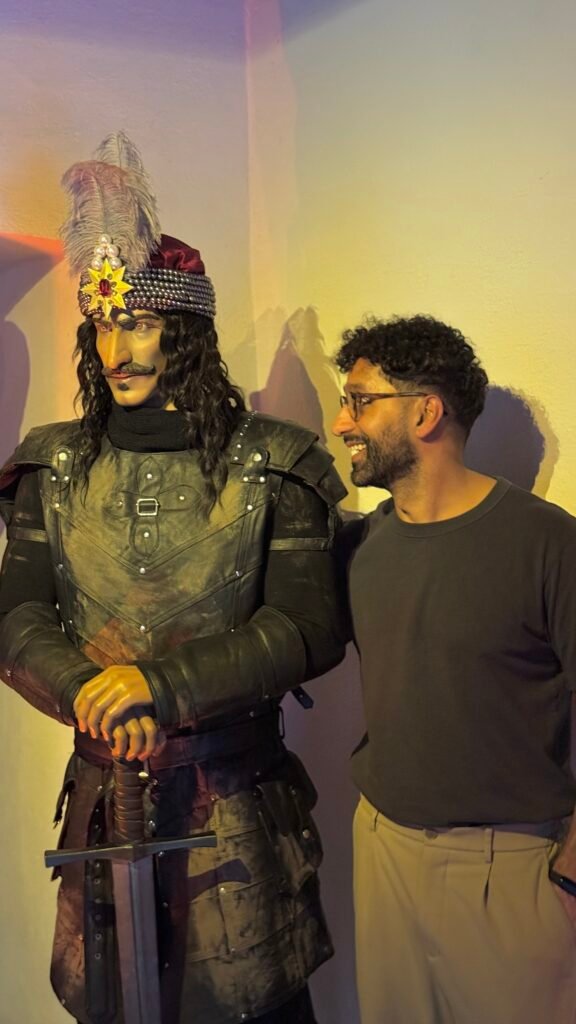
The name Dracula belonged first to a real and genuinely frightening man. Vlad III, prince of Wallachia in the 15th century, inherited the surname from his father, Vlad Dracul. The father belonged to the chivalric Order of the Dragon. Dracul meant dragon; over time, in Romanian, the word slid toward devil. Vlad himself signed letters as Drakulya in the 1470s, apparently untroubled by the drift.
He earned his other name, Vlad Tepes aka Vlad the Impaler by method.
Reports say he impaled prisoners by the thousand across his campaigns against the Ottomans and his rebellious nobles.
He killed many thousands more and left forests of stakes as a deterrent. His German and Hungarian enemies had reasons to exaggerate. Even so, the man plainly mastered terror as a tool of statecraft.
The Dracula scholar Elizabeth Miller combed Stoker’s surviving notes. She found no sign he studied Vlad’s life beyond Wilkinson’s footnote. Stoker never used the impalings, the wars or the cruelty. But the separation is not as clean as scholars sometimes insist. Vlad’s reign fed the very folklore Stoker drew on. A prince who killed so brutally left a mark on the land’s imagination. The villages that feared the undead also remembered the warlord. Stoker may not have connected the dots deliberately. The culture he borrowed from had already done it for him.
So the figure tourists encounter at Bran is not a simple case of mistaken identity. One is Vlad, a historical prince of documented brutality. The other is the count, a Victorian fiction rooted in the region’s own fears. They share a name, a landscape and a deep current of dread. The resonance between them is the legend’s engine.
Poenari Castle: Vlad the Impaler’s Real Fortress
If Vlad held a castle worth the name, he held Poenari, not Bran. Poenari stands in ruins on a knife-edge ridge above the Arges River in southern Romania. Reaching it today means climbing roughly 1,480 steps up the mountainside. The reward is a scatter of broken walls and watchtowers. The view explains, in a glance, why a warlord would covet the spot.
The fortress predates Vlad by two centuries. Wallachia’s rulers raised it around the 13th century and later left it to crumble. Vlad recognized its value and rebuilt it in the 1450s. The way he reportedly did so ranks as the most Dracula thing in the true story. After a massacre of the boyars he blamed for his family’s ruin, he reportedly marched the survivors up the ridge. He worked them until the fine clothes from their Easter feast rotted off their backs. Rather than buying the castle, Vlad extracted it from the people he was destroying.
The legend’s most cinematic scene also belongs here. During an Ottoman siege in 1462, Vlad’s first wife reportedly threw herself from a tower into the river. She chose the fall over capture, declaring she would sooner feed the fish than the Turks. Vlad himself slipped out through a passage running north into the mountains. Poenari carries a horror Stoker never needed to invent. It bleeds history. And that history fed the folklore his novel consumed.
Where Castle Count Dracula Actually Stood
In the novel, Stoker plants the count’s home at the head of the Borgo Pass. He set it in the Bargau mountains of northeastern Transylvania. He chose that real pass off a map for its remoteness and its name. No castle of the kind he described has ever stood there. The location lays fiction over real terrain, and the terrain was already rich with meaning.
The building in Stoker’s mind seems to come from several places at once. From 1894 he holidayed at Cruden Bay, on the windswept Aberdeenshire coast. There the ruined Slains Castle loomed on its clifftop. Many scholars read Slains as the visual model for the count’s lair.
A Transylvanian thread runs through it, too. The engraving of a craggy fortress in early editions resembles Bran. Stoker probably leaned on an illustration from a 19th-century travel book by Charles Boner. So the famous silhouette carries Bran’s bones, dressed in a Scottish ruin’s mood. Stoker set it in a real Carpathian pass surrounded by real vampire country.
Castle Dracula is a composite: part Romania, part Scotland, part pure invention. But the Romanian part is the one that gives it weight. Stoker did not pick Transylvania at random. He picked it because the folklore there was already doing what his novel needed. The land was the story before the story arrived.
Count Dracula Tourism in Romania: A Country’s Mixed Feelings
Romania’s relationship with its most famous fictional export has always been complicated. The country profits enormously from the count, yet sometimes bristles at the costume. My tour guide reminded me that the real medieval heritage runs deeper than any novel. Fair point. But Stoker’s novel also introduced millions of people to a region and a folklore they would never have encountered otherwise. The myth and the history feed each other.
The serious itinerary runs well beyond Bran. Sighisoara, the Saxon hill town, gave Vlad his birthplace, and its citadel still stands intact. Snagov, the island monastery near Bucharest, reportedly holds his grave after his assassination. Targoviste held his princely court, and Poenari rewards those who want the real walls. Each site adds a layer to the story Bran introduces.
Additionally, each autumn the castle hosts after-hours Halloween tours and a costumed party. Some packages add a staged “ritual,” performed as Transylvanian theatre for visitors who flew in for exactly that. It makes good fun and stays honest about being a show. But beneath the performance sits something genuine. The region’s folklore did not need Stoker’s permission to be frightening. He needed its permission to be believed.
The appetite endures because the connection is real, even if imprecise. People do not travel to Transylvania on a misunderstanding.
They come because a novel, a warlord and centuries of village belief all point at the same dark corner of Europe. They come to stand in that corner and feel the overlap.
What I Found at Bran Castle
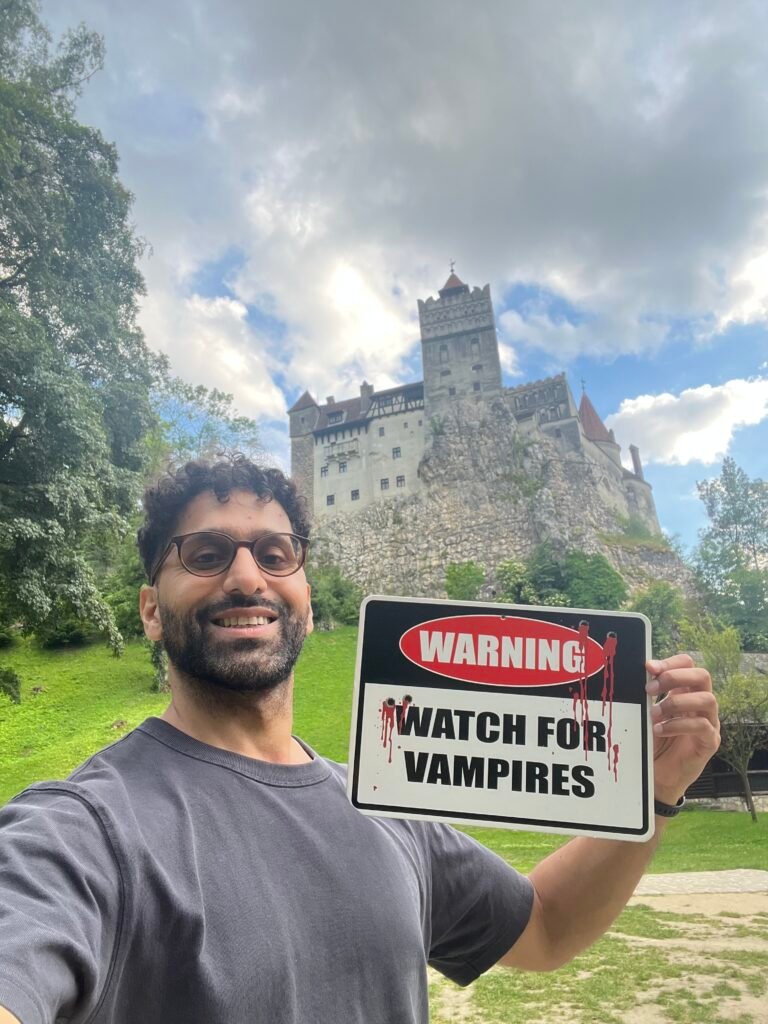
So I climbed the hill, past the stalls of souvenirs, knowing the building would bend the truth a little. That, in its way, was the point. I did not go to Bran expecting a documentary. I went because this is where the threads cross. A Saxon fortress in a region that feared its own dead. A novel that drew its power from those fears. A warlord whose name fused history to horror. Bran holds all of it, imperfectly and all at once.
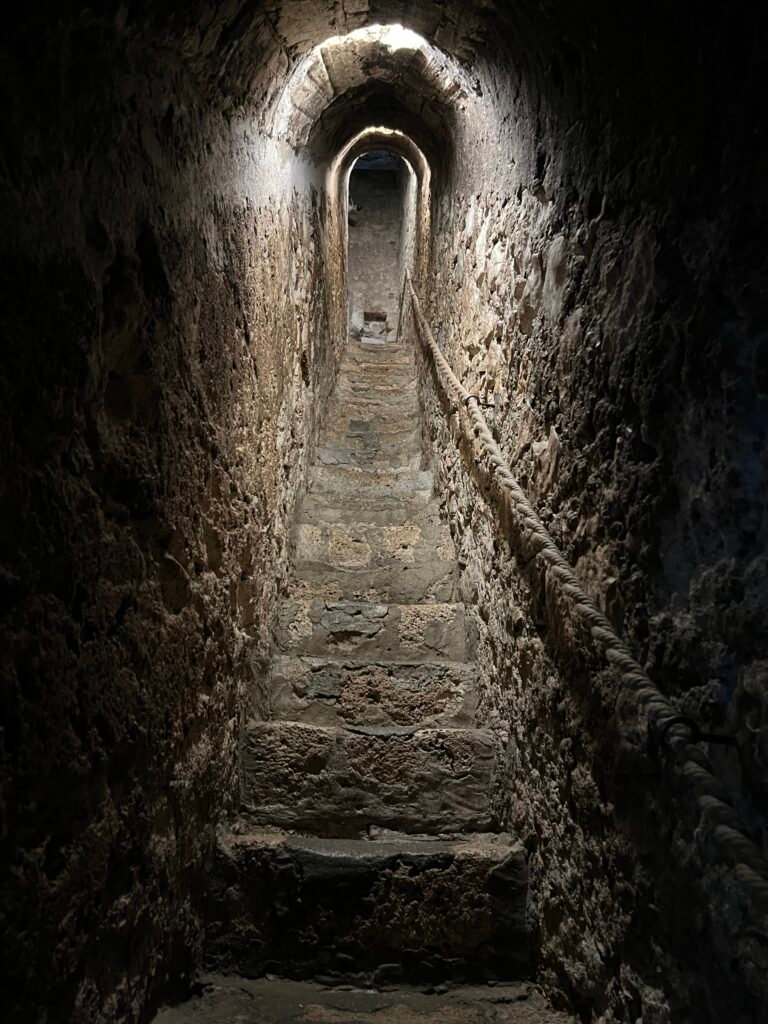
I found the torture-chamber exhibit and the Time Tunnel. Workers bored that old well shaft through the rock and rebuilt it as an elevator and light show. I found Queen Marie’s bright, careful rooms, which almost no one bothers to photograph. And I kept thinking about her heart in its silver box. That true and genuinely strange story feels at home here. Bran collects strange stories. It always has.
The seam between fact and fiction is visible if you look for it. But standing inside the castle, I stopped wanting to pull the threads apart. They belong together. A fortress guarded a pass in a land that believed in vampires. A novelist felt that belief across a continent and gave it a name borrowed from a warlord. The castle cannot hold all of that perfectly. No single place could. But it holds enough.
Up close, the legend felt more layered than I expected. The folklore underneath it is real. The dread Stoker captured was inherited. That is what makes Dracula’s Castle more than a tourist trap. The story did not land here by accident. It grew here, from roots older than the novel, older than Vlad, and older than the castle itself.

7 Comments
Bukwas: The Wild Man of the Woods You Don't Want To Meet - Your source for all things horror
August 24, 2026[…] The Castle Count Dracula Never Knew […]
The Skinwalker: A Shape-Shifting Creature of Terror - Your source for all things horror
August 24, 2026[…] The Castle Count Dracula Never Knew […]
Shadow People: Unveiling the Dark Figures of the Paranormal - Your source for all things horror
August 24, 2026[…] The Castle Count Dracula Never Knew […]
The Horror of Artificial Intelligence: Unexplained Behaviours Leave Experts Puzzled - Your source for all things horror
August 24, 2026[…] The Castle Count Dracula Never Knew […]
Exploring the World’s Most Eerie and Haunted Forests
August 24, 2026[…] The Castle Count Dracula Never Knew […]
Haunted Houses: Tracing the Origins of a Cultural Phenomenon - Your source for all things horror
August 24, 2026[…] The Castle Count Dracula Never Knew […]
Bringing Nightmares to Life with Latex Masks - Your source for all things horror
August 24, 2026[…] The Castle Count Dracula Never Knew […]