
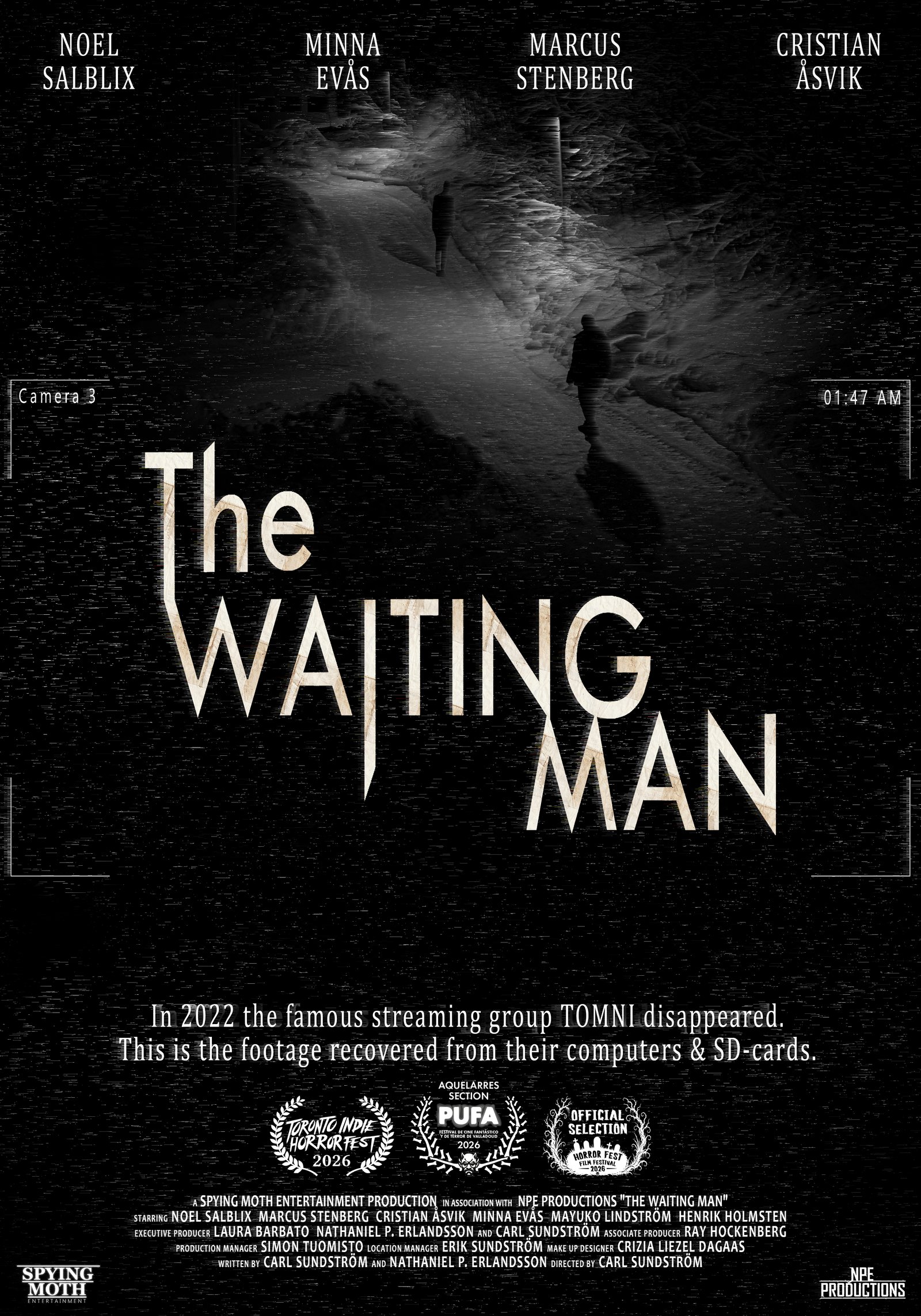
Winter has given us seasonal affective disorder (SAD) — a type of depression — but it’s also given us the antidote to SAD: winter horror films.
If you’ve ever experienced the crippling mental & physical desolation that comes with the colder months, you’ll understand why winter horror films work so well.
It’s partly why filmmaker Carl Sundström set his feature film, The Waiting Man, during the dead of winter in Sweden.
The Waiting Man is a found-footage horror that centres around an entity called the Alikabiha, also known as the Waiting Man. It’s a shadow-like figure that stalks its prey prior to devouring them.

You might mistake him for a creepypasta-type creature based on urban legends.The Waiting Man, however, comes directly from the mind of Sundström.
“I started creating the Waiting Man with the simple idea of an entity that watches its victims from outside their homes before eventually taking them,” he said.
The idea behind this monster has been a long time coming. Sundström, 34, would shoot short films on his camcorder with a friend around the time another scary urban legend — the Slender Man — was gaining popularity.
Sundström wanted to create a short film about a similar monster that would observe the person prior to hunting them. But the film never materialized. Yet, the idea stayed with Sundström.
“I started thinking about how frightening it would be if there was a shadowy figure standing at the edge of the forest across the street,” he said.

Table of Contents
Why winter horror films work
Now, imagine that same shadowy figure is standing outside your apartment during a bitterly cold night amid a snowstorm. For Sundström, it made sense.
Hailing from Sweden, Sundström understands the link between horror and the country’s winter months.
“The snow, darkness and harsh weather create an environment where the characters feel particularly vulnerable and cut off from the outside world.”
He noted it adds another layer of dread to the character of the Waiting Man as well.
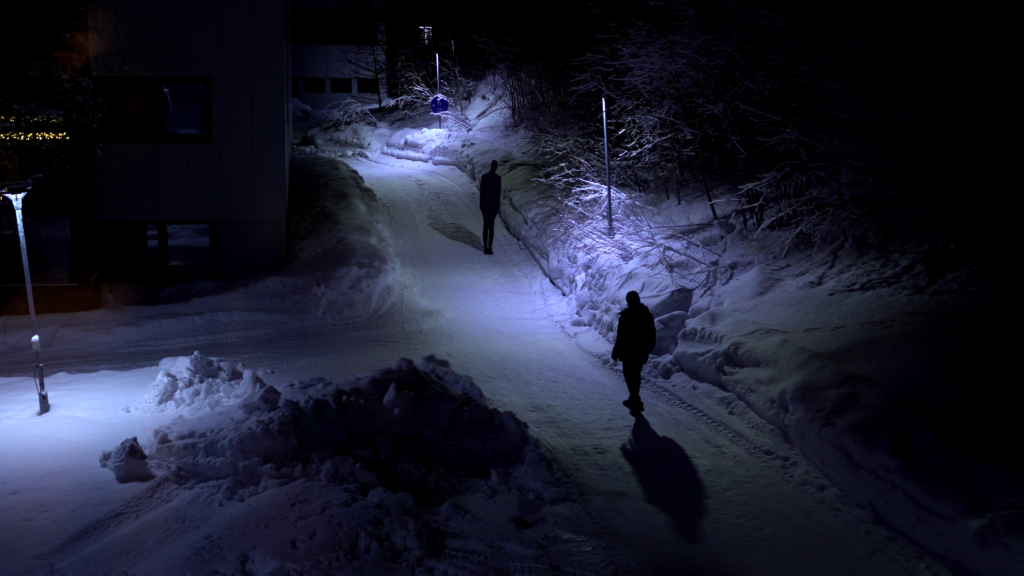
“Seeing someone standing alone in the middle of a snowstorm for hours is very unsettling, because you immediately understand that something is wrong,” he said.
“No ordinary person would simply stand there in those conditions.”
There are certain countries in the world that have a reputation for cold, harsh winters. Sweden is one of them. And rightfully so.
Sundström shot The Waiting Man primarily in the city of Kramfors, where average January nighttime lows hover around -9C to -12C.
“We wanted to embrace the visual image many people outside Sweden have of the country,” he said.
Although the Waiting Man can be found all over the world — in all climates — as the film illustrates, the cold gives it another dose of terror.
The Waiting Man emerges from a long line of winter horror films, including one of my favourites: The Shining.
Based on the novel by Stephen King, that film illustrates impeccably how winter can drive one mad while cooped up inside.
Winter also works well as a backdrop for coming face-to-face with our biggest fears — or the scariest monsters — as the case is in The Waiting Man.
The Waiting Man as a metaphor for terminal illness
Sundström gives the viewer freedom to figure out what the Waiting Man represents. I couldn’t help but see the Waiting Man as a symbol of the slow descent into madness.
A bitter winter exacerbates that descent, forcing the lead character, Joel Sandström (played by Noel Salblix), to spend the majority of his time in his apartment doing what he knows best: remaining glued to the computer as an influential streamer.
For Sundström, the Waiting Man is a symbol of something else. It represents illness.
“First, you notice something. You tell yourself it is probably nothing,” he said. “Then you notice it again, and you start to become a little more worried. Eventually, more symptoms begin to appear,” he added.
“You start searching for answers, perhaps by Googling what you are experiencing. Then you discover stories from other people who have experienced the same thing, and suddenly you find yourself going further down the rabbit hole.”
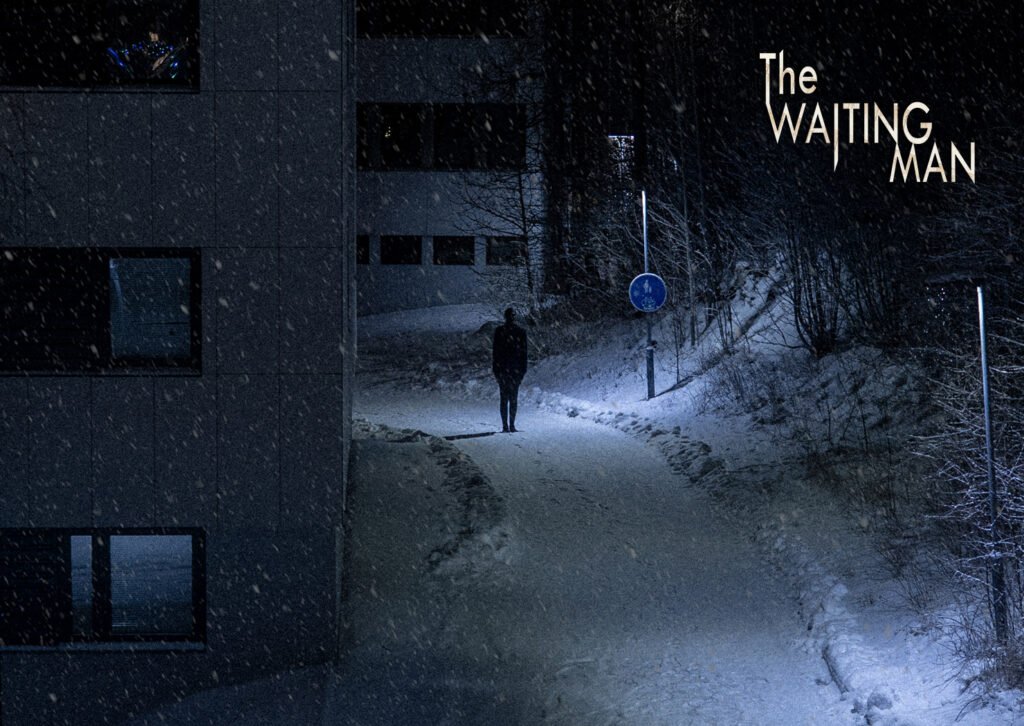
A childhood passion for horror films
One summer — when Sundström was very young — he came across a Swedish TV channel that had a horror nights segment.
“Every Tuesday night at 11 p.m., they would show classic horror films such as Halloween, The Exorcist, and A Nightmare on Elm Street,” he said.
That experience sparked his love for the horror genre. He would stay up late watching a deluge of horror movies.
“After that, I was completely sold,” he said.
Later in life, Sundström fell in love with early-2000s Asian horror. His favourite Japanese horror films are One Missed Call and Ju-On for one key reason.
“Both films capture that feeling of helplessness and dread that was such a defining characteristic of Asian horror during that period,” he said.
Although The Waiting Man has a Japanese connection to it, Sundström said it doesn’t come from his passion for J-horror. Rather, it’s to illustrate that the legend of the Waiting Man is global, and not only tied to Sweden.
Audience reactions and what’s next
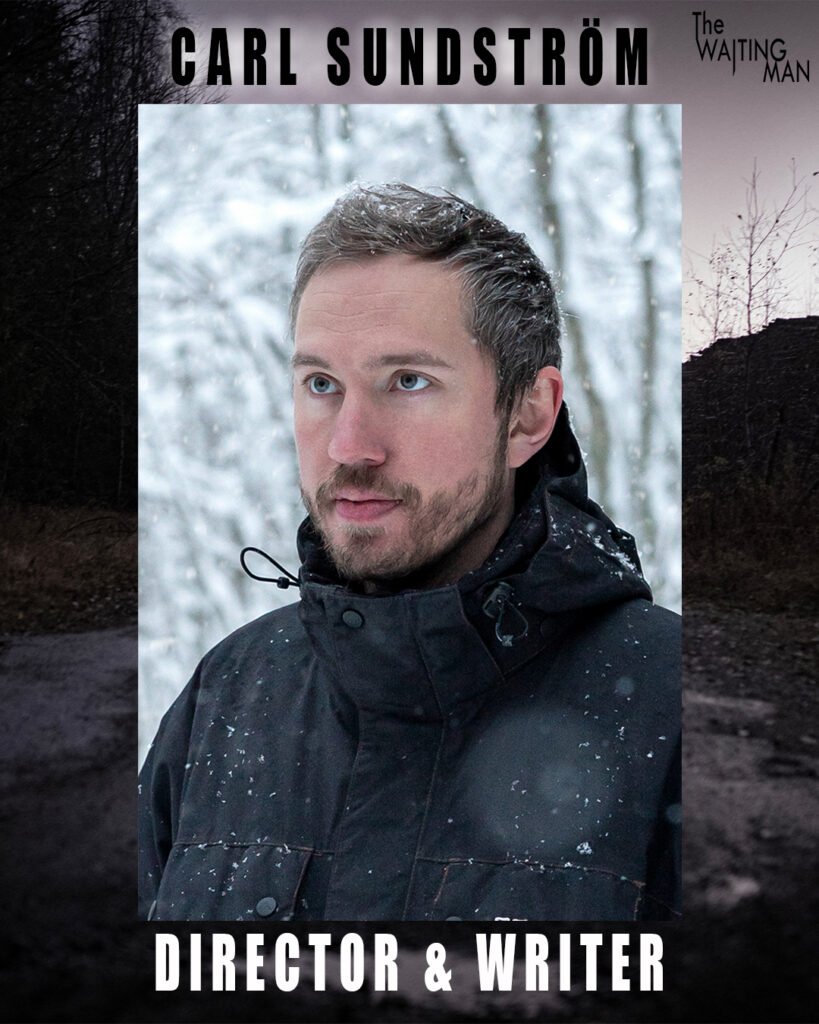
The Waiting Man is currently hitting the horror film fest circuit, and Sundström noted audiences are enjoying it.
After reviewing the film, I can see why. The Waiting Man will leave you feeling unnerved. It has a healthy amount of jump scares that’ll sit with you even after the film credits roll. And the sense of being watched may also linger.
“If people walk away from the film still thinking about the Waiting Man — hoping they won’t see him outside their own window — then I feel like we have accomplished what we set out to do,” he said.
The Waiting Man makes its Canadian premiere at the Toronto Indie Horror Film Fest Oct. 6-10. The film’s U.S. premiere is in Wilmington, Del. at the Horror Fest Film Festival set for Sept. 24-27.