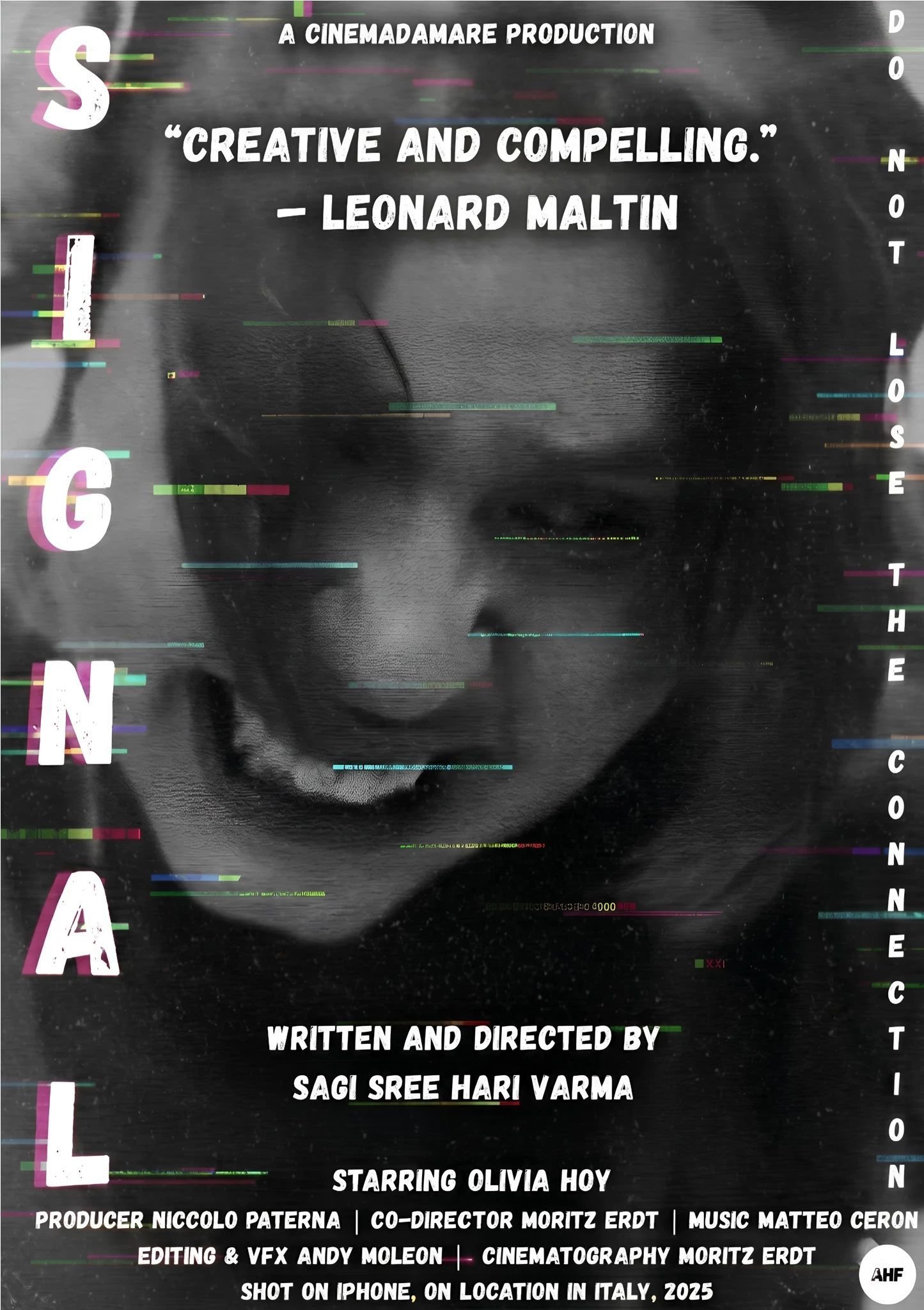
For many of us, a dead Wi-Fi signal sounds like the stuff of nightmares. For director Hari Varma, it became the premise behind the iPhone horror short film, Signal, one of 2026’s most travelled festival titles.
Signal, a black-and-white, single-take short written and directed by Varma, imagines a world where a lost internet connection strips away identity itself. The three-minute film follows a young girl navigating a world that has gone silent after its digital pulse flatlines. Since its debut, the Signal iPhone horror short film has screened and won awards on every continent except Antarctica. It played the Cannes Marché du Film in May. It also screened at the Academy’s Gold Rising program in Los Angeles on June 9, an appearance covered by KTLA 5 Morning News. The film is now being developed into a feature, with representation from United Talent Agency in Los Angeles.
Readers who enjoyed our profile of Trinidadian director Andre Silva’s Caribbean horror short All Skin No Laugh will spot a similar do-it-yourself spirit here.
Table of Contents
Born From Digital Collapse
Varma said Signal grew out of a distinctly modern anxiety: the quiet, near-total collapse of the digital infrastructure people rely on without noticing.
“We live in an era where identity itself is bound to an invisible connection, and I became fascinated by the primitive isolation that would surface the instant that connection vanished,” Varma said. “The film lives inside one idea: a world where Wi-Fi is as vital as oxygen, the signal suddenly flatlines, and a young girl has to navigate a world that has simply stopped breathing.”
Related Articles
How the horror film, MEAT, disrupts the male gaze
When Male Silence Turns Monstrous
A $400 horror short film that exposes the beauty industry’s darkest secrets
‘We’re All Haunted Here’ Rethinks the Haunted House Horror Film
Indian in a Box Explores the Horror of Invisible Labour
Shooting the Signal iPhone Horror Short Film in One Take
Varma shot the entire film on an iPhone in one continuous take, a choice he called a declaration rather than a limitation.
“The goal from day one was to prove you could marry mobile technology with a high-end, big-screen audio-visual experience and still land something visceral enough to demand a theatre,” he said. “It was definitely a challenge to shoot it all in a single take, but we did it.”
The single take served the story’s structure directly. Varma wanted the audience to fall into the girl’s nightmare the moment she wakes up, and an unbroken shot pulled viewers into that disorientation immediately. The crew landed the final take on their fourth attempt.
Varma is emphatic that format never dictated the film’s ambitions.
“The camera doesn’t make the film, the idea does,” he said. “What’s non-negotiable is the strength of the idea and the discipline to execute it.”
Why the Film Skips Colour Entirely
Signal unfolds entirely in black and white, a decision Varma made to strip the film to what he called its most primal register.
“Colour would have given the audience something familiar to hold onto; without it, the isolation feels older and more disorienting, closer to a memory or a nightmare than a news broadcast,” he said.
Casting a Small Italian Town
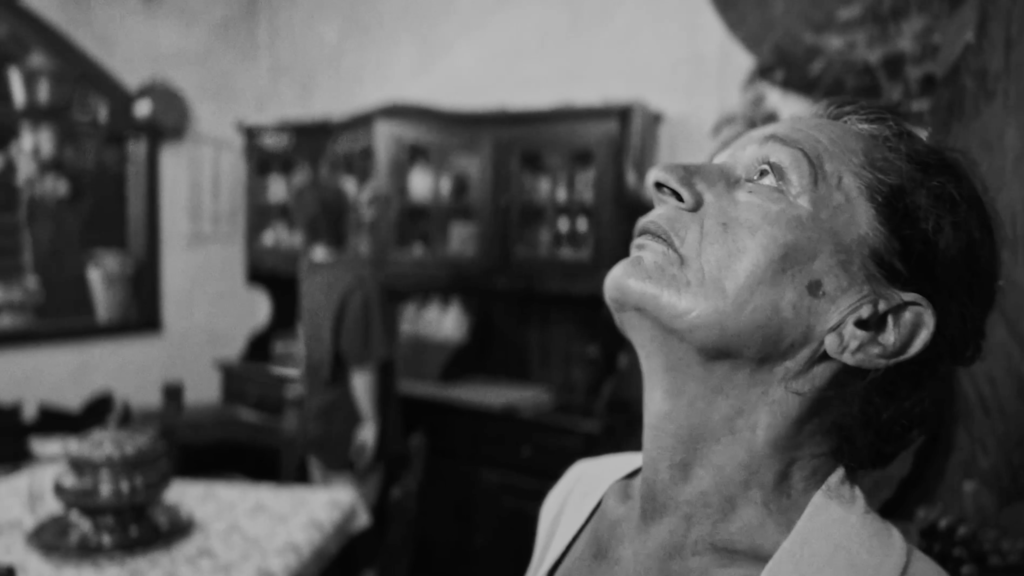
Varma cast much of Signal with residents of Fiuggi, a municipality in Italy, after going door to door to recruit them during a hot summer shoot.
“It was a challenge going door-to-door to request people to act in our film,” he said. “However, it worked thanks to the amazing residents of the municipality of Fiuggi. We spent about 30 minutes briefing them on their positions and acting bits, and they were all incredible learners and performers.”
Varma said he was surprised by how many children in the town turned out to perform.
Horror as the Right Genre for a Story About Disconnection
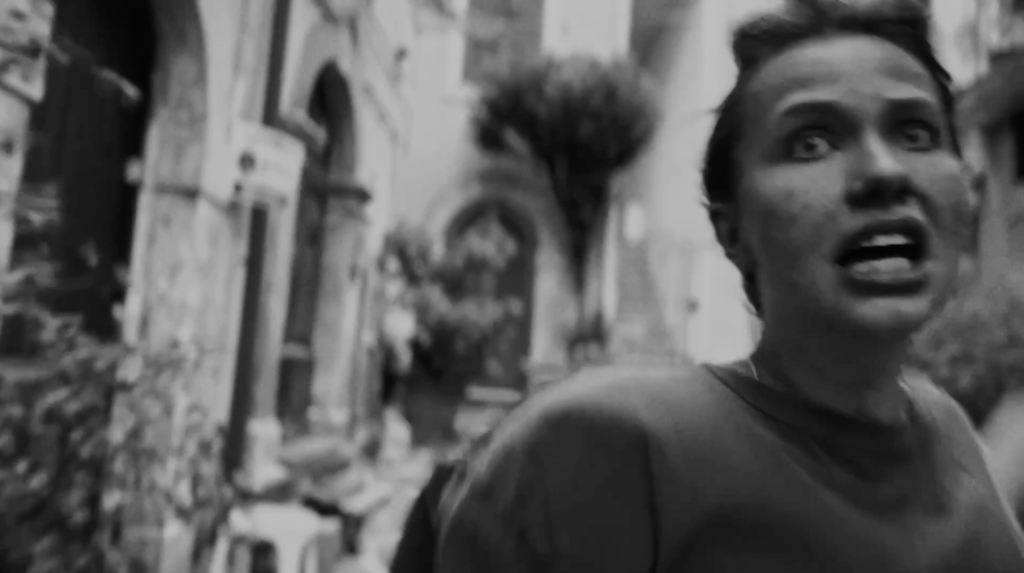
Varma chose horror deliberately, arguing the genre works on instinct rather than clear details.
“Horror strips a story down to instinct,” he said. “It doesn’t need exposition to make you feel something is wrong; it works on the same primitive nervous system this film is about.” He added that the fear in Signal is not a monster but silence and disconnection, which he called “a very modern, very real kind of horror.”
Varma said he hopes audiences leave the film questioning how much of their own identity depends on an invisible connection. He also described Signal as personal, tied to the disorientation of losing something assumed to be permanent. Audiences may never have thought of Wi-Fi as oxygen until it disappeared.
From Festival Circuit to a Feature in Development
The Signal iPhone horror short film’s festival run has been extensive. Varma pointed to screenings ranging from SF3 at the Sydney Opera House to a jury reviewing more than 2,000 entries in Istanbul. The film also played the Cannes Marché du Film and the Academy’s Gold Rising program, landing on the program’s 10th anniversary opening day. Signal screened at the Toronto Horror Film Festival in early June 2026 as well. Critic Leonard Maltin has called the film “creative and compelling.”
“One of the best aspects of bringing the film to global audiences was seeing how universal these themes are, and how wonderful the film looked and sounded on the big screen,” Varma said.
Varma has long had ideas for a feature and sees Signal as proof of concept for that larger world.
“I am very excited to dive deeper into this world,” he said.
Varma, born in Visakhapatnam, India, and trained in Moscow and Los Angeles, is the first Indian alumnus of the Oscar Gold Fellowship. His earlier work includes campaigns for the FIFA World Cup and the United Nations, along with the short film The Fool, shot at Warner Bros. Studios in Los Angeles.
With a feature adaptation now in development, the horror short film’s flatlined Wi-Fi signal may be far from its last transmission.