Jacob Ethan Tanner had loved horror for years before he ever tried making it. The genre carried too much weight in his head. “I’ve seen enough bad movies, or movies that miss that mark, that I think I put a load of pressure onto myself,” Tanner said. When he finally took the leap, he reached for one of the oldest tools in the genre’s kit: found footage horror movies.
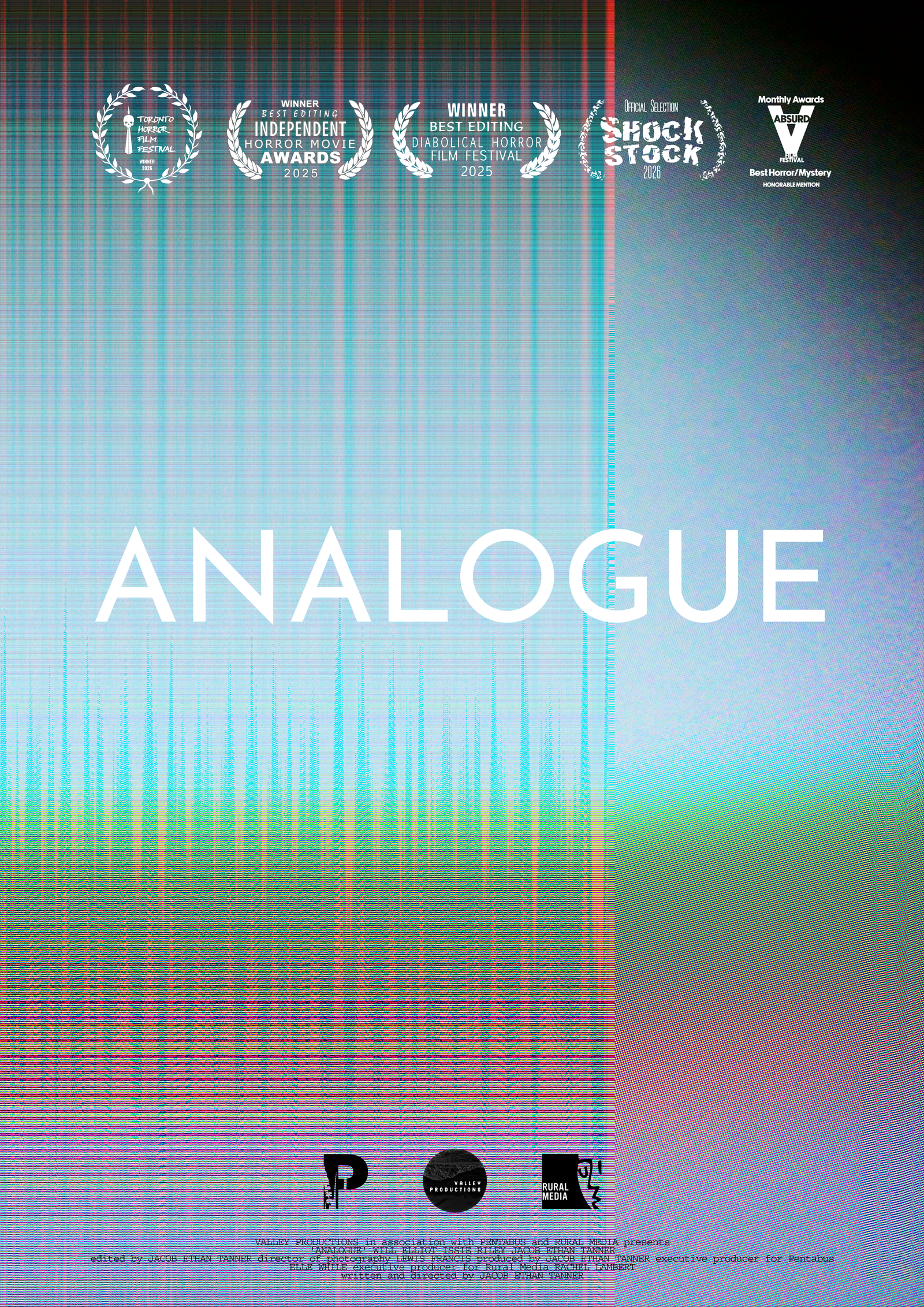
That pressure lifted when Pentabus Theatre and Rural Media handed him a brief through their 2025 National Young Writers ArtFlicks program. It came with a fixed set of rules rather than an open canvas. The scheme commissioned eight young writers to make three vertical micro-shorts each, built for TikTok. Tanner’s mind went straight to found footage. The result is Analogue, a trio of connected scares shot on smartphones and dashcams. Analog filmmaking refers to the grainy, unpolished look of footage shot on film or tape. In Analogue, each short chases that look using tools that are anything but analog.
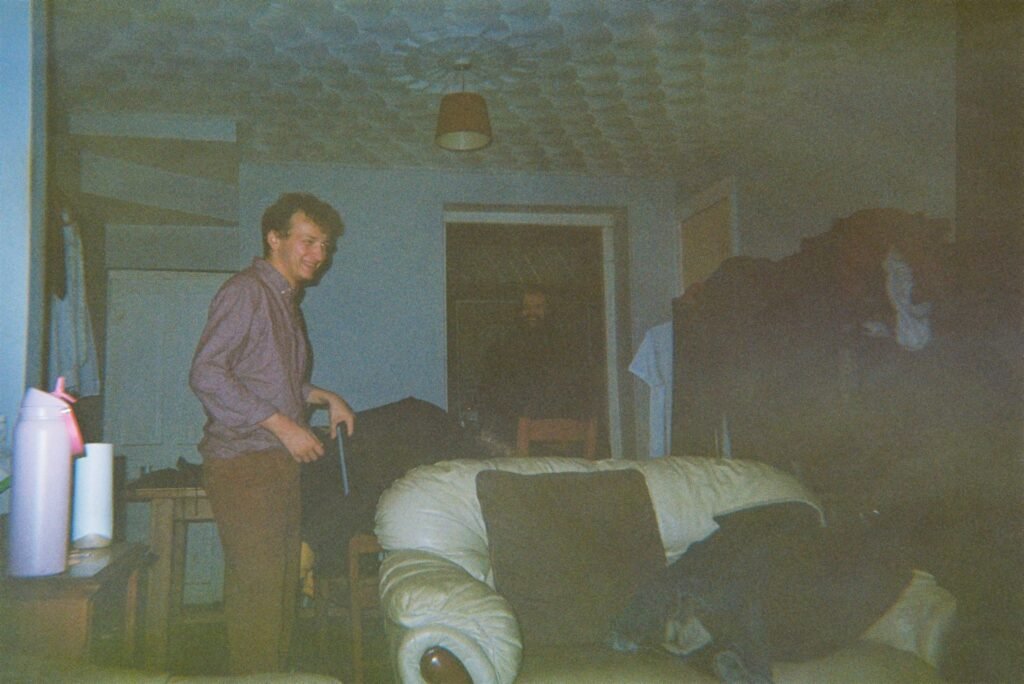
Table of Contents
A brief history of found footage horror movies
Found footage is one of the oldest tricks in horror movies, dressed up as one of the newest. The style presents a film as raw, unedited material shot by the characters themselves. It is later “discovered” and pieced together for an audience. Its roots reach back through decades of exploitation cinema and political filmmaking. That was well before consumer camcorders made the technique cheap and accessible. One of the earliest experiments in blurring fiction and documentary reality came in 1938. Orson Welles staged a radio broadcast of “The War of the Worlds” as a series of interrupted news bulletins.
Horror did not fully claim the format until 1980, when Italian director Ruggero Deodato released “Cannibal Holocaust.” The film follows a documentary crew into the Amazon, framed with a grimy, cheap aesthetic meant to resemble a snuff film. The violence provoked so much outrage that Italian authorities arrested Deodato on obscenity charges. He had also told his cast to disappear from public view after the shoot, a decision that fed rumours the footage was genuine until the actors turned up in court to clear his name. Critics now widely regard the film as the genre’s disturbing but foundational blueprint.
Related Articles
How the horror film, MEAT, disrupts the male gaze
When Male Silence Turns Monstrous
A $400 horror short film that exposes the beauty industry’s darkest secrets
‘We’re All Haunted Here’ Rethinks the Haunted House Horror Film
iPhone Horror Short Film, Signal, Imagines a World Without Wi-Fi
Blair Witch Project brought found footage horror movies to the mainstream
It took nearly two decades for found footage horror to reach a mass audience. That changed in 1999, when Daniel Myrick and Eduardo Sánchez released “The Blair Witch Project.” Three film students vanish in the film while shooting a documentary about a local legend in the Maryland woods. The film cost as little as $35,000 to make, yet it grossed roughly $248 million worldwide, an indie record at the time. It popularized the found-footage subgenre without technically inventing it.
The marketing leaned just as heavily on illusion as the story did. A fabricated mythology, an interactive website full of staged evidence, and real-world stunts like missing-person posters on college campuses built the buzz around the film. Its success opened the door for a wave of imitators, from “Paranormal Activity” to “Cloverfield” to Spain’s “REC.” All of them traded on the same premise. The camera never lies, even when everything in front of it is fiction.
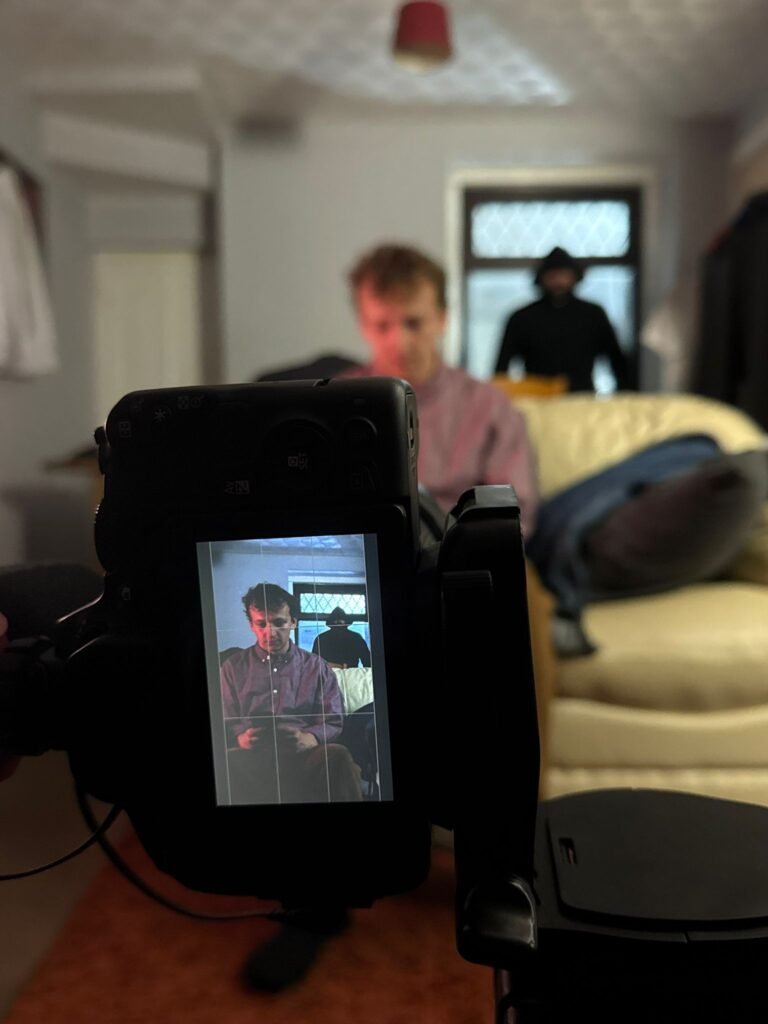
That lineage is what Tanner tapped into more than 25 years later, on a fraction of the Blair Witch budget. He used an iPhone and a dashcam instead of a rented camcorder. The “Blair Witch Project” co-directors had to stretch dread across a feature runtime. Tanner had to compress an entire arc of fear into 90 seconds, three separate times over.
Analog instincts, digital tools
“As much as these shorts are shot digitally, we wanted to imagine or invoke a sense of analog style filmmaking, using modern technology,” Tanner said. He wanted the three volumes of Analogue to feel thematically linked rather than tell one continuous story, an approach he said suited found footage’s reliance on atmosphere over spectacle. That instinct traced back partly to his own fandom of the VHS horror anthology series, which he cited as inspiration for connecting standalone scares under one title.
The title itself nods to that tension between old and new. Tanner said the project never set out to make analog versus digital part of the plot. Still, the spirit of analog filmmaking shaped every choice behind the camera, even with a smartphone doing the recording.
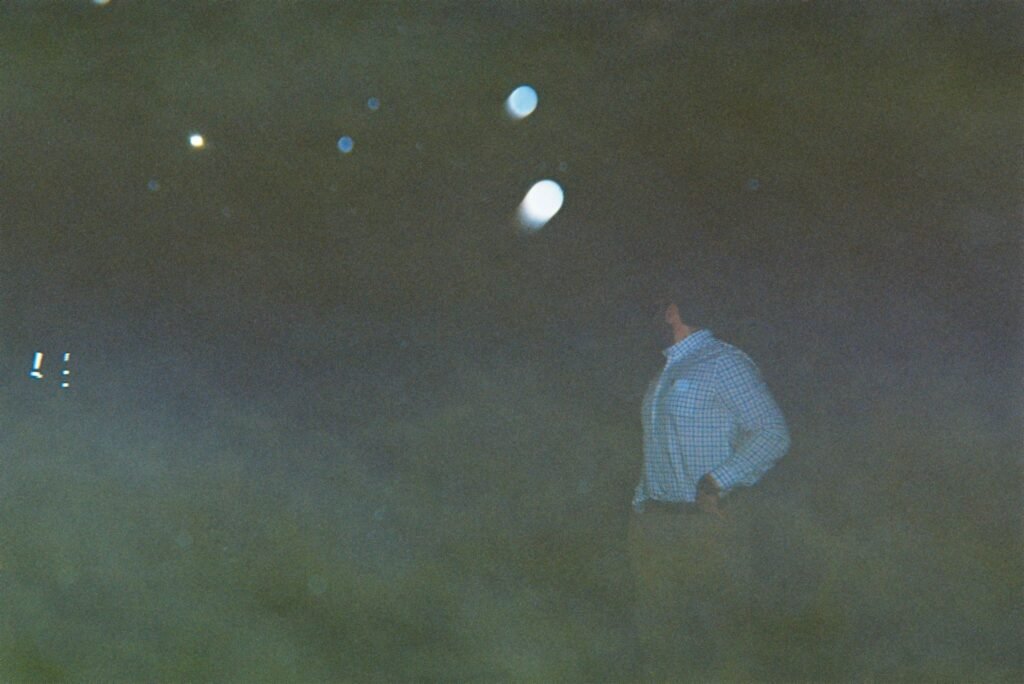
A stage actor finds horror through a TikTok brief
Tanner trained at the Royal Central School of Speech and Drama in London and appeared in the West End run of “Backstairs Billy.” His screen credits include the 2020 short “It’s Quiet in the Cold.” He also made “I’m Not Awake and Neither Are You,” a 2024 BBC Wales and iPlayer release. He has also written horror and thriller stage work, including a piece called “Nurture.” Horror had stayed mostly on the page for him until ArtFlicks gave him a reason to point a camera at it.
ArtFlicks is the digital shorts arm of Pentabus Theatre, a UK-based touring company that runs the program jointly with production company Rural Media. Each year, the program mentors a small cohort of early-career UK writers to make three 90-second micro-films apiece for its TikTok channel. Past cycles have pulled in more than a million views combined.
The 2025 cohort included eight writers between the ages of 18 and 30, working across genres from comedy to queer coming-of-age drama. Tanner was the one who picked horror, and turned that pick into Analogue.
A found-footage genre built for a 90-second runtime
Cramming dread into a minute and a half meant compressing structure without abandoning it. Tanner said each short still follows a traditional three-act shape, just at speed. “The challenge was creating three different types of slow-burn scares within a minute and a half each,” he said, adding that it is ultimately up to the audience to judge whether it worked.
Budget and time were tight too. The crew shot the whole anthology in a single evening, which pushed Tanner in front of the camera alongside his cast. “I also had to rely on myself, and had to play a role in each of the shorts,” he said. “It was quite fun juggling so many hats.”
Found footage has always leaned on that kind of constraint rather than fighting it. Deodato’s crew shot “Cannibal Holocaust” on a shoestring in the Amazon. The Blair Witch co-directors sent their actors into real Maryland woods with almost no script and let their genuine exhaustion do the acting. Limits on money and time have shaped found footage horror movies from the start, not just decorated them. Tanner’s single-evening shoot for Analogue sits in that same tradition, just compressed even further. Talented friends from the Welsh filmmaking scene made up most of his cast, rather than professional crew.
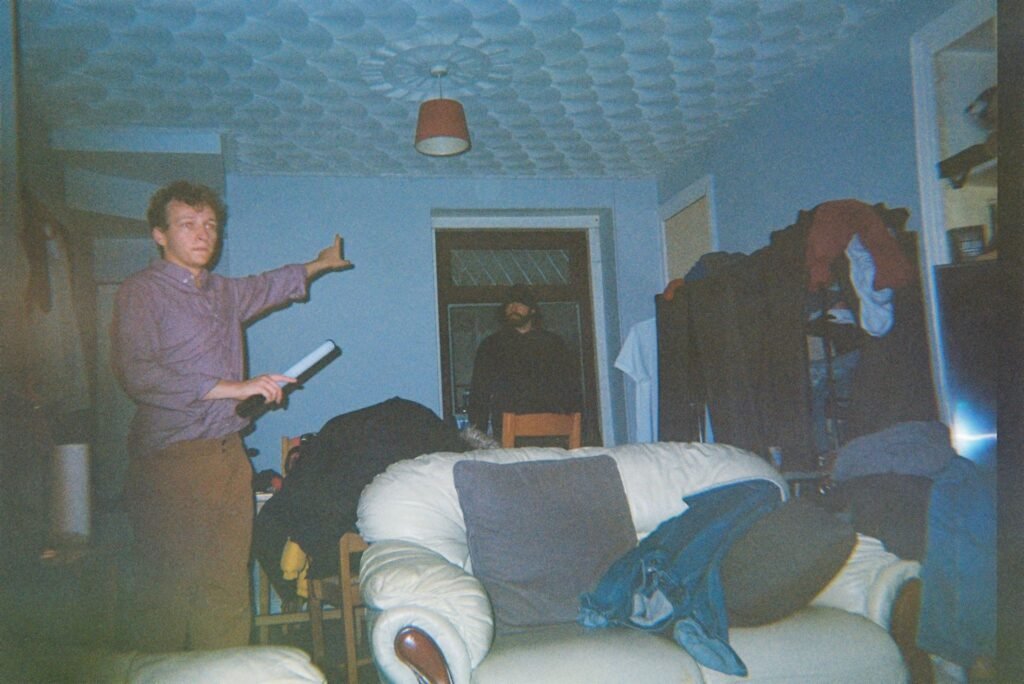
Welsh folk horror on a farm road
The pull toward local folklore surfaced most in the anthology’s third segment, “Dash-Cam.” Tanner and his crew filmed on an old dirt road outside a farm in a South Wales valley. They used the isolation of the setting as its own character. He is now developing a longer project rooted in Welsh folklore, though details remain under wraps.
Tanner said he resisted engineering the shorts around TikTok’s scrolling habits, even while working inside its vertical, bite-sized format. Chasing an algorithm felt counter to the stories he wanted to tell, he said. The approach paid off anyway: Analogue has drawn more than 200,000 views across social platforms.
What comes after Analogue
Tanner has not said much yet about the Welsh folklore project taking shape after “Dash-Cam.” He has only confirmed it is longer form and further along than a passing idea. Analogue moved quickly from a writers’ scheme to a produced trio of films with real reach. That makes whatever comes next worth watching for.
The anthology’s success also says something about where found footage horror movies sit now, more than a quarter century after Blair Witch. The technique no longer needs a rented camcorder or a fabricated missing-persons campaign to feel authentic. A smartphone and a dashcam can do the job just as well. Those are the same devices most people already carry or mount in their cars. The audience already watches most of its horror on a phone screen anyway.
Why horror still works
Horror’s appeal, in Tanner’s view, comes down to a feeling nothing can fake. “Fear is such a visceral, immediate response,” he said, pointing to films like “Get Out” as proof the genre can carry real social commentary while still delivering scares and entertainment. That same tension between fear and craft drew him to found footage in the first place. The style works by convincing an audience that what they are watching might be real.
Tanner says he is not finished with horror. He called the genre a natural fit for his taste and his writing, and said he plans to keep making it. For a filmmaker who spent years feeling too intimidated to try, that is its own kind of ending, closer to a beginning than a conclusion. Asked what he wants viewers to feel right after watching Analogue, his answer is simple: “unsettled”.